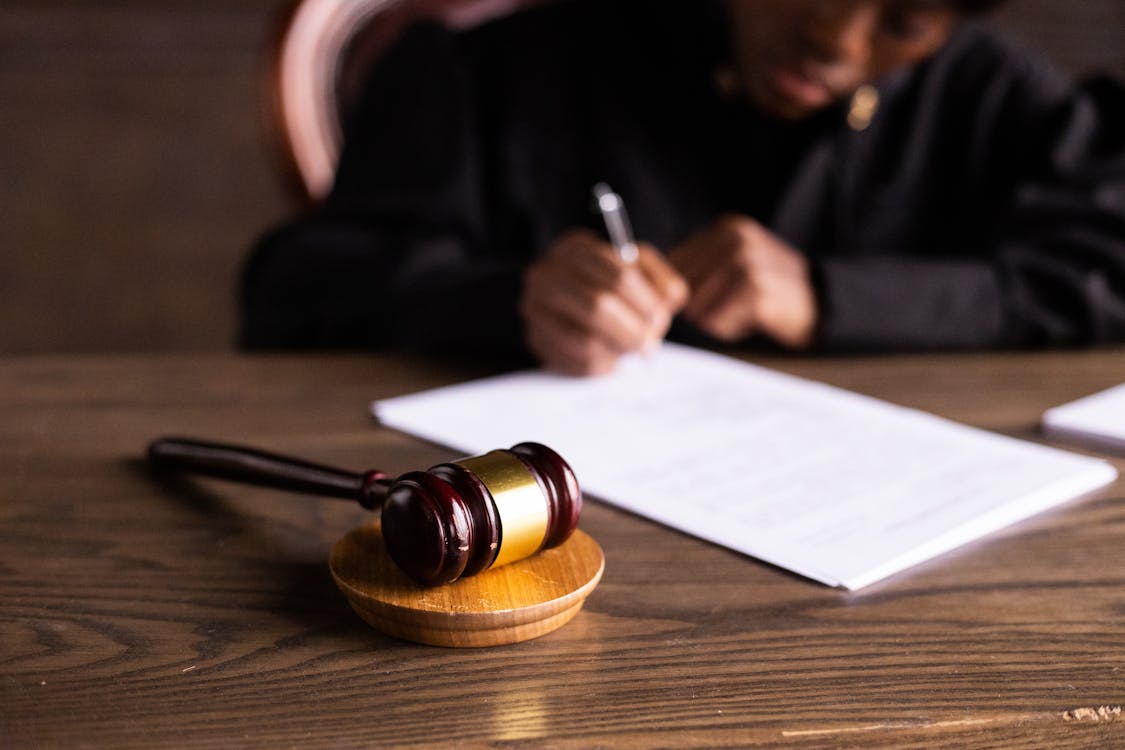

Young girl using her phone on the breakfast table

The Ethics of Digital Forensics: Privacy vs. Investigation

In today’s digital age, forensic investigations play a crucial role in uncovering cybercrimes, fraud, and other legal disputes. However, the ethical dilemmas surrounding digital forensics often revolve around the balance between privacy rights and the need for thorough investigations. Legal professionals and forensic experts must navigate these challenges while upholding the ethics of digital forensics and ensuring fair proceedings.

The Role of Legal Ethics in Digital Forensics

Digital forensics involves collecting, analyzing, and preserving electronic data for use in legal cases. However, ethical concerns arise when investigators access personal communications, financial records, or sensitive information. Ethics of digital forensics dictate that professionals must follow strict protocols to avoid overstepping privacy laws. They must ensure that evidence collection is legally authorized, handled with integrity, and does not infringe on an individual’s rights.

One of the biggest ethical concerns is obtaining digital evidence without proper consent or warrants. Unauthorized data extraction can lead to legal complications, even if the evidence is crucial to a case. Adhering to proper procedures ensures that digital forensic findings hold up in court.

Audio Authentication and Privacy Concerns

With the rise of deepfake technology and altered audio files, audio authentication services have become essential in verifying the legitimacy of recordings used in legal cases. However, verifying audio evidence must be done ethically, ensuring that individuals’ privacy is not compromised.

For example, forensic experts may analyze phone calls, surveillance recordings, or voice messages. If these recordings were obtained without consent, legal and ethical issues arise. Experts must verify whether the evidence meets legal admissibility standards and whether it was acquired through lawful means.

Facebook and other apps on a phone

The Role of Expert Witness Testimony

Forensic analysts often serve as expert witnesses in court cases, providing critical insights into digital evidence. Expert witness testimony must be unbiased, fact-based, and presented with full transparency. Ethical concerns arise when experts are pressured to manipulate findings to favor one party.
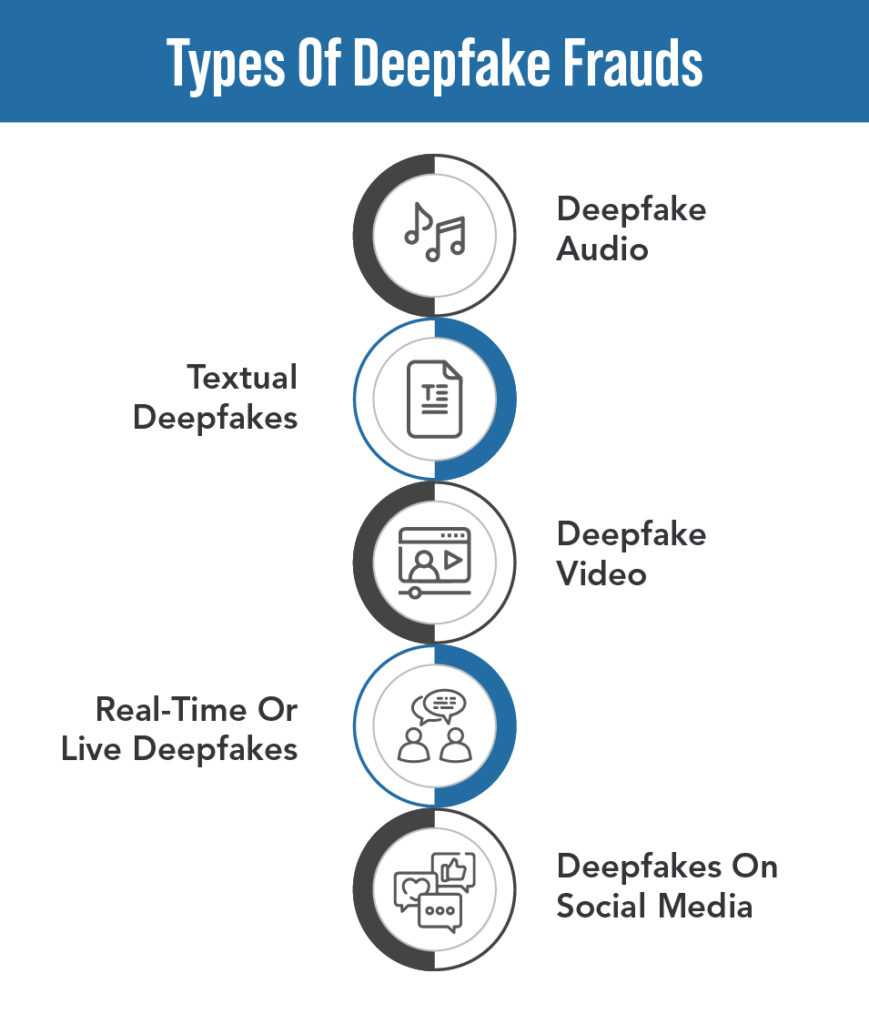
An ethical digital forensics expert must:

  • Present only verified, objective conclusions
  • Avoid conflicts of interest
  • Ensure that evidence is handled and interpreted according to legal standards

At Eclipse Forensics, we specialize in digital forensics services, ensuring that electronic evidence is collected, analyzed, and presented with the highest ethical standards. Our audio authentication services help verify recordings for legal cases, while our experts provide expert witness testimony to support fair and accurate investigations. We uphold the ethics of digital forensics, maintaining a strict commitment to privacy laws and data integrity. Contact Eclipse Forensics today to safeguard the truth with expert digital forensic solutions.

A judge sitting in a formal suit at his table

Admissibility of Digital Evidence in Court: What You Need to Know

Digital evidence has become a crucial element in modern legal proceedings. However, ensuring its admissibility in court requires compliance with legal standards for digital evidence, proper authentication, and expert testimony. Below, we explore the key factors that determine whether digital evidence can be used in a legal case.

Legal Standards for Digital Evidence

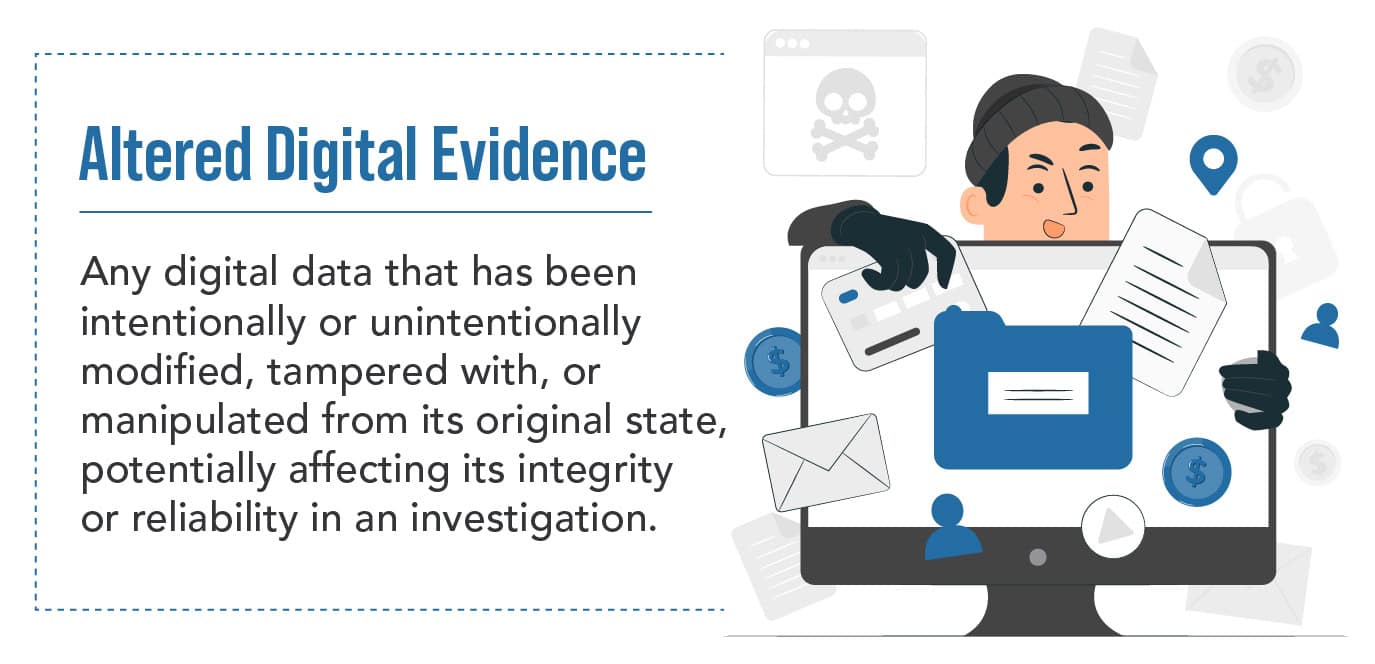
Courts follow strict legal standards for digital evidence to maintain its integrity and reliability. These standards require that digital evidence be relevant, authentic, and legally obtained. The Federal Rules of Evidence (FRE) in the U.S., for instance, mandate that digital files must not be altered or tampered with before submission. Chain of custody is another essential factor—proper documentation must show how the evidence was collected, stored, and transferred.

Authentication of Digital Evidence

Authentication is a critical step in ensuring that digital evidence is admissible. This process verifies that the evidence is genuine and has not been manipulated. Audio and video recordings, emails, text messages, and computer logs must be properly authenticated before they can be used in court.

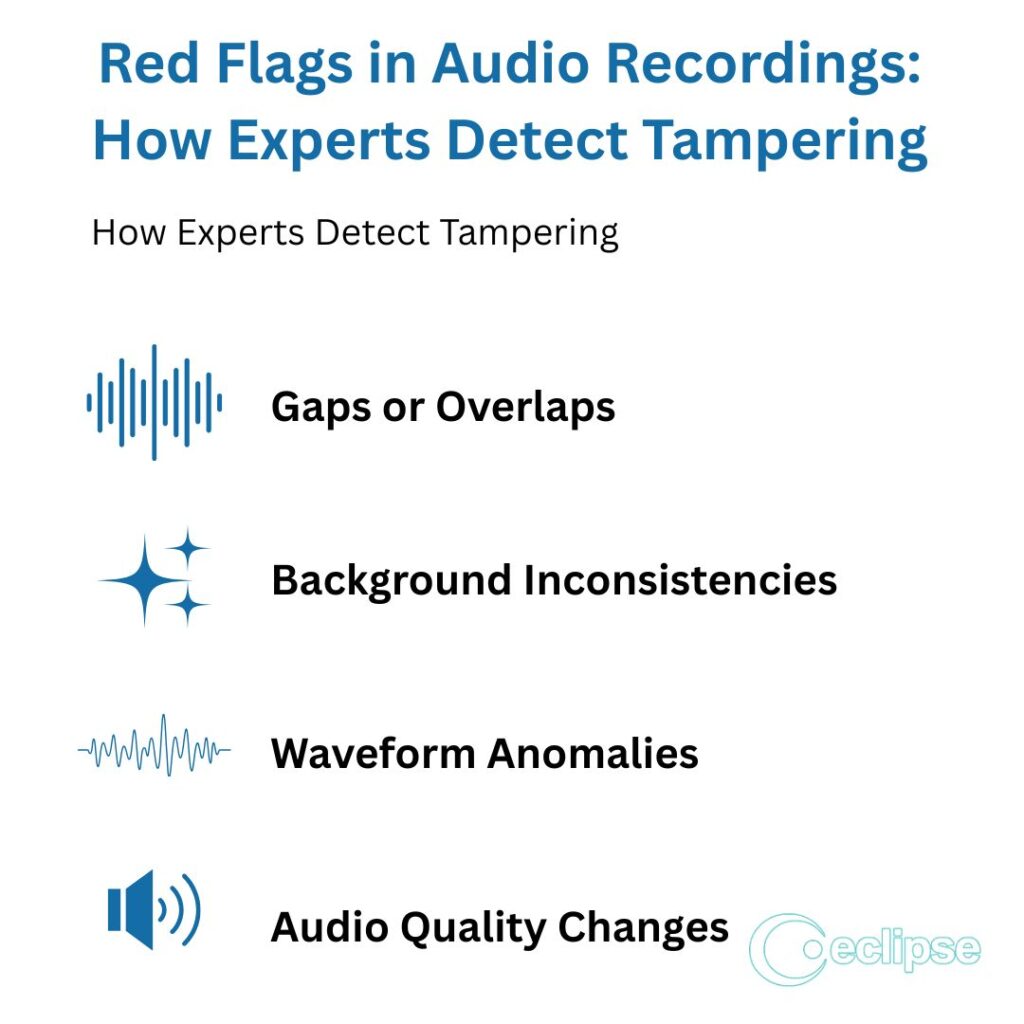
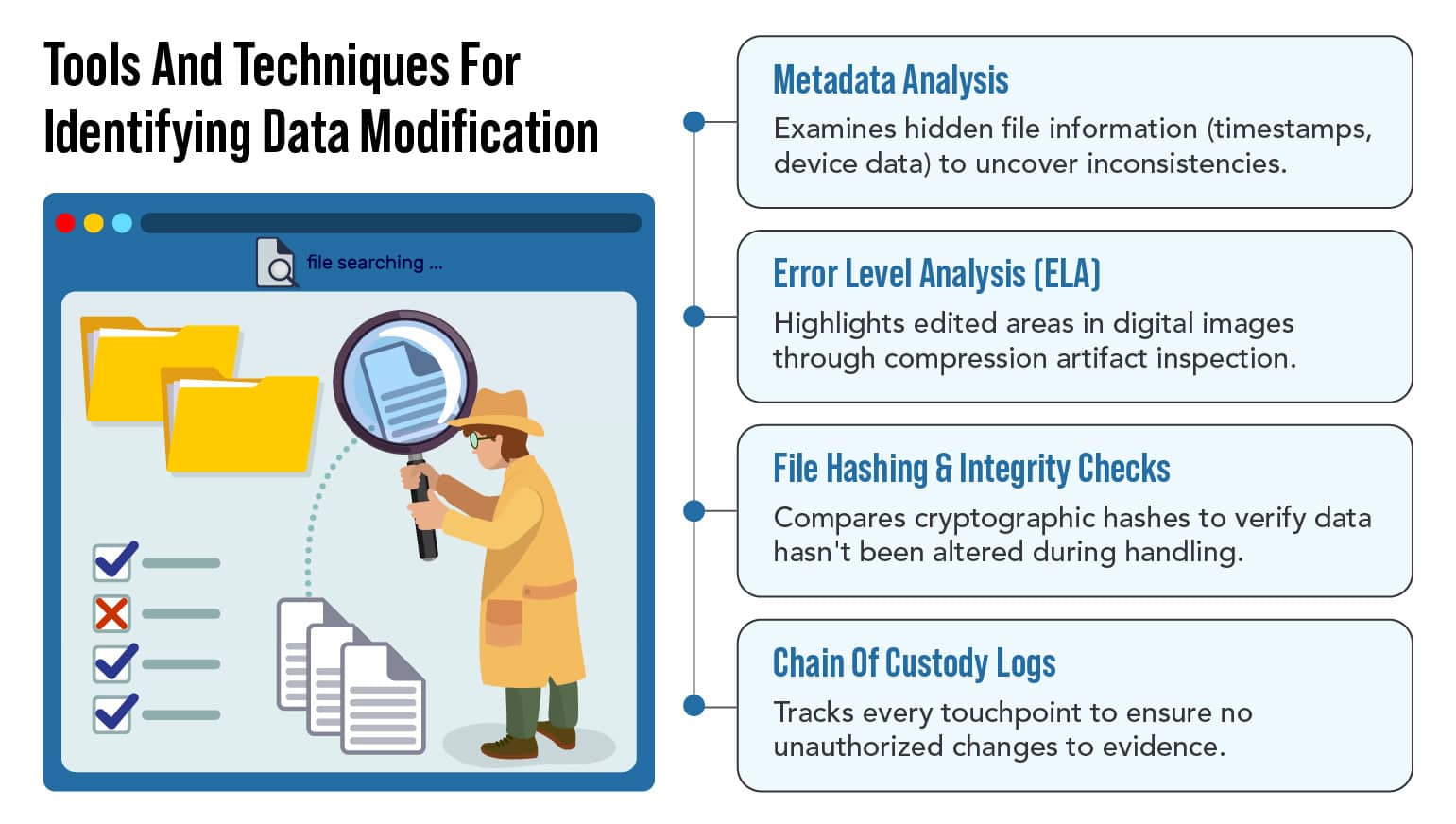
Audio authentication services play a crucial role in this process. They help verify the legitimacy of recorded conversations by analyzing metadata, timestamps, and potential alterations. Advanced forensic techniques can identify splicing, background noise inconsistencies, or unnatural speech patterns that may indicate tampering.

The Role of Expert Witness Testimony

Expert witness testimony is often required to establish the credibility of digital evidence. Digital forensic experts can explain technical details to the court, such as how data was collected and whether any alterations occurred. Their testimony ensures that complex forensic processes are understandable to judges and juries.
In cases involving audio recordings, forensic experts can testify about the results of audio authentication services, confirming the accuracy and authenticity of the evidence. Their analysis can help validate whether a recording is an accurate representation of an event or if it has been altered in any way.

Person holding a lit-up mobile phone in their hand

How Digital Forensics Services Strengthen Cases

Digital forensics services play a crucial role in uncovering and preserving digital evidence. These services involve extracting data from electronic devices, analyzing metadata, and detecting any signs of manipulation. Digital forensics can also recover deleted files and verify the integrity of evidence presented in court.

Need reliable digital forensics services to authenticate crucial evidence for your case? At Eclipse Forensics, we specialize in expert witness testimony and digital forensic services, ensuring compliance with legal standards for digital evidence. Whether you need to verify recordings, analyze digital files, or present forensic findings in court, our experts provide accurate, admissible results. Contact us today for professional forensic support!

A document with a stamp that reads ‘guilty

The Role of Digital Forensics in Modern Fraud Investigations

Fraud has become increasingly sophisticated in the digital age, requiring advanced investigative techniques to uncover deception. Digital forensics plays a crucial role in modern fraud investigations by analyzing electronic evidence, verifying authenticity, and providing expert testimony in legal proceedings.

Uncovering Digital Evidence

Fraudsters often leave digital footprints across devices, emails, financial transactions, and communication logs. Digital forensics services help investigators retrieve, analyze, and interpret this data to identify fraudulent activities. Through forensic imaging, metadata analysis, and recovery of deleted files, experts can uncover key evidence that links suspects to fraudulent transactions.

The Importance of Audio Authentication Services

In fraud investigations, recorded conversations, voicemails, and digital communications can be pivotal pieces of evidence. However, verifying their authenticity is essential to prevent manipulated or fabricated recordings from influencing a case. Audio authentication services utilize forensic techniques to analyze voice consistency, detect tampering, and confirm the legitimacy of audio evidence. This process strengthens the integrity of fraud investigations by ensuring that only credible recordings are considered.
Expert Witness Testimony in Fraud Cases

The technical nature of digital forensics requires clear and credible presentation in court. Expert witness testimony bridges the gap between complex forensic findings and legal proceedings. Digital forensic experts explain their methodologies, present findings, and provide professional opinions on the validity of electronic evidence. Their testimony can be a deciding factor in determining the authenticity of financial records, emails, and other digital evidence linked to fraud cases.

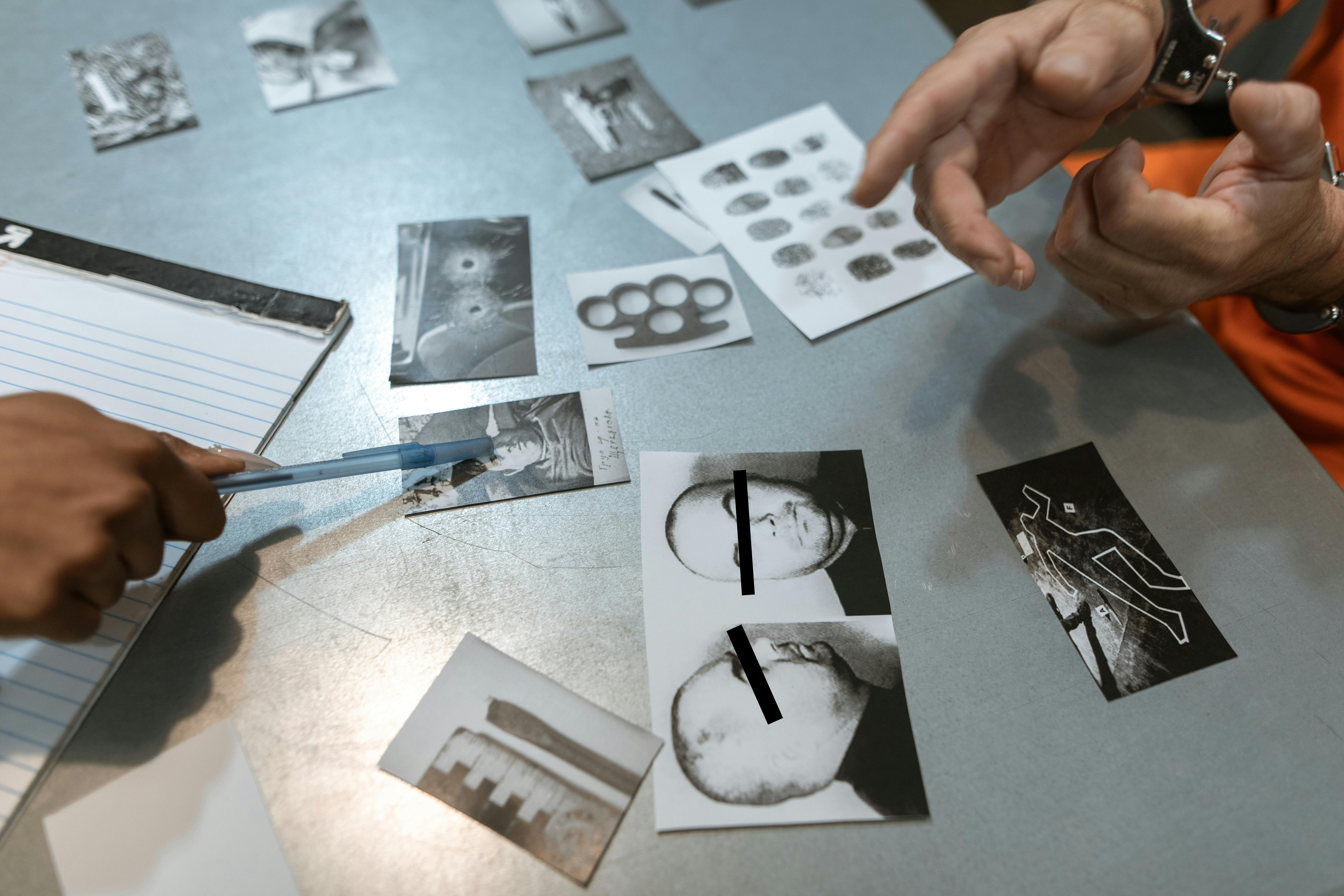
An image of a person pointing to a photo

Strengthening Legal Investigations with Digital Forensics Services

Modern fraud investigations rely heavily on digital forensics services to establish timelines, identify perpetrators, and prevent future fraud. Whether dealing with cyber fraud, identity theft, or financial scams, forensic experts provide essential support in gathering admissible evidence. Their expertise ensures a thorough and unbiased examination of digital data, ultimately aiding law enforcement and legal teams in securing justice.

In today’s digital landscape, fraud investigations demand advanced forensic techniques to stay ahead of evolving threats. By leveraging digital forensics, audio authentication services, and expert witness testimony, investigators can uncover the truth, validate evidence, and hold fraudsters accountable.

At Eclipse Forensics, we specialize in digital forensics services to support modern fraud investigations with precision and integrity. Our experts analyze digital evidence, authenticate audio recordings, and provide expert witness testimony to strengthen legal cases. Whether you need audio authentication services to verify recordings or forensic analysis to uncover fraudulent activities, our team delivers accurate and court-admissible findings. Trust Eclipse Forensics to uncover the truth and support your investigation. Contact us today for professional forensic assistance!

A gavel resting on a wooden block

Inside the Mind of a Digital Criminal: How Digital Forensics Tracks Cybercriminals

The digital world has opened new doors for innovation, but it has also become a playground for cybercriminals. From hacking and fraud to identity theft and digital espionage, criminals leave behind digital footprints. Digital forensics plays a crucial role in tracking cybercriminals through specialized tools and methodologies.

Understanding Digital Forensics

Digital forensics is the science of collecting, preserving, and analyzing electronic evidence. It helps law enforcement agencies, businesses, and legal teams uncover hidden data, identify perpetrators, and present evidence in court. This process is critical in tracking cybercriminals, ensuring they are held accountable for their crimes.

Key Techniques Used in Digital Forensics

  1. Data Recovery and Analysis
    Cybercriminals often attempt to erase their tracks, but digital forensics experts can recover deleted files, emails, and browser histories. Advanced forensic tools allow investigators to reconstruct data, exposing hidden transactions and unauthorized activities.
  2. Audio Authentication Services
    Criminals frequently communicate via voice messages, phone calls, or recorded instructions. Audio authentication servicesverify the integrity of these recordings, detect alterations, and confirm speaker identity. This technique is vital in cybercrime investigations involving threats, fraud, or impersonation.
  3. Network and IP Tracing
    Cybercriminals rely on anonymization techniques like VPNs and proxy servers. However, digital forensics servicescan analyze network traffic, trace IP addresses, and uncover hidden connections between hackers and their targets. This helps law enforcement track down cybercriminals operating from different locations.
  4. Metadata and Log File Analysis
    Every digital action leaves a trail. Investigators analyze metadata from documents, images, and videos to determine when and where they were created or modified. Log file analysis further helps track unauthorized system access and data breaches.

A person sitting stressed at a table

The Role of Expert Witness Testimony in Cybercrime Cases

Once evidence is gathered, expert witness testimony plays a key role in legal proceedings. Digital forensics specialists explain complex technical findings in a way that courts can understand. Their testimony strengthens cases against cybercriminals by providing credible, fact-based analysis.

Eclipse Forensics specializes in tracking cybercriminals through digital forensics, offering cutting-edge solutions to uncover digital evidence. Our expert digital forensics services include data recovery, metadata analysis, and network tracing to identify cyber threats. With advanced audio authentication services, we verify recordings for authenticity, ensuring accurate legal outcomes. Our specialists provide expert witness testimony, delivering clear, credible insights for court cases. Whether you need to investigate fraud, data breaches, or unauthorized access, Eclipse Forensics has the expertise to uncover the truth. Contact us today to protect your digital assets and strengthen your legal case with proven forensic techniques.

A black and white shot of a child using a mobile phone

Data Breaches and Digital Forensics: Tracing the Source of the Attack

In today’s digital landscape, data breaches have become an ever-present threat, affecting businesses, government institutions, and individuals alike. Cybercriminals exploit vulnerabilities to steal sensitive information, causing financial loss, reputational damage, and legal repercussions. In response, digital forensics has emerged as a critical field for investigating breaches, identifying perpetrators, and securing justice. Digital forensics services, including audio authentication services and expert witness testimony, play a crucial role in tracing the source of cyberattacks and ensuring accountability.

Understanding Data Breaches

A data breach occurs when unauthorized individuals gain access to confidential information, whether through hacking, insider threats, malware, or human error. The compromised data can include financial records, personal identification information, intellectual property, and classified business communications.

Common Causes of Data Breaches

  1. Phishing Attacks– Cybercriminals trick users into revealing credentials through deceptive emails or websites.
  2. Malware and Ransomware– Malicious software infiltrates systems, stealing or encrypting data until a ransom is paid.
  3. Insider Threats– Employees or contractors with access to sensitive data misuse their privileges for personal gain.
  4. Weak Passwords and Poor Security Measures– Unsecured systems and predictable passwords provide easy access for hackers.
  5. Cloud Misconfigurations– Incorrect security settings in cloud storage lead to unauthorized data exposure.

The aftermath of a data breach can be devastating, resulting in financial losses, legal action, and loss of consumer trust. This is where digital forensics services come into play.

The Role of Digital Forensics in Investigating Breaches

Digital forensics is the science of collecting, preserving, and analyzing electronic data to investigate cybercrimes. When a data breach occurs, digital forensics experts work to identify how the attack happened, who was responsible, and what information was compromised.

Anonymous man using a screen in purple lighting

Key Steps in Digital Forensic Investigations

  1. Incident Response and Evidence Collection
    • The first step in any digital forensic investigation is securing the affected system to prevent further damage.
    • Experts create forensic copies of compromised devices to preserve original evidence.
    • Log files, network activity records, and system memory dumps are collected for analysis.
  2. Data Analysis and Reconstruction
    • Investigators examine system logs, metadata, and encrypted files to trace unauthorized access.
    • Deleted or altered files are recovered to determine what information was stolen or modified.
    • Behavioral analytics help identify suspicious activities leading up to the breach.
  3. Tracing the Source of the Attack
    • IP addresses, device identifiers, and geolocation data help pinpoint attackers.
    • Advanced techniques like steganalysis detect hidden messages or altered files used by cybercriminals.
    • Audio authentication servicesmay be used in cases involving voice-related cybercrimes, ensuring recorded communications are genuine.
  4. Expert Witness Testimony and Legal Proceedings
    • Forensic experts provide expert witness testimony in court, explaining their findings in a way that judges and juries can understand.
    • Their reports serve as crucial evidence in legal cases against cybercriminals.

Digital Forensics Services for Data Breach Investigations

Specialized digital forensics services help organizations mitigate damage and recover from data breaches. These services include:

  1. Network Forensics– Analyzing network traffic to detect anomalies and pinpoint unauthorized access.
  2. Endpoint Forensics– Examining compromised devices, including computers, smartphones, and IoT devices.
  3. Database Forensics– Investigating unauthorized access or alterations to databases containing sensitive information.
  4. Cloud Forensics– Tracing breaches in cloud-based services and identifying misconfigurations.
  5. Audio Authentication Services– Validating the authenticity of recorded conversations, often used in corporate fraud cases.

Person holding a lit-up mobile phone in their hand

Preventing Future Data Breaches

While digital forensics is essential in investigating breaches, proactive cybersecurity measures can help prevent attacks altogether. Organizations should:

  • Implement multi-factor authentication (MFA)to secure accounts.
  • Regularly update software and security patchesto close vulnerabilities.
  • Conduct cybersecurity trainingto educate employees on recognizing threats.
  • Deploy intrusion detection systems (IDS)to monitor for suspicious activity.
  • Utilize data encryptionto protect sensitive information.

The Role of Audio Authentication in Cybercrime Investigations

In the digital forensics landscape, audio authentication services play a crucial role in verifying the legitimacy of voice recordings used as evidence in cybercrime investigations. Cybercriminals often use voice phishing (vishing) to trick individuals into revealing sensitive information. In such cases, forensic experts analyze recorded calls to determine if they have been tampered with or manipulated.

Audio authentication involves examining background noise, speech patterns, and digital signatures to detect alterations. For instance, if a cybercriminal tries to use voice deepfakes to impersonate executives in a business email compromise (BEC) scam, forensic specialists can identify inconsistencies in speech synthesis and frequency anomalies. These findings can be critical in tracing the source of the attack and preventing further fraud.

Additionally, audio authentication is essential in cases involving insider threats, blackmail, or fraudulent recordings submitted as evidence in court. By validating the authenticity of such recordings, forensic experts help establish the credibility of digital evidence, ensuring that legal proceedings are based on accurate information.

Legal Challenges in Digital Forensic Evidence

While digital forensics services provide critical insights into data breaches and cybercrimes, the legal system faces challenges when handling forensic evidence. One of the main issues is the admissibility of digital evidence in court. To be considered valid, forensic evidence must be collected and analyzed using legally accepted methods that maintain data integrity.

Another challenge is the chain of custody, which refers to the documentation and handling of digital evidence from the time it is collected until it is presented in court. If any part of the process is mishandled, the evidence may be deemed inadmissible, weakening the case against cyber criminals.

Facebook and other apps on a phone

Furthermore, data privacy laws and international regulations complicate forensic investigations. Forensic experts must navigate laws such as the GDPR (General Data Protection Regulation) in Europe or the CCPA (California Consumer Privacy Act) in the U.S. when accessing and analyzing breached data. Compliance with these regulations ensures that investigations do not infringe upon privacy rights.

Another legal challenge is the use of expert witness testimony in court. While digital forensics experts provide crucial insights, their testimony must be presented in a way that is understandable to judges and juries who may not have technical expertise. This requires forensic professionals to communicate complex findings in clear, concise terms while ensuring their methodologies meet legal standards.

Emerging Trends in Data Breach Investigations

As cybercriminal tactics evolve, data breach investigations must adapt to new challenges. One emerging trend is the use of artificial intelligence (AI) in digital forensics. AI-driven tools can analyze massive amounts of data, detect patterns in cyberattacks, and automate forensic analysis, reducing investigation times.

Another growing trend is cloud forensics, as more businesses rely on cloud-based services. Cybercriminals often exploit misconfigurations in cloud environments to gain unauthorized access to sensitive data. Digital forensics teams now focus on identifying breaches in cloud storage, tracking unauthorized logins, and ensuring compliance with cloud security protocols.

Additionally, the rise of ransomware attacks has increased the demand for digital forensics services to trace the origins of these threats. Investigators work to track cryptocurrency transactions linked to ransom payments, uncovering connections between hackers and their financial networks.

With cyber threats becoming more sophisticated, digital forensic techniques continue to evolve, ensuring that organizations remain one step ahead in protecting their digital assets.

 Laptop on a table

Data breaches pose significant risks, but digital forensics provides the tools necessary to investigate, recover, and hold cybercriminals accountable. By leveraging digital forensics services, including audio authentication services and expert witness testimony, organizations can not only trace the source of an attack but also strengthen their cybersecurity defenses. As cyber threats evolve, businesses must stay vigilant and embrace forensic technologies to protect their digital assets.

If your organization has experienced a data breach, trust Eclipse Forensics to uncover the truth. Our digital forensic services help trace cyberattacks, recover lost data, and secure vital evidence. From audio authentication services to expert witness testimony, we provide reliable solutions for legal and corporate investigations. Protect your digital assets—contact Eclipse Forensics today!

An inmate’s hands hanging outside their cell

IoT Forensics: Investigating Smart Devices in Criminal Cases

The rapid proliferation of Internet of Things (IoT) devices has transformed daily life, integrating smart technology into homes, workplaces, and public infrastructure. While these devices offer convenience, they also serve as valuable sources of digital evidence in criminal investigations. IoT forensics—the specialized field of examining data from smart devices—has become crucial for law enforcement, legal professionals, and digital forensic consultants handling cybercrime and criminal cases.

The Role of IoT Forensics in Criminal Investigations

IoT forensics involves the systematic collection, preservation, and analysis of data from smart devices. These devices, ranging from smart home assistants to wearable fitness trackers, continuously generate digital footprints that may hold vital clues in criminal cases.

Common IoT Devices in Forensic Investigations

IoT devices vary widely, but the following are frequently examined in criminal cases:

  1. Smart Home Assistants (e.g., Alexa, Google Home)– These devices record audio commands and interactions, which can provide crucial evidence.
  2. Wearable Devices (e.g., Fitbits, Apple Watches)– Activity data, heart rate monitoring, and location tracking can establish a suspect’s movements and physical condition at a given time.
  3. Smart Security Systems (e.g., Ring, Nest cameras)– Surveillance footage, motion detection logs, and access records can corroborate or contradict alibis.
  4. Connected Vehicles– Modern cars collect GPS data, speed patterns, and even voice commands, helping investigators reconstruct crime scenes.
  5. Smartphones and Tablets– Though not exclusive to IoT, mobile devices interact with other smart systems and store valuable forensic evidence.

A close-up shot an audeze headset

Collecting and Preserving IoT Evidence

Challenges in IoT Evidence Collection

Unlike traditional digital forensics, IoT forensics presents unique challenges:

  • Distributed Data Storage– IoT data is often stored across multiple locations, including the device, cloud servers, and third-party services.
  • Encryption and Access Controls– Many IoT platforms employ strong encryption, requiring forensic experts to navigate legal and technical barriers.
  • Volatility of Data– IoT devices continuously update or overwrite data, necessitating swift evidence collection to prevent loss.
  • Diverse Communication Protocols– IoT devices communicate using Wi-Fi, Bluetooth, Zigbee, and proprietary protocols, complicating data extraction.

Best Practices for IoT Forensic Investigations

To ensure the integrity of IoT evidence, forensic experts follow these key practices:

  1. Legal Authorization– Obtain proper warrants and permissions before accessing IoT data.
  2. Network Traffic AnalysisMonitor IoT network activity to identify suspicious behaviors or unauthorized access.
  3. Device Seizure and Isolation– Physically securing the device prevents tampering or data deletion.
  4. Cloud Data Acquisition– Work with service providers to legally obtain cloud-stored IoT logs.
  5. Hashing and Imaging– Create forensic images of storage devices while maintaining cryptographic hashes for data integrity verification.

Analyzing IoT Data for Criminal Investigations

Correlating IoT Data with Other Digital Evidence

IoT data rarely exists in isolation. Investigators correlate IoT records with other digital evidence, such as:

  • CCTV footage and security logs– To verify timestamps and events.
  • Mobile device location data– To cross-reference movement patterns.
  • Social media and communication records– To establish intent and connections.

For instance, a fitness tracker’s step count combined with GPS logs from a connected car could establish whether a suspect was at the crime scene.

A person wearing handcuffs

Reconstructing Events with IoT Data

IoT forensic experts reconstruct crime timelines using device logs, such as:

  • Door lock recordsshowing when a smart lock was engaged or disengaged.
  • Voice commandsretrieved from virtual assistants.
  • Temperature and motion sensor dataindicating movement within a premises.

By piecing together these digital artifacts, forensic consultants build a comprehensive narrative for legal proceedings.

The Role of Audio Authentication Services in IoT Forensics

Audio recordings from smart devices can serve as critical evidence in criminal investigations. However, their admissibility in court depends on authentication and verification. Audio authentication services assess the validity and integrity of recorded voice data to ensure it has not been manipulated.

Key Aspects of Audio Authentication

  • Speech Analysis– Identifying speakers and verifying authenticity.
  • Waveform Examination– Detecting anomalies, tampering, or editing.
  • Noise and Echo Analysis– Ensuring recordings are unaltered.

For example, if a virtual assistant captured an incriminating voice command, forensic experts must authenticate the recording before it can be used as evidence.

Expert Witness Testimony: Strengthening Legal Cases

Forensic findings are only as strong as their presentation in court. Expert witness testimony plays a pivotal role in explaining complex IoT forensic evidence to judges and juries.

What an IoT Forensics Expert Witness Does

  • Explains forensic methodologiesin simple, clear terms.
  • Demonstrates evidence reliabilitythrough scientific validation.
  • Addresses defense challengesregarding data integrity.
  • Supports legal argumentsby establishing the credibility of findings.

An experienced digital forensic consultant can bridge the gap between technical data and legal interpretations, ensuring that IoT evidence is compelling and admissible.

Laptop on a table

Challenges and Future Trends in IoT Forensics

Legal and Privacy Considerations

While IoT data is invaluable in investigations, it raises legal and ethical concerns:

  • User Privacy Rights– Courts must balance law enforcement needs with individuals’ privacy protections.
  • Jurisdictional Issues– Data stored on international cloud servers may be difficult to access.
  • Chain of Custody Compliance– Ensuring proper handling of digital evidence to prevent legal challenges.

Advancements in IoT Forensic Technology

As IoT ecosystems evolve, forensic techniques must keep pace. Emerging trends include:

  • AI-Powered Analysis– Machine learning enhances anomaly detection in IoT device behavior.
  • Blockchain-Based Evidence Verification– Immutable records strengthen data integrity.
  • Automated IoT Data Extraction Tools– Reducing manual effort in forensic investigations.

By integrating these innovations, forensic experts can improve the accuracy and efficiency of IoT forensics.

Expanding the Scope of IoT Forensics

While IoT forensics has already demonstrated its value in criminal investigations, its scope extends beyond traditional cases. As smart technology becomes more embedded in everyday life, forensic experts must adapt their methodologies to cover a broader range of scenarios, from cybercrimes to corporate espionage.

IoT Forensics in Cybercrime Investigations

Tracking Unauthorized Network Access

IoT devices are frequent targets for hackers looking to exploit security vulnerabilities. By examining network traffic and device logs, forensic investigators can determine whether unauthorized access has occurred and track the attacker’s movements.

Malware and Ransomware Attacks on Smart Devices

With the rise of smart home and industrial IoT systems, cybercriminals have found new ways to deploy ransomware and malware. IoT forensic experts analyze infected devices, identify the source of attacks, and trace digital footprints to locate perpetrators.

Social Engineering Exploits via IoT Devices

Hackers often manipulate IoT devices to gain access to private information. Forensic specialists can recover logs from compromised devices to establish how attackers gained entry and what data they accessed or manipulated.

Facebook and other apps on a phone

Corporate and Industrial IoT Forensics

Forensic Investigations in Smart Office Environments

Many corporations use IoT-enabled security systems, environmental controls, and productivity tools. In cases of corporate fraud, intellectual property theft, or unauthorized access, IoT forensics can help reconstruct activities within a corporate environment.

Industrial IoT (IIoT) and Supply Chain Security

Manufacturing plants and logistics firms rely on IoT systems for automation. Cyberattacks targeting IIoT infrastructure can disrupt operations and compromise sensitive data. Investigators use forensic techniques to trace intrusions and identify security gaps.

Cross-Border Investigations and Jurisdictional Challenges

Navigating Global Data Regulations

Since many IoT devices store data in cloud servers located worldwide, forensic experts often face legal barriers in obtaining evidence. Understanding international data privacy laws, such as the GDPR in Europe or the CCPA in California, is essential for legally accessing and utilizing IoT evidence.

Cooperation Between Law Enforcement Agencies

Crimes involving IoT devices often require collaboration between multiple jurisdictions. Coordinating between different legal systems, technology providers, and regulatory bodies is crucial in ensuring seamless forensic investigations.

In an era where digital evidence can make or break a case, Eclipse Forensics provides cutting-edge IoT forensics to uncover critical data from smart devices. Our skilled digital forensic consultants specialize in extracting and analyzing evidence from IoT networks, ensuring accuracy and integrity. We also offer audio authentication services to verify the legitimacy of recordings used in legal proceedings. With our expertise in expert witness testimony, we provide clear, court-admissible forensic analysis to support your case. Whether you’re dealing with cybercrime, fraud, or digital disputes, trust Eclipse Forensics for reliable, precise forensic solutions. Contact us today to strengthen your investigation with expert digital forensics!

Person holding a lit up mobile phone in their hand

The Rise of Cloud Forensics: Investigating Crimes in Virtual Environments

The rapid expansion of cloud computing has revolutionized how businesses and individuals store and access data. While cloud services offer convenience and scalability, they also present new challenges for law enforcement and cybersecurity professionals. Cybercriminals increasingly exploit cloud environments to commit fraud, data breaches, and other digital crimes. This has led to the rise of cloud forensics, a specialized field dedicated to investigating crimes in virtual spaces.

Understanding Cloud Forensics

Cloud forensics is a branch of digital forensics that focuses on investigating, identifying, and analyzing digital evidence within cloud environments. Unlike traditional digital forensics, which deals with local storage and on-premises networks, cloud forensics must address remote data storage, shared resources, and multi-jurisdictional legal issues.

A digital forensic consultant plays a crucial role in conducting cloud investigations, ensuring data integrity, and providing expert analysis of cyber incidents. Their work involves reconstructing events, identifying perpetrators, and ensuring evidence meets legal standards.

The Challenges of Cloud Forensics

Investigating cybercrimes in cloud environments presents unique challenges, including:

  1. Data Volatility and Accessibility

Cloud data is often dynamic, with files continuously modified, deleted, or overwritten. Unlike physical hard drives, where forensic experts can create an exact copy for analysis, cloud storage operates on distributed networks, making it harder to retrieve previous data states.

  1. Jurisdictional and Legal Barriers

Cloud providers operate globally, which can create conflicts when investigating crimes. Data stored on servers in different countries is subject to varying privacy laws and regulations. A digital forensic consultant must navigate these legal complexities to acquire data legally while preserving its admissibility in court.

Young girl using her phone on the breakfast table

  1. Lack of Direct Control

Traditional digital forensics involves seizing physical devices for examination. In cloud environments, the data is controlled by third-party providers. Investigators must rely on expert witness testimony to establish the reliability and authenticity of data acquired from cloud sources.

  1. Encryption and Privacy Protections

Many cloud services employ end-to-end encryption to protect user data. While encryption enhances security, it can also hinder forensic investigations by limiting access to critical evidence. Advanced decryption techniques and audio authentication services are often required to analyze encrypted communications or voice recordings stored in the cloud.

Key Tools and Techniques in Cloud Forensics

To overcome these challenges, cloud forensic professionals utilize specialized tools and methodologies to gather and analyze evidence effectively.

  1. Log Analysis and Metadata Extraction

Cloud service providers maintain logs of user activities, file modifications, and access attempts. Investigators analyze these logs to trace unauthorized access, data exfiltration, and suspicious activities.

  1. Snapshot and Backup Recovery

Many cloud platforms offer automated backups and system snapshots. Forensic analysts retrieve these backups to reconstruct past activities, identify deleted files, and assess security breaches.

  1. Machine Learning for Anomaly Detection

Advanced AI-driven forensic tools help detect anomalies in cloud environments. These tools analyze vast datasets to identify patterns indicative of cybercrime, such as unauthorized login attempts or sudden spikes in data transfers.

  1. Audio and Video Authentication

With the increasing use of multimedia content in cloud storage, audio authentication services play a critical role in verifying voice recordings used in criminal investigations. Experts analyze metadata, voice patterns, and background noise to confirm authenticity and detect tampering.

  1. Blockchain-Based Evidence Integrity

To ensure evidence integrity, cloud forensic professionals increasingly rely on blockchain technology. By recording forensic findings on an immutable ledger, investigators can prevent evidence tampering and provide transparent audit trails for legal proceedings.

 Close-up shot of a person holding a cell phone

The Role of Expert Witness Testimony in Cloud Forensics

In cybercrime cases, forensic findings must be presented in court with clarity and credibility. Expert witness testimony is crucial in explaining complex technical details to judges, attorneys, and juries. A digital forensic consultant serves as an expert witness by:

  • Presenting forensic evidence in a legally defensible manner.
  • Explaining cloud computing concepts and forensic methodologies.
  • Validating the authenticity of digital evidence.
  • Defending forensic findings against cross-examination.

Expert witnesses also help shape legal precedents by contributing insights on emerging cyber threats, encryption practices, and data handling standards.

The Future of Cloud Forensics

As cloud technology evolves, so too will forensic investigation techniques. Several trends are shaping the future of cloud forensics:

  1. Integration of AI and Automation

AI-powered forensic tools will enhance investigative efficiency by automating data collection, correlation, and anomaly detection. Automation will also reduce the time required to analyze large-scale cloud datasets.

  1. Enhanced Collaboration Between Law Enforcement and Cloud Providers

Stronger partnerships between law enforcement agencies and cloud service providers will improve data accessibility for forensic investigations. Compliance frameworks will continue to evolve to balance user privacy with law enforcement needs.

  1. Advancements in Cross-Border Data Sharing

International agreements, such as the CLOUD Act, will play a crucial role in facilitating cross-border digital investigations. These agreements will help forensic teams access data stored in foreign jurisdictions while adhering to global privacy regulations.

  1. Improved Encryption Analysis Techniques

As encryption technologies become more sophisticated, forensic analysts will need advanced decryption methods, including quantum computing-assisted cryptanalysis, to access encrypted evidence legally and ethically.

  1. Greater Use of Cloud Forensicsin Corporate Investigations

Beyond criminal cases, cloud forensics will become essential in corporate security, fraud detection, and insider threat investigations. Organizations will increasingly rely on forensic experts to ensure compliance with cybersecurity regulations and mitigate data breaches.

Person touching a phone’s screen

Emerging Threats in Cloud Environments

As businesses and individuals continue shifting to cloud-based solutions, cybercriminals adapt their strategies to exploit vulnerabilities. Some of the most pressing threats in cloud environments include:

  1. Ransomware-as-a-Service (RaaS)

Cybercriminals now leverage cloud infrastructure to deploy ransomware attacks at scale. Attackers encrypt cloud-stored data and demand ransom payments, leaving organizations with limited recovery options if they lack secure backups.

  1. Insider Threats and Privilege Misuse

Not all cyber threats originate externally. Employees with privileged access can misuse their credentials to steal data or sabotage cloud systems. Proper monitoring and forensic analysis help detect unauthorized activities before they cause significant damage.

  1. Supply Chain Attacks

Many organizations rely on third-party vendors for cloud services. Attackers exploit vulnerabilities in these providers to gain access to sensitive client data, making forensic investigations crucial in tracing the origins of such breaches.

The Role of Cloud Forensics in Compliance and Regulatory Investigations

Regulatory compliance is a major concern for businesses operating in the cloud. Forensic investigations play a vital role in ensuring organizations adhere to data protection laws such as:

  1. General Data Protection Regulation (GDPR)

Organizations handling EU citizens’ data must comply with GDPR guidelines. Cloud forensic experts help verify compliance by analyzing data access logs, breach incidents, and encryption policies.

  1. Health Insurance Portability and Accountability Act (HIPAA)

Healthcare providers using cloud-based electronic health records (EHRs) must protect patient data. Cloud forensics aids in investigating data breaches to determine whether sensitive medical records were exposed.

  1. Financial Industry Regulatory Authority (FINRA) Compliance

Financial institutions leveraging cloud solutions must ensure transaction records remain intact. Digital forensic consultants assist in audits by verifying the authenticity of financial data stored in the cloud.

White and black digital device displaying a graph

Digital Forensic Consultant: The Key to Cloud Investigations

A digital forensic consultant brings specialized expertise in cloud investigations. Their responsibilities include:

  • Conducting forensic analysis on cloud platforms to uncover cyber threats.
  • Assisting businesses in responding to security incidents effectively.
  • Providing expert witness testimonyin court to validate digital evidence.
  • Collaborating with law enforcement to track down cybercriminals.

Their role is increasingly critical as cloud environments become the primary target for cyberattacks.

The rise of cloud computing has transformed digital investigations, requiring specialized expertise in cloud forensics to combat cybercrime effectively. As threats continue to evolve, forensic professionals must stay ahead by adopting cutting-edge tools, ensuring legal compliance, and providing expert witness testimony in legal proceedings. The future of cloud forensics lies in automation, AI-driven investigations, and stronger global collaboration, ensuring a secure digital environment for all users.

At Eclipse Forensics, we specialize in cloud forensics, helping businesses, legal teams, and law enforcement uncover critical digital evidence in virtual environments. Our digital forensic consultants use advanced techniques to analyze cloud data, recover lost files, and verify evidence integrity. We also offer audio authentication services to detect tampering and ensure the credibility of voice recordings. Whether you need expert analysis or expert witness testimony for legal proceedings, our team provides accurate, court-admissible findings. Trust Eclipse Forensics to deliver cutting-edge forensic solutions that stand up to scrutiny. Contact us today to safeguard your digital investigations!

A document with a stamp that reads ‘guilty

When Digital Forensics Goes Wrong: Cases of Misinterpreted Evidence

Digital forensics plays a crucial role in modern investigations, helping law enforcement and legal professionals uncover digital evidence that can make or break a case. However, forensic analysis is not infallible. Mistakes in interpretation, flawed methodologies, and a lack of proper verification can lead to devastating consequences. Misinterpreted evidence has resulted in wrongful convictions, dismissed cases, and damaged reputations. This blog explores real-world cases of digital forensic errors, the role of a digital forensic consultant, and how services like audio authentication services and expert witness testimony can help prevent such errors.

The High Stakes of Digital Forensics

Digital evidence, such as emails, call logs, metadata, and audio recordings, is often seen as highly reliable. However, errors can occur at multiple stages, from data collection to analysis and courtroom presentation. These mistakes can arise due to:

  • Lack of expertise: Investigators may lack proper training in digital forensics.
  • Flawed methodologies: Using incorrect forensic tools or failing to validate findings.
  • Bias in interpretation: Investigators may misread evidence to fit preconceived theories.
  • Poor chain of custody: Mishandling evidence can compromise its integrity.

When forensic experts misinterpret digital evidence, the results can be catastrophic. Let’s examine some well-known cases where digital forensic failures had real-world consequences.

Case 1: The Wrongful Conviction of David Camm

David Camm, a former Indiana state trooper, was convicted twice for the murder of his wife and two children based partly on digital forensic evidence. A key piece of evidence was bloodstain pattern analysis found on his clothing, combined with a timeline derived from phone call logs and email metadata. However, forensic experts later determined that the analysis was flawed, and the prosecution misinterpreted the digital timestamps.

A digital forensic consultant reviewed the case, pointing out inconsistencies in how the data was presented. Eventually, new evidence exonerated Camm, highlighting the dangers of drawing conclusions from improperly analyzed forensic data.

Man analyzing a video

Case 2: The Amanda Knox Case – Digital Forensics Gone Wrong

Amanda Knox was accused of murdering her roommate in Italy in 2007. A key part of the prosecution’s argument revolved around her phone activity and internet browsing history. Initially, forensic experts testified that she had been using her phone and laptop at critical times, suggesting she was awake and active when the crime occurred.

However, upon closer examination by independent forensic analysts, it was revealed that the forensic tools used had failed to properly interpret Knox’s phone records. In reality, the timestamps did not correlate with actual usage, and the data had been misread.

This case underscores the need for expert digital forensic consultants who can validate findings before they are presented as fact in court.

Case 3: The FBI’s Misuse of Audio Evidence

In some cases, audio authentication services have played a role in debunking forensic misinterpretations. One such case involved the FBI’s reliance on voice analysis technology in a high-profile criminal investigation. The prosecution used flawed forensic techniques to claim that a suspect’s voice matched an incriminating recording.

Later, independent audio authentication services determined that the analysis was unreliable due to poor-quality audio and incorrect assumptions about voice matching. The suspect was ultimately acquitted, proving that improperly handled digital forensic evidence can lead to wrongful convictions.

The Importance of Expert Witness Testimony

When digital forensic evidence is presented in court, it must be analyzed and explained correctly. This is where expert witness testimony becomes invaluable. A qualified expert can:

  • Challenge flawed forensic methods: Exposing errors in digital evidence interpretation.
  • Verify the integrity of evidence: Ensuring that data has not been manipulated or misrepresented.
  • Explain findings to the jury: Making complex forensic data understandable.

In several cases, expert testimony has helped overturn wrongful convictions by highlighting misinterpreted forensic evidence.

The Role of Digital Forensic Consultants

A digital forensic consultant plays a vital role in ensuring the accuracy of digital evidence. These professionals work with attorneys, businesses, and individuals to:

  • Conduct independent forensic analysis.
  • Verify whether digital evidence was obtained legally.
  • Challenge forensic errors in court.
  • Provide expert opinions on complex digital forensic matters.

Having a digital forensic consultant review evidence before trial can prevent costly mistakes and ensure justice is served.

A legal person sitting stressed at a table

The Challenges of Interpreting Digital Evidence

Unlike physical evidence, digital data is highly complex and can be easily manipulated or misread. Investigators must navigate various challenges, including:

  • Metadata Misinterpretation: Metadata can provide crucial context, such as timestamps and file origins. However, improper software tools or incorrect assumptions can lead to misleading conclusions.
  • Data Fragmentation: Files that are deleted or partially recovered can create incomplete pictures, leading to speculation rather than factual conclusions.
  • Encrypted and Compressed Data: Many modern communication tools use encryption, making it difficult to extract definitive evidence without advanced forensic techniques.
  • Hardware and Software Compatibility Issues: Differences in operating systems, software updates, and proprietary formats can lead to misinterpreted forensic results.

These challenges underscore the need for digital forensic professionals who can apply the correct methodologies and avoid common errors.

Case 4: The “Phantom” IP Address – A Cybercrime Gone Wrong

In one case, law enforcement arrested an individual based on an IP address linked to cybercrime activities. Investigators relied solely on digital logs that placed the suspect at the scene of the cyberattack. However, a digital forensic consultant later discovered that the IP address had been spoofed, meaning it was not actually connected to the accused’s device.

This case highlights the dangers of relying on circumstantial digital evidence without thorough validation. Cybercriminals often use VPNs, proxies, and spoofing techniques to mask their real locations, making IP addresses alone an unreliable form of forensic evidence.

The Importance of Proper Chain of Custody in Digital Forensics

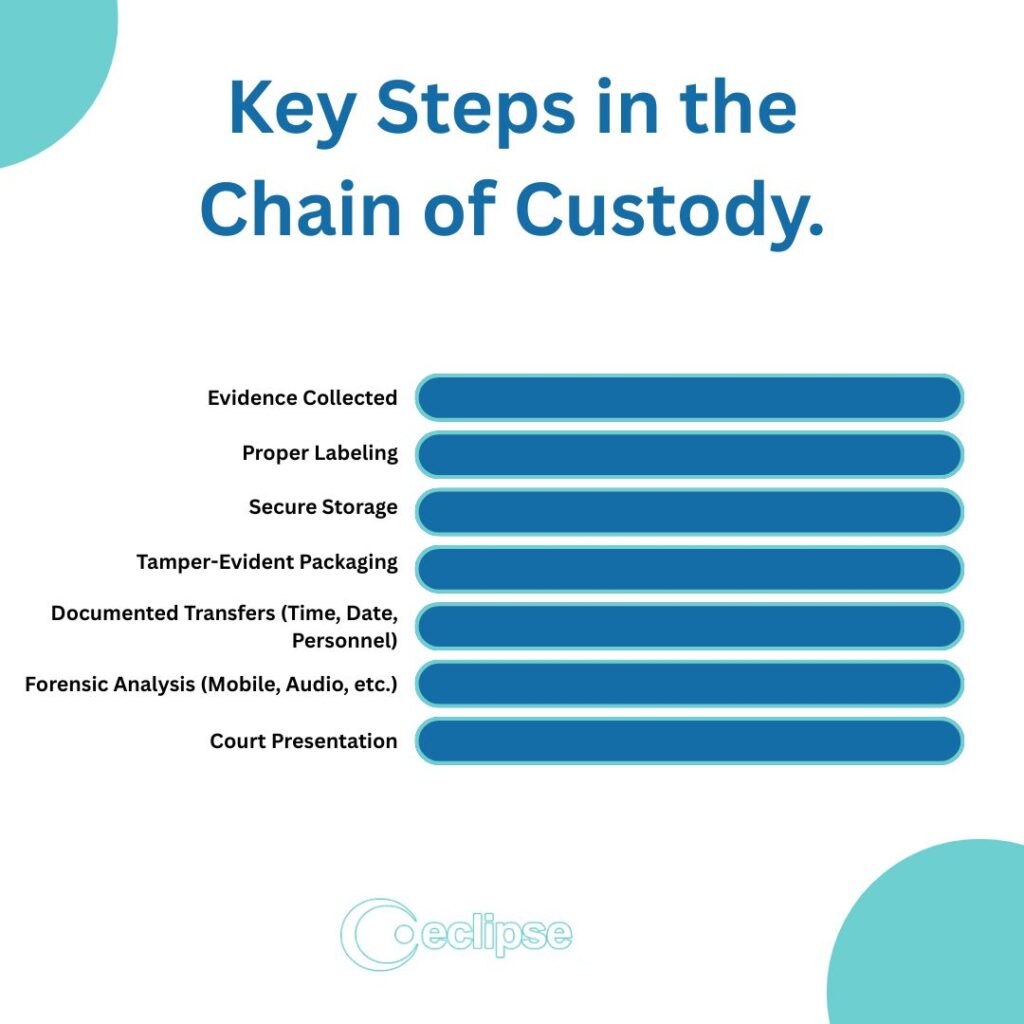
The chain of custody refers to the process of documenting the handling, transfer, and storage of digital evidence. Any break in this chain can compromise the validity of the evidence. Common chain of custody failures include:

Facebook and other apps on a phone

  • Unsecured Storage: Digital evidence must be stored in forensically sound environments to prevent tampering or corruption.
  • Inconsistent Documentation: Every action taken on a piece of digital evidence should be recorded. Failing to do so can make it inadmissible in court.
  • Lack of Verification: Before presenting evidence, forensic analysts must validate the data to confirm its accuracy.

A compromised chain of custody can result in wrongful convictions or case dismissals due to unreliable evidence.

Case 5: Flawed Audio Authentication in a High-Profile Trial

In a well-known legal case, an audio recording was presented as key evidence against a defendant. Prosecutors claimed that the recording contained incriminating statements. However, independent audio authentication services later determined that the recording had been edited, with spliced segments creating misleading context.

The case was dismissed after forensic experts demonstrated that the original audio had been manipulated. This highlights the importance of validating digital audio evidence before using it in legal proceedings.

How Digital Forensic Consultants Prevent Errors

A digital forensic consultant is essential for ensuring accuracy in investigations. Their role includes:

  • Using Advanced Forensic Tools: Consultants rely on specialized software and methodologies to analyze data accurately.
  • Conducting Independent Reviews: They cross-check findings to prevent misinterpretations.
  • Providing Expert Witness Testimony: If forensic errors are identified, consultants can testify in court to explain inaccuracies.
  • Identifying Fabricated or Tampered Evidence: Experts use forensic techniques to detect manipulated images, emails, and audio files.

Without forensic consultants, many misinterpretations of evidence would go unchallenged, leading to severe legal consequences. By learning from past mistakes and adopting rigorous forensic standards, we can prevent future injustices and uphold the integrity of digital investigations.

A gavel resting on a wooden block

At Eclipse Forensics, we specialize in uncovering the truth through expert digital forensic consulting, ensuring that misinterpreted evidence doesn’t lead to wrongful outcomes. Our team provides audio authentication services to detect tampering, verify recordings, and present accurate findings in court. With trusted expert witness testimony, we help attorneys, law enforcement, and private clients navigate complex digital investigations. Don’t let forensic errors compromise your case—contact Eclipse Forensics today for precise, reliable forensic analysis.

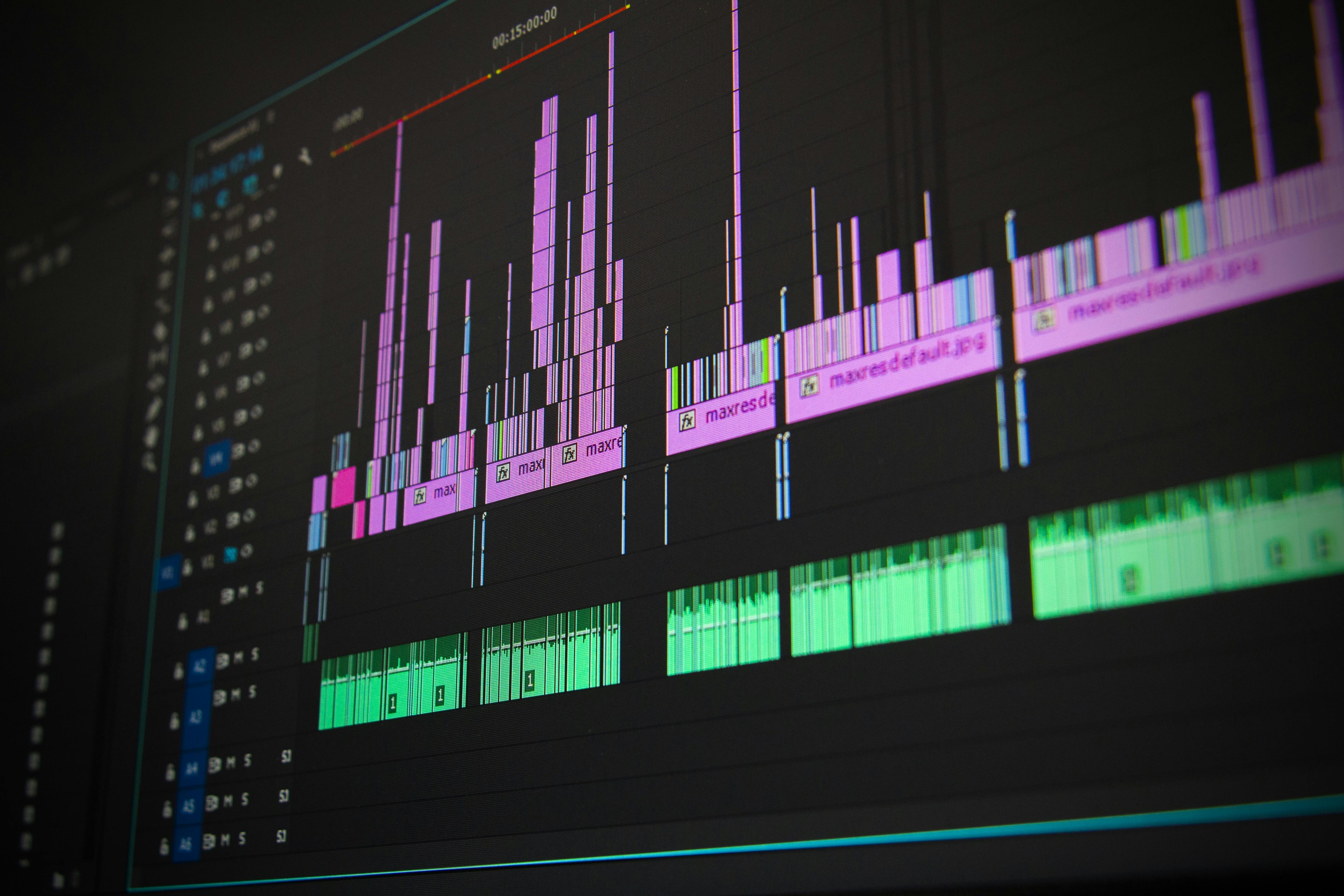
An image of a person using an audio mixing console

Forensic Audio Authentication: Techniques and Tools for the Modern Investigator

With the AI Voice Generator Market likely to reach a value of $20.4 billion by 2030, the escalation of deepfake technology and audio manipulation is no surprise. Thus, forensic audio authentication has become a crucial tool for modern investigators.

According to the National Institute of Standards and Technology (NIST), advancements in artificial intelligence have made audio forgeries more convincing than ever, posing significant risks in legal proceedings and criminal investigations.

Digital forensic experts use cutting-edge techniques such as spectrographic analysis, waveform comparison, and electronic signature verification to determine the authenticity of an audio recording.

With the right tools and expertise, forensic investigators can uncover tampered recordings, ensuring that truth prevails in courtrooms, security investigations, and media verification processes.

1. The Importance of Forensic Audio Authentication

Audio recordings are often presented as evidence in criminal trials, civil disputes, and corporate investigations. However, with modern editing software, malicious actors can manipulate recordings to mislead courts and authorities. Forensic audio authentication ensures that recordings are genuine, preventing wrongful accusations and protecting the integrity of evidence.

audio

2. Key Elements of Audio Authentication

Authentication involves determining whether an audio file has been altered, identifying inconsistencies, and verifying its originality. Experts analyze the following elements:

Metadata: Information about the file’s creation, modification, and format.

Acoustic properties: Examining waveform consistency, background noise, and voice characteristics.

Digital signatures: Checking for embedded markers or cryptographic hashes that validate originality.

3. Spectral and Waveform Analysis

One of the most common techniques in audio forensic analysis is spectral and waveform analysis. Using advanced software, investigators can visualize an audio file’s frequency spectrum to detect anomalies.

Spectrogram Analysis: Helps identify frequency inconsistencies that indicate splicing or tampering.

Waveform Analysis: Examines amplitude and patterns for unnatural breaks or edits.

4. Electrical Network Frequency (ENF) Analysis

ENF analysis is a powerful forensic tool used for audio authentication. This technique relies on the variations in electrical power frequency (50Hz or 60Hz) recorded in the background of an audio file.

  • If the ENF pattern matches the expected grid frequency at the time of recording, the audio is likely authentic.
  • Deviations or irregularities suggest manipulation or synthetic generation.

An image of an audio mixer

5. Voice Biometrics and Speaker Identification

Digital forensic experts use voice biometrics to analyze speaker characteristics and verify authenticity. This technique involves:

Formant Analysis: Evaluates vocal tract resonance and speech patterns.

Pitch and Intonation Analysis: Identifies unnatural modulations that indicate splicing.

AI-Based Speaker Recognition: Uses machine learning to compare voiceprints against known samples.

6. Background Noise Analysis

Every audio recording contains background noise that can serve as a fingerprint for audio authentication. Experts analyze:

Ambient Sounds: Traffic, birds, or machinery can indicate the recording’s environment.

Room Tone Matching: Ensures consistency in background noise across the entire file.

Noise Print Analysis: Detects artificial insertions or deletions.

7. Deepfake and Synthetic Audio Detection

With the rise of AI-generated voices, digital forensic experts now use specialized tools to detect synthetic audio. Techniques include:

Neural Network Analysis: Identifies artifacts associated with AI-generated speech.

Prosody and Speech Rhythm Evaluation: Detects unnatural timing and pronunciation.

Adversarial Testing: Challenges AI-created audio with detection algorithms.

8. Audio File Metadata Examination

Metadata is essential for verifying an audio file’s origin and integrity. Experts inspect:

Creation and Modification Dates: Identifies inconsistencies.

Device Information: Checks if the recording device matches the expected source.

Compression and Encoding Details: Detects recompression artifacts indicative of edits.

An image of a person sitting in front of an audio mixer

9. Tampering Detection through Signal Analysis

Signal analysis techniques help detect subtle manipulations. Methods include:

Phase Analysis: Identifies shifts that suggest inserted segments.

Harmonic Distortion Detection: Finds anomalies in the harmonic structure.

Time-Domain Examination: Locates abrupt changes in signal continuity.

10. Forensic Audio Authentication Tools

Several industry-leading tools assist digital forensic experts in analyzing audio files. Some of the most widely used include:

Forensic Audio Workstation (FAW): Provides a comprehensive suite for waveform and spectral analysis.

iZotope RX: Advanced noise reduction and spectral editing capabilities.

Audacity (for initial inspection): Open-source tool used for basic waveform visualization.

Sonus Investigate: AI-powered deepfake detection and voice analysis.

Cognitech Audio Examiner: Specialized for voice authentication and noise filtering.

11. Challenges in Audio Authentication

Despite technological advancements, forensic audio authentication presents challenges:

High-Quality Editing Tools: Modern software allows for nearly undetectable modifications.

Encryption and Compression Artifacts: Some files lose critical data due to compression.

Legal Admissibility: Courts require rigorous validation to accept audio evidence.

An image of a person using an audio mixer

12. Legal and Ethical Considerations in Audio Authentication

Forensic audio authentication isn’t just about technical analysis—it also involves legal and ethical considerations. Digital forensic experts must ensure that their methods comply with legal standards and that evidence is collected and analyzed without violating privacy laws. Key considerations include:

Chain of Custody: Ensuring proper documentation of audio evidence from collection to courtroom presentation.

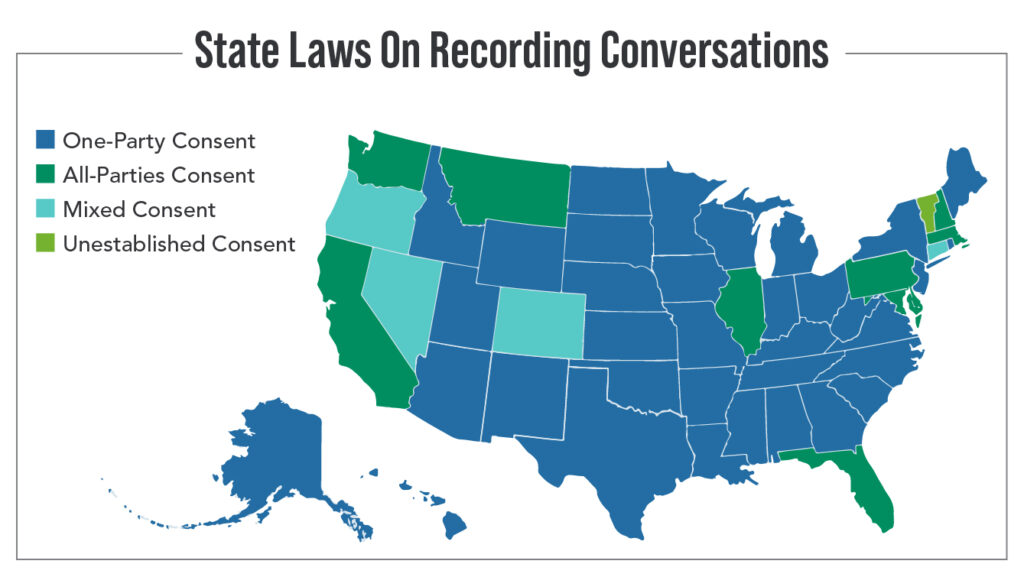
Privacy Laws: Complying with regulations regarding recorded conversations, such as consent requirements.

Expert Testimony: Providing clear and admissible findings in court.

13. The Role of Machine Learning in Audio Forensics

Machine learning is revolutionizing forensic audio authentication by automating analysis and improving detection accuracy. Some applications include:

Pattern Recognition: Identifies subtle anomalies that indicate tampering.

Deep Learning Models: Trained to detect synthetic voices and audio deepfakes.

Automated Report Generation: Reduces manual workload by providing instant analysis summaries.

14. Enhancing Quality for Better Audio Authentication

Before authentication can be performed, digital forensic experts often enhance the quality of audio recordings to remove noise and clarify speech. Common enhancement techniques include:

Noise Reduction: Removing background interference to isolate speech.

Equalization and Filtering: Adjusting frequency levels to improve clarity.

Time and Speed Adjustments: Correcting distortions caused by recording equipment.

Enhancing audio quality helps digital forensic experts conduct more accurate analyses and ensures that key details are preserved during authentication.

15. Real-World Cases Involving Forensic Audio Authentication

Forensic audio authentication has played a critical role in many high-profile legal cases. Some notable examples include:

Criminal Trials: Authenticating 911 calls and covert recordings as admissible evidence.

Corporate Fraud Investigations: Verifying the legitimacy of recorded business conversations.

Political Scandals: Exposing doctored recordings used in misinformation campaigns.

These real-world cases highlight the importance of forensic audio authentication in ensuring justice and preventing manipulation of evidence.

16. The Impact of Emerging Technologies on Audio Authentication

As technology continues to evolve, new challenges and opportunities arise in forensic audio authentication. Emerging trends include:

Blockchain for Audio Verification: Securely timestamping recordings to prove authenticity.

Quantum Computing: Potentially enhancing forensic analysis with faster processing capabilities.

AI-Generated Voice Replication: Increasing the need for more advanced detection techniques.

Staying ahead of these technological advancements is crucial for forensic experts to maintain the reliability and credibility of audio evidence in investigations.

An image of a person using an audio mixer

17. The Role of Multimodal Forensic Analysis

Forensic audio authentication is often combined with other forensic techniques to strengthen the reliability of evidence. Multimodal forensic analysis involves:

Audio-Video Synchronization: Ensuring that an audio recording matches its corresponding video.

Linguistic Analysis: Examining speech patterns, dialects, and language inconsistencies.

Cross-Verification with Other Evidence: Comparing audio findings with phone records, witness statements, or environmental factors.

Using a multimodal approach enhances the accuracy of forensic investigations and provides a more comprehensive analysis of audio evidence.

18. The Future of Forensic Audio Authentication

As audio editing technology evolves, so do forensic authentication methods. Emerging trends include:

AI-Powered Authentication: Machine learning models trained to detect deepfake and tampered audio.

Blockchain for Audio Integrity: Embedding blockchain hashes to prove authenticity.

Real-Time Audio Verification: Live authentication systems to prevent fraudulent recordings.

The Bottom Line

Forensic audio authentication is a vital discipline that ensures the credibility of audio evidence in legal and investigative settings. Digital forensic experts can confidently determine whether an audio recording has been tampered with by leveraging advanced techniques like spectral analysis, ENF matching, and AI-based detection.

While challenges persist, ongoing innovations in forensic technology continue to strengthen the ability to detect and prevent audio fraud. Digital forensic experts must stay ahead of emerging threats and continuously adopt the latest tools to maintain the integrity of digital evidence.

Ensure the Integrity of Your Audio Evidence with Eclipse Forensics

At Eclipse Forensics, we specialize in advanced forensic audio authentication techniques to ensure the integrity of your recordings. Whether you’re involved in a legal case, corporate investigation, or personal dispute, our cutting-edge tools and expert analysis can verify the authenticity of your audio files.

Don’t risk the reliability of your evidence—trust our digital forensic experts to identify any tampering or manipulation. Contact Eclipse Forensics today to secure your audio recordings and protect your case with trusted, expert audio forensic services. Let us help you preserve the truth.

A gavel resting on a wooden block

Expert Witness Testimony: Navigating Audio Forensics in Courtrooms

In today’s digital age, the role of audio forensics in courtrooms has become increasingly vital. From criminal investigations to civil disputes, expert testimony backed by forensic analysis can determine the authenticity of audio evidence. This blog explores how digital forensic experts navigate audio authentication services, the role of forensic image analysis, and the standards required for admissibility in court.

Understanding Audio Forensics in Courtrooms

Audio forensics involves the scientific analysis of sound recordings to verify authenticity, identify speakers, enhance clarity, and detect tampering. This discipline plays a crucial role in legal proceedings, where recorded conversations, voicemails, and other audio materials serve as evidence.

A digital forensic expert applies specialized techniques to analyze:

  • The integrity of audio files
  • Background noises that may provide context
  • Speaker identification
  • Evidence of edits, splicing, or alterations

These analyses ensure that the presented audio is genuine and untampered, making it admissible in court.

The Role of Digital Forensic Experts in Legal Cases

A digital forensic expert provides technical insight to attorneys, judges, and jurors. Their expertise helps establish the credibility of audio evidence by determining whether it has been manipulated.

Key Responsibilities of a Digital Forensic Expert

  1. Authentication of Audio Files
    • Verifying metadata to check timestamps, format conversions, and potential tampering.
    • Analyzing waveform structures to identify unnatural disruptions.
  2. Enhancement of Poor-Quality Recordings
    • Reducing background noise and improving speech intelligibility.
    • Isolating voices from overlapping sounds.

Man analyzing video and audio

  1. Speaker Identification and Verification
    • Comparing voiceprints using spectrographic analysis.
    • Evaluating speech patterns and unique vocal characteristics.
  2. Detection of Audio Tampering
    • Identifying splices, edits, or anomalies in recordings.
    • Cross-referencing audio with other digital evidence.

The findings of a digital forensic expert can significantly impact case outcomes by confirming the reliability of audio evidence.

Audio Authentication Services: Ensuring Evidence Integrity

Courts require Audio Authentication Services to confirm the validity of sound recordings. These services assess whether an audio file has been altered or manipulated in any way that could misrepresent the truth.

Methods Used in Audio Authentication

  1. Spectrographic Analysis
    • Visual representation of sound frequencies to detect inconsistencies.
    • Used for identifying background noises and speaker variations.
  2. Electric Network Frequency (ENF) Analysis
    • Measures fluctuations in electrical signals recorded in audio to match timestamps.
    • Helps determine if a recording was edited or recorded at a different time.
  3. Metadata Examination
    • Analyzes file properties, such as timestamps, format, and codec information.
    • Checks for signs of re-encoding or tampering.
  4. Acoustic Environment Matching
    • Compares background noise signatures to establish location consistency.
    • Helps verify whether the audio was recorded in the stated environment.

These techniques ensure that audio presented in court remains unaltered and trustworthy.

The Intersection of Audio Forensics and Forensic Image Analysis

In many cases, forensic image analysis complements audio forensics in courtrooms. Surveillance footage, body cam recordings, and mobile phone videos often contain both visual and audio elements, requiring comprehensive forensic evaluation.

A document with a stamp that reads ‘guilty

How Forensic Image Analysis Supports Audio Investigations

  1. Synchronization of Audio and Video
    • Ensures timestamps align between audio and video files.
    • Identifies potential mismatches that could indicate tampering.
  2. Lip Sync and Speech Verification
    • Cross-referencing speaker mouth movements with audio content.
    • Detecting discrepancies in speech-to-visual timing.
  3. Frame-by-Frame Examination
    • Identifying inconsistencies in lighting, shadows, or digital artifacts.
    • Determining whether the video has been edited separately from the audio track.

By combining audio authentication services with forensic image analysis, experts provide courts with a more comprehensive view of digital evidence.

Admissibility of Audio Forensic Evidence in Court

For audio forensics in courtrooms to be effective, the evidence must meet legal standards for admissibility. Courts evaluate audio recordings based on:

  1. Authenticity
    • Provenance of the recording must be clear and verifiable.
    • Authentication through forensic analysis ensures reliability.
  2. Chain of Custody
  3. Expert Witness Testimony
    • Digital forensic experts must explain their methodology and findings.
    • Testimony must be clear, credible, and based on scientific principles.
  4. Compliance with Legal Standards
    • Must adhere to rules of evidence, such as the Daubert Standard(requiring scientific validity) or the Frye Standard (requiring general acceptance in the forensic community).

Failure to meet these standards can lead to the exclusion of crucial audio evidence.

Challenges in Audio Forensics and Legal Proceedings

Despite its importance, audio forensics in courtrooms faces several challenges:

Low-Quality Recordings

  • Poorly recorded or distorted audio can limit forensic analysis.

Person holding a lit-up mobile phone in their hand

Deepfake and AI-Generated Voices

Legal and Privacy Issues

  • Unauthorized recordings may not be admissible in some jurisdictions.

Subjective Interpretation

  • Background noises or ambiguous speech may lead to differing expert opinions.

To overcome these challenges, forensic experts rely on cutting-edge technology and standardized procedures.

Emerging Technologies in Audio Forensics

As technology advances, so do the tools used in audio forensics in courtrooms. New developments enhance the accuracy and efficiency of forensic investigations, making it easier to detect tampering and verify authenticity.

Artificial Intelligence and Machine Learning

AI-powered tools are revolutionizing audio authentication services by automating the detection of anomalies in recordings. Machine learning algorithms can:

  • Identify unnatural speech patterns indicative of deepfake technology.
  • Enhance voice recognition by filtering out background noise.
  • Detect tampering through subtle distortions that might be undetectable to the human ear.

Blockchain for Audio Evidence Integrity

Blockchain technology is increasingly being explored for securing forensic evidence. By using decentralized digital ledgers, courts can:

Man with his hand on a cassette tape

  • Track the chain of custody for audio files.
  • Ensure that once recorded, files remain unaltered.
  • Provide timestamp verification to confirm recording authenticity.

3D Audio Analysis

This technique allows forensic experts to:

  • Pinpoint the location of sound sources in a recording.
  • Analyze reverberation and acoustics to verify the recording environment.
  • Reconstruct audio scenes to determine if events happened as described.

By integrating these emerging technologies, digital forensic experts can provide even more precise and reliable analyses in legal cases.

The Impact of Deepfake Technology on Audio Forensics

Deepfake technology has introduced new challenges for audio authentication services. With AI-generated voices becoming increasingly realistic, the risk of fabricated evidence entering courtrooms has grown.

How Deepfake Audio Works

Deepfake audio is created using AI models that can:

  • Mimic a person’s voice with only a few minutes of sample audio.
  • Generate realistic conversations that never actually happened.
  • Modify existing recordings by inserting new words or phrases.

Close-up shot of a man working on a screen

Detecting Deepfake Audio

Forensic experts rely on:

  • Spectrographic Analysis– Examining frequency patterns for irregularities.
  • Waveform Consistency Checks– Identifying unnatural fluctuations in pitch and tone.
  • AI Detection Software– Using neural networks to flag potential deepfake content.

Legal Implications

The rise of deepfake audio poses significant legal concerns, including:

  • Increased difficulty in distinguishing authentic recordings from manipulated ones.
  • The potential for wrongful convictions or false accusations.
  • A higher burden of proof on forensic analysts to validate evidence.

As deepfake technology evolves, audio forensics in courtrooms must adapt to counteract the risks associated with synthetic speech.

For legal professionals, understanding the science behind audio forensics is essential in building strong, credible cases. Whether verifying the authenticity of recordings or identifying tampered evidence, digital forensic experts play a crucial role in courtroom proceedings.

Uncover the Truth with Expert Forensic Audio Analysis

At Eclipse Forensics, our digital forensic experts use advanced audio authentication services and forensic image analysis to detect tampering, enhance clarity, and verify recordings. Whether you need expert forensic video analysis or forensic audio analysis, trust our team to deliver precise, court-admissible results. Contact Eclipse Forensics today for professional digital forensic services tailored to your legal needs.