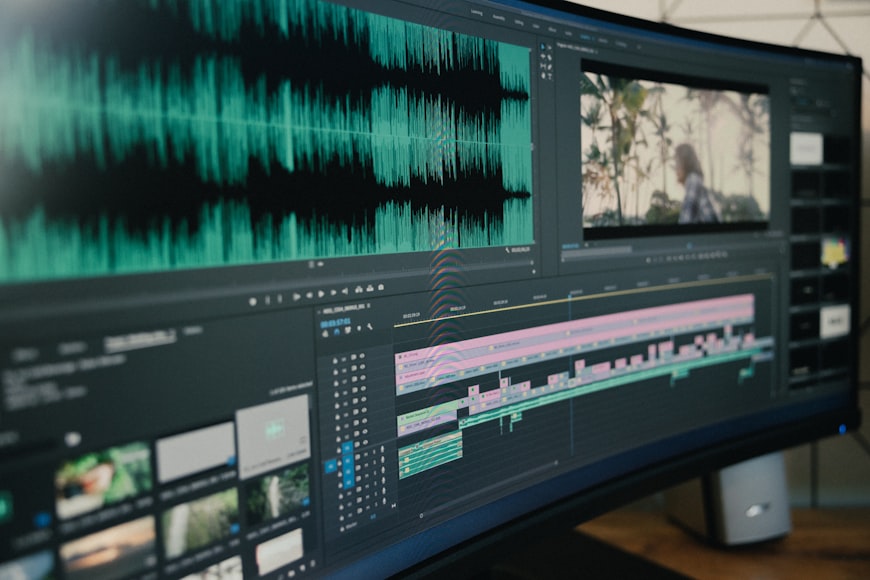
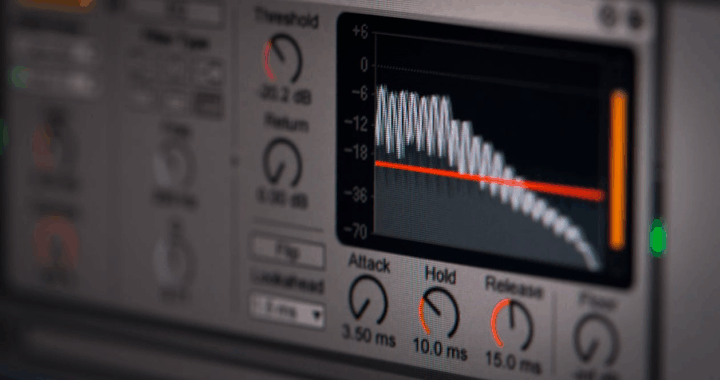
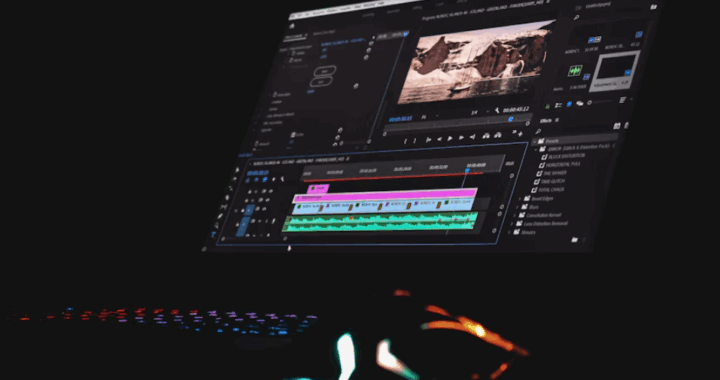
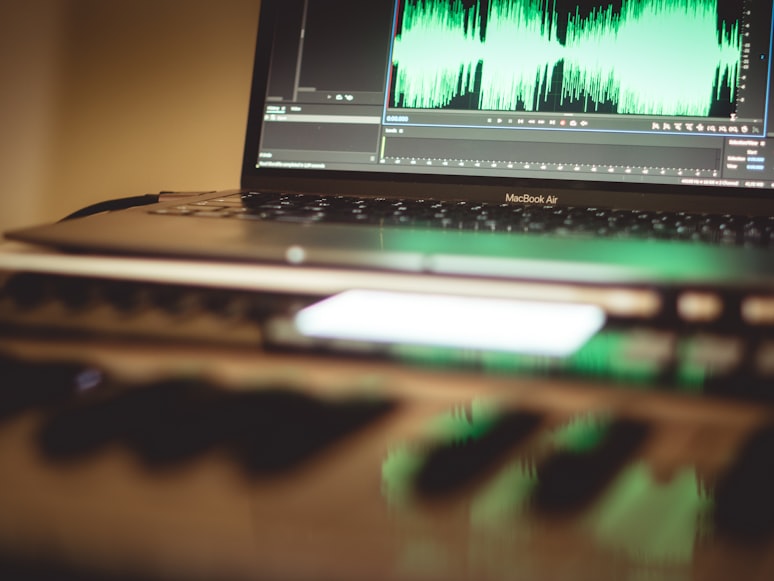
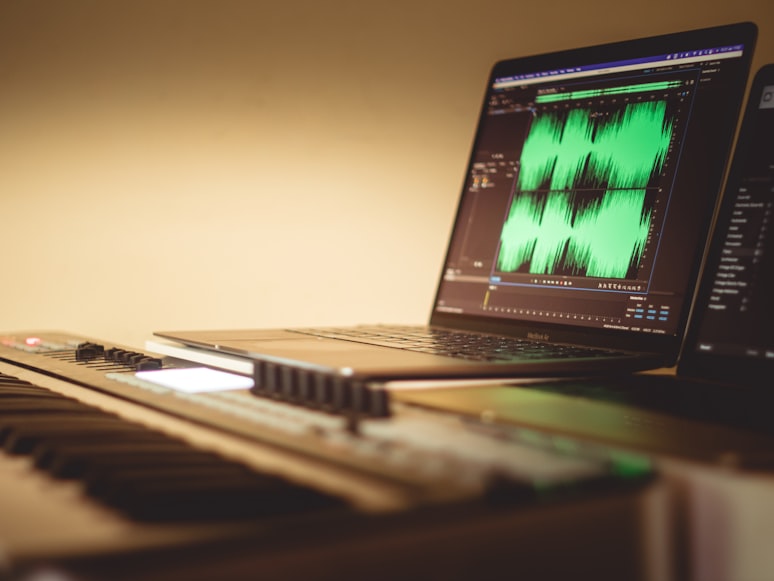
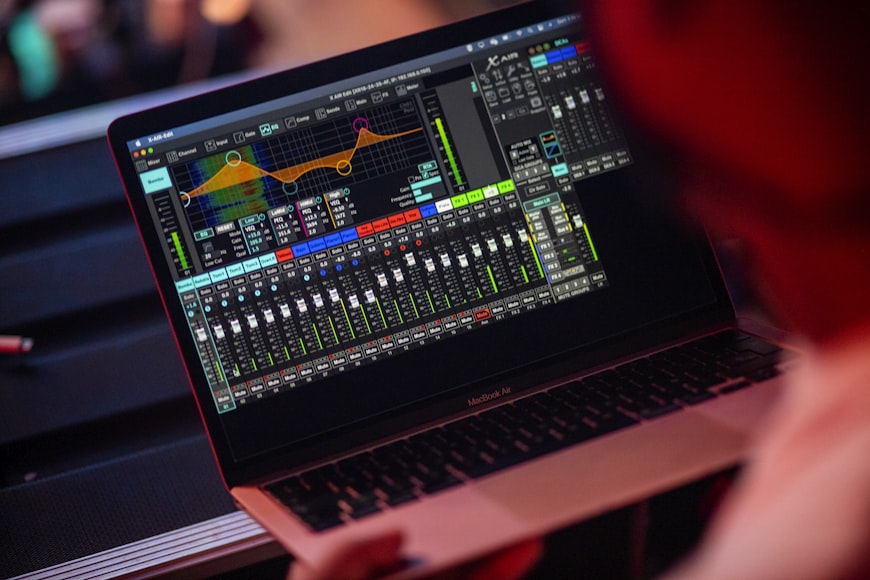
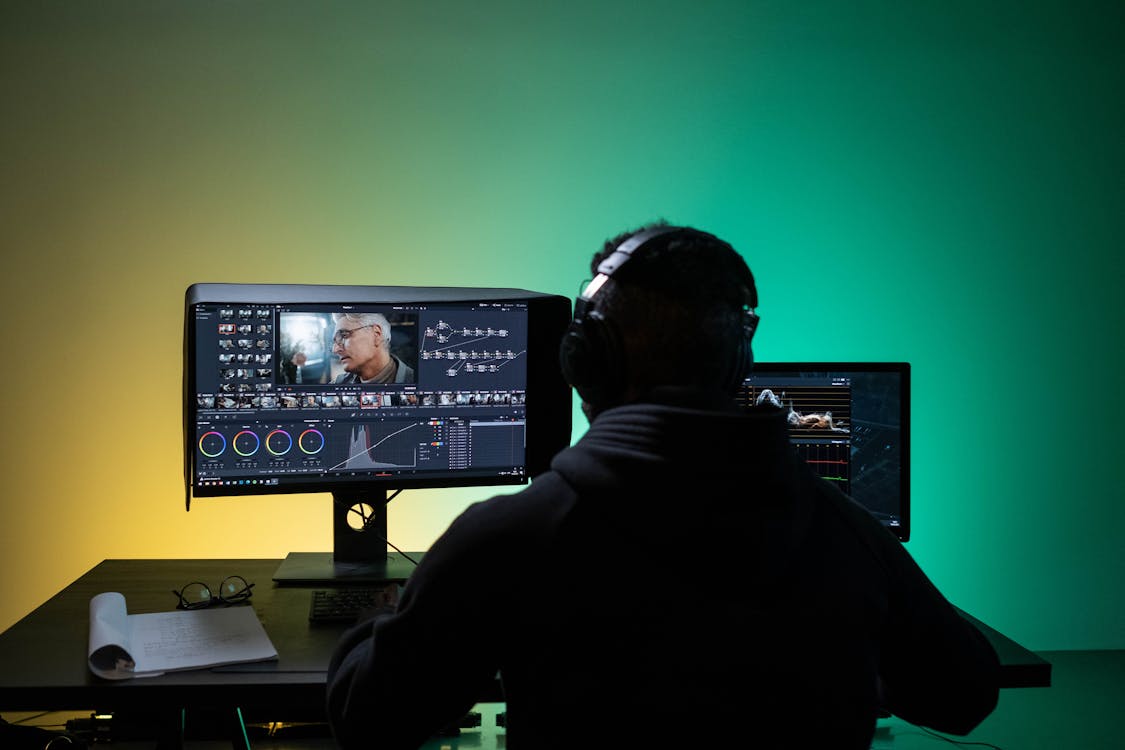
An expert removing noise from an audio.

From Noise to Evidence: How Audio Forensics Enhances Clarity

In today’s digital age, recorded audio plays a vital role in investigations, trials, and legal disputes. Yet, not all recordings are captured in perfect conditions.

Background chatter, environmental interference, and poor recording equipment often make conversations difficult to understand. This is where speech enhancement forensics steps in, transforming unclear recordings into reliable evidence that can withstand courtroom scrutiny.

Why Clarity Matters in Legal Evidence

A muffled voice or overwhelming background noise can change the trajectory of a case. If words are misheard or context is misunderstood, it may create doubt in the courtroom. Forensic specialists use advanced tools and proven techniques to reduce noise and clarify speech, ensuring voices are understandable and transcripts are accurate. In some cases, professionals like a forensic audio specialist may be called to testify about the methods used, giving courts confidence in the evidence’s reliability.

The Process Behind Speech Enhancement Forensics

Enhancing speech is not just about amplifying volume. It involves a careful, scientific process of isolating voices, filtering out irrelevant sounds, and correcting distortions. Sophisticated software helps remove hums, clicks, and echoes while retaining the authenticity of the voice itself.

This process is particularly valuable when combined with broader services such as forensic audio services and video forensic services, where both audio and visual components may be analyzed together to ensure evidence is clear and trustworthy.

Applications in Real-World Cases

The need for speech enhancement extends across civil and criminal matters. In criminal investigations, enhanced recordings may reveal critical statements otherwise lost in noise. In civil litigation, they may prove the authenticity of a disputed conversation or agreement.

Specialists often collaborate with other experts, such as a forensic computer analyst or a forensic video analysis expert, to piece together digital activities alongside voice recordings. This multidisciplinary approach strengthens cases and provides courts with comprehensive, defensible insights.

A forensic audiospecialist at work.

Beyond Clarity: Authenticating the Evidence

Improving clarity is only part of the job. Courts must also be assured that recordings have not been altered. That’s why audio authentication services and tools that help authenticate audio forensics are often integrated with enhancement work.

These services confirm that a recording is genuine, unedited, and accurately represents what it claims to capture. By combining clarity with authenticity, forensic teams deliver evidence that is both understandable and admissible.

At Eclipse Forensics, we specialize in transforming unclear audio into powerful courtroom evidence. Our team provides expert audio forensic services that not only enhance speech but also ensure authenticity through our trusted audio authentication services.

With decades of experience, we combine cutting-edge technology and proven methodology to support both legal teams and law enforcement. Whether you need a digital forensic consultant to guide your case or a team skilled in digital video forensics, we are here to help. Trust us to clarify, authenticate, and present audio evidence that makes a difference when it matters most.

Contact us now.

close-up of a white and black digital device displaying an audio graph

Audio Authenticity: Spotting Edited or Doctored Recordings

Audio recordings are often used as vital pieces of evidence in legal proceedings. However, with today’s editing software easily accessible, audio manipulation has become more common—and more difficult to detect without professional tools. Ensuring audio authenticity for the court requires a careful and technical evaluation by an experienced specialist who can examine the content for signs of tampering.

In this process, the work of an audio forensic expert becomes essential. By analyzing the structure, waveform patterns, and background inconsistencies, they help determine whether a recording has been cut, altered, or spliced in ways that could affect its legal standing.

Detecting Splices and Edits in Recordings

One of the most common forms of manipulation in audio evidence is the insertion or removal of segments. These alterations can shift context, hide key information, or make a conversation appear misleading. To detect such edits, an audio forensic expert uses spectral analysis and waveform comparisons. These tools reveal abrupt transitions, unnatural gaps, or overlaps that indicate interference with the original timeline.

For example, if a speaker’s voice pattern is consistent and then suddenly changes in pitch or volume, it may signal that two different audio sections have been combined. Similarly, background noises such as hums, clicks, or ambient sounds often shift unnaturally after a splice, giving trained ears and software the evidence needed to flag manipulation.

focus on headphones placed in front of two screens with audio graphs and keys

Analyzing Background Noise and Frequency Consistency

Every environment has its own acoustic signature. Even small shifts in the position of a recording device can impact how background noise registers. This makes background consistency one of the most telling factors in verifying a recording’s integrity.

During audio authentication services, experts compare background frequencies throughout the recording. A sudden disappearance or alteration of ambient noise—such as a ceiling fan, traffic hum, or footsteps—can indicate that a section was inserted from a different source or recorded under different conditions. An audio forensic expert can identify these inconsistencies and determine whether the recording presents a continuous, unbroken event or a manipulated version of reality.

Timing Analysis and File Properties

Technical evaluation of file properties also supports the authentication process. Timing metadata, bit rates, and encoding formats all provide valuable clues. Files that show irregular timestamp patterns or multiple compression layers may have been processed more than once, suggesting possible tampering.

A digital forensic consultant skilled in examining audio file structures can assess whether the file has remained in its original state or if software has been used to edit its contents. These findings are especially important when preparing for expert witness testimony, where the chain of custody and file integrity are often challenged.

Building Trust in Sound Evidence

Establishing audio authenticity for the court is not just about reviewing what was said—it’s about ensuring the recording hasn’t been altered to mislead or conceal. The expertise of an audio forensic expert, along with support from audio authentication services and insights from a digital forensic consultant, strengthens the legal validity of any audio recording. When accuracy and credibility matter most, trust us at Eclipse Forensics for professional support that stands up in court.

Contact us today.

Forensic audio enhancement in process.

Forensic Audio Enhancement: Turning Noise into Clear Evidence

In the pursuit of truth, audio can be one of the most revealing—and most complicated—forms of evidence. In countless legal and investigative cases, recorded conversations, voicemails, emergency calls, and surveillance audio hold critical information. However, these recordings often come with a major obstacle: noise.

Wind, static, echo, and overlapping voices can obscure important words or sounds. That’s where forensic audio enhancement comes into play.

At Eclipse Forensics, we specialize in turning chaotic, distorted audio into usable, intelligible, and admissible evidence. Through advanced tools and expertise, we help attorneys, investigators, and agencies uncover what’s truly being said—and ensure it holds up in court.

Understanding the Basics of Forensic Audio Enhancement

Forensic audio enhancement is a specialized process that involves improving the clarity of audio recordings by reducing or eliminating unwanted noise. It’s used to isolate voices, correct volume imbalances, and clarify words or sounds that are otherwise difficult to detect.

We work with a variety of recordings, including police body cam audio, 911 calls, surveillance tapes, mobile phone conversations, and more. As audio forensic experts, we ensure the enhancement process is conducted with scientific rigor so the results can be used confidently in court.

How Audio Authentication Services Strengthen Evidence

Before we enhance any audio, we often begin by verifying its authenticity through audio authentication services. This step is essential to confirm that the recording is original and has not been altered or tampered with. We use waveform analysis, metadata reviews, and software tools to detect anomalies in the file structure or signal chain.

This authentication process helps legal teams authenticate video forensics and audio evidence alike—reinforcing the reliability of any materials presented in court. It’s not enough to hear the words; those words must be provably unedited and trustworthy.

An expert providing audio forensic services.

Advanced Tools Used by Audio Forensic Experts

At Eclipse Forensics, we rely on cutting-edge tools that allow us to conduct precise and non-destructive audio enhancements. These include spectral editors, noise reduction software, filtering systems, and multiband equalizers.

Our audio forensic services are designed to address common challenges such as:

  • Hiss or static interference
  • Background conversations or noise
  • Room echo and reverberation
  • Muffled or clipped speech
  • Low-volume audio

Each case is unique, so we tailor our approach based on the recording’s format, quality, and relevance to the investigation. This scientific and case-by-case methodology sets us apart as trusted cyber forensic experts.

Why Legal Teams Trust Eclipse Forensics

Our audio analysis doesn’t just improve sound—it improves the strength of legal arguments. Attorneys trust us because we understand both the science and the legal process. From pre-trial discovery to expert witness testimony, our team is committed to helping clients make the most of their evidence.

We support attorneys by providing detailed reports, annotated transcripts, and synchronized exhibits. These tools help juries and judges understand the significance of audio in the context of a case, without the confusion of poor-quality sound.

Our specialists are often called upon to deliver expert witness testimony on how an enhancement was performed and why the results are reliable. Whether it’s criminal defense, prosecution, civil litigation, or internal investigations, digital forensic services from Eclipse Forensics deliver results that stand up to scrutiny.

Integrating Audio and Video Forensics

In many cases, audio isn’t the only digital evidence available. That’s why our services often complement video forensic services and forensic video analysis.

Syncing enhanced audio with digital video forensics can help establish a complete and credible timeline of events. For example, pairing surveillance footage with enhanced conversations or identifying background sounds that match visible activity helps build a stronger evidentiary narrative.

As a multidisciplinary team that includes forensic video analysis experts, forensic computer analysts, and digital forensic consultants, we can seamlessly integrate all types of digital evidence—ensuring nothing is lost in isolation.

Audio authentication services in process.

Real-Life Applications: What Forensic Audio Enhancement Can Reveal

Consider a criminal case where two suspects were recorded speaking quietly inside a moving car. The audio is distorted by engine noise, road vibration, and overlapping voices. Our enhancement process can isolate each speaker’s voice, reduce ambient noise, and clarify words previously inaudible.

In another case, a 911 call filled with screaming and background commotion was crucial to understanding the sequence of a domestic disturbance. Using audio forensic services, we enhanced the caller’s voice, identified background noises (like door slams and footsteps), and provided a time-synchronized transcript that supported the timeline.

Such results don’t just support the legal theory—they become key evidence for building or breaking a case.

Legal Admissibility: Ensuring Enhanced Audio Meets Court Standards

Enhancing audio isn’t just about making a recording easier to hear—it must also be legally admissible. Courts have strict requirements regarding the handling of digital evidence. Any enhancement must be scientifically sound, properly documented, and clearly explained.

Our team at Eclipse Forensics adheres to established forensic methodologies that align with court expectations. Every enhancement comes with supporting documentation that includes the original file, a detailed log of techniques used, and a comparison of before-and-after results.

Additionally, our audio forensic experts are fully prepared to testify on how and why the enhancement process was conducted. We ensure our work holds up under cross-examination, preserving the credibility of your case.

An audio forensic expert at work.

Challenges in Forensic Audio Enhancement

Not all audio can be fully restored, and understanding the limits is just as important as knowing the capabilities. Poor recording conditions, excessive compression, or device malfunction can sometimes make full recovery impossible.

However, our role is to extract as much clarity and meaning as the technology allows—without altering the original context or introducing misleading changes. We carefully evaluate each file to determine what’s realistically achievable. If an enhancement would compromise the integrity of the evidence, we advise clients accordingly.

That transparency has earned Eclipse Forensics a reputation for integrity and expertise across the legal and investigative communities.

Preparing for Trial: How We Support Legal Teams

Beyond enhancing audio, we play a crucial role in preparing evidence for trial. Our digital forensic consultants provide detailed reports and breakdowns of the enhancement process. We can prepare transcripts, visual sound maps, and time-stamped annotations that match the audio to events in question.

We also assist attorneys with expert witness testimony, explaining the science behind what was heard, what was filtered out, and what conclusions can be drawn. Judges and juries appreciate clarity, and our courtroom-ready materials help demystify the complex process of forensic audio enhancement.

Our team also frequently collaborates with other forensic professionals—like forensic video analysis experts, forensic computer analysts, and cell phone forensics experts—to ensure your case benefits from a full-scope, multi-angle review of the evidence.

An expert performing forensic audio enhancement.

Audio + Devices: Where Mobile and Audio Forensics Intersect

Many critical recordings today come from phones, tablets, or smart devices. Our ability to extract, preserve, and analyze such recordings puts us at the forefront of digital investigation. Using cell phone forensic services, we can recover deleted audio files, voicemail backups, or messaging apps that contain voice recordings.

Once obtained, those files are fed into our enhancement systems to isolate voices, reduce background interference, and prepare them for courtroom presentation. The combination of audio forensic services with mobile device data provides lawyers with a powerful, cross-verified toolkit.

This is especially useful in criminal cases, family law, workplace disputes, and civil litigation—anywhere sound and context matter.

Why Eclipse Forensics Is the Trusted Choice

We understand what’s at stake in every case. Whether it’s a single phone call or a long, multi-speaker conversation, we approach each file with the same precision, discretion, and urgency. Our work supports justice, and we don’t take that lightly.

As a trusted digital forensic expert and leading provider of audio forensic services, Eclipse Forensics offers unmatched experience, legal readiness, and scientific accuracy. Our team combines technical expertise with real-world courtroom experience to deliver results that win cases and earn trust.

A cyber forensic expert enhancing audio.

Trust Eclipse Forensics for Thorough Audio Analysis

When every word matters, Eclipse Forensics delivers clarity, precision, and confidence. Our forensic audio enhancement services help attorneys and investigators turn distorted or low-quality recordings into clear, actionable evidence.

Whether you need audio forensic services, help with audio authentication services, or support from a qualified audio forensic expert, our team is ready to assist.

We also collaborate closely with professionals across digital forensic services, video analysis, and mobile data recovery. If your case relies on what was said—and proving it—Eclipse Forensics is your go-to partner for accurate results that stand up in court.

Contact us today to discuss your case and discover how our audio expertise can strengthen your legal strategy.

Black and white shot of a child using a mobile phone

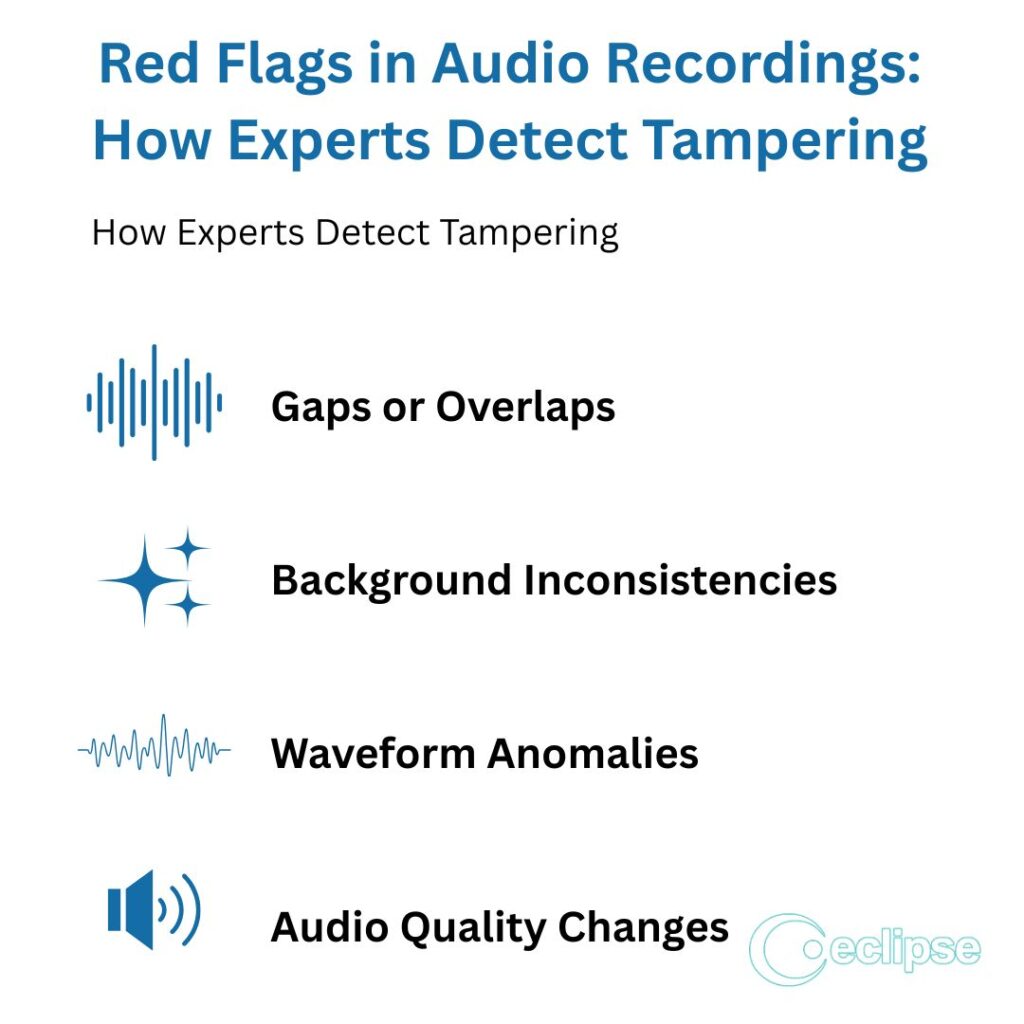
Red Flags in Audio Recordings: How Experts Detect Tampering

In legal investigations, journalism, and corporate security, audio recordings often serve as key pieces of evidence. But what happens when the authenticity of that audio is in question? This is where audio tampering detection comes into play—a critical component of forensic analysis that ensures integrity and truth in high-stakes scenarios. In this blog, we’ll explore how audio forensic experts identify tampering, the common red flags they look for, and how this work intersects with mobile device forensics and digital video forensics.

Man analyzing a video

Understanding Audio Tampering

Audio tampering refers to any unauthorized or deceptive modification of an audio recording. This can include deletions, insertions, splices, or manipulation of speech patterns to distort meaning. Tampering may be done to mislead listeners, alter evidence, or present a false narrative.

The ability to detect these alterations is crucial. False evidence can mislead courts, sabotage careers, or threaten public safety. Hence, audio tampering detection is an indispensable skill in forensic science, requiring a blend of technology, experience, and investigative techniques.

The Role of an Audio Forensic Expert

An audio forensic expert is trained to analyze sound recordings for signs of manipulation. Their job involves verifying authenticity, identifying edits, and presenting their findings in court if necessary. These experts use specialized tools and methodologies to examine recordings across multiple dimensions—such as waveform analysis, metadata inspection, and acoustic consistency.

Their analysis is often part of a broader forensic investigation that may include mobile device forensics and digital video forensics, providing a complete picture of events.

Red Flags Experts Look For in Audio Recordings

1. Inconsistent Background Noise

One of the most obvious signs of tampering is irregular or inconsistent background noise. Real-world environments have a continuous audio signature—ambient sounds like air conditioners, traffic, or room acoustics. A sudden change in these sounds might indicate that portions of the audio were inserted or deleted.

For example, if a speaker’s voice maintains the same volume and tone but the background ambiance shifts, it may suggest the clip has been spliced together from different recordings.

2. Unnatural Pauses or Speech Patterns

Human speech is fluid and generally consistent. If a recording features unnatural gaps, abrupt stops, or strange inflections, it may suggest that the audio has been edited. Audio forensic experts analyze speech rhythm, cadence, and pitch to detect anomalies that may not be perceptible to the average listener.

This includes checking for duplicated phrases or oddly timed silences that could signal content removal.

3. Spectral Discontinuities

Using spectrogram analysis, forensic analysts can visually inspect the frequency content of an audio file. Tampered sections often have frequency patterns that don’t align with the surrounding audio. These spectral discontinuities are difficult to hide and can reveal subtle edits, like overlapping cuts or inserted phrases.

Spectrograms provide a kind of “fingerprint” for the recording, and any break in the continuity is a strong red flag.

4. Metadata Irregularities

Every digital recording carries metadata—details like creation date, file type, recording device, and editing history. If a file’s metadata shows that it was modified after its alleged recording date or edited using software, that’s a critical clue for audio tampering detection.

Although metadata can be altered, a mismatch between the file’s declared history and forensic findings can prompt deeper investigation.

An Anonymous man using a screen in purple lighting

5. Digital Compression Artifacts

When audio is compressed, it often introduces artifacts—imperfections due to reduced data. If different sections of the same recording have varying compression artifacts, it may indicate they originated from separate sources and were stitched together. Audio forensic experts can analyze these discrepancies to reveal tampering.

Tools and Techniques in Audio Tampering Detection

1. Waveform Analysis

This method involves visually examining the audio’s waveform to detect irregularities in amplitude or timing. Sudden spikes, drops, or unnatural silences may indicate cuts or edits. Analysts look for discontinuities that stand out from the overall pattern of the audio.

2. Spectrogram Analysis

Spectrograms help visualize the frequency spectrum over time. Unlike waveforms that show volume, spectrograms display pitch, intensity, and sound texture. Inconsistencies here can signal splicing or signal insertion.

3. Electrical Network Frequency (ENF) Matching

ENF analysis is a powerful forensic tool that uses the background electrical hum recorded from power lines. Since this frequency fluctuates predictably, it can be matched with historical records to verify the time and authenticity of a recording.

4. Acoustic Environment Analysis

This involves evaluating the recording’s environmental acoustics, such as echo patterns or reverberation. If parts of a conversation allegedly occurred in the same location but show different acoustic properties, that’s a serious red flag.

Audio Tampering on Mobile Devices

With the widespread use of smartphones, many recordings under investigation originate from mobile devices. This introduces new challenges—and opportunities—in mobile device forensics. Experts not only analyze the audio file itself but also extract data from the device to verify:

  • When and where the recording was made (using GPS stamps)
  • Whether audio editing apps were used
  • If original files were replaced or renamed

An expert analyzing digital forensic data

For instance, mobile device forensics might uncover hidden cache files or cloud backups that contain unedited versions of the audio in question, helping to identify tampering.

Correlation with Digital Video Forensics

Tampered audio is often part of altered video content. In digital video forensics, analysts look at both the video and its accompanying audio to detect inconsistencies. Mismatched lip-syncing, inconsistent lighting, or background noise that doesn’t match the video can point to deeper manipulation.

For example, if a security footage clip has audio that doesn’t align with the visual actions—like gunshots occurring without visible flash or speech happening when lips are still—it raises suspicion. Cross-referencing findings from both audio tampering detection and digital video forensics offers stronger evidence of tampering.

The Legal Importance of Audio Integrity

Tampered recordings can destroy reputations or falsely incriminate individuals. This is why audio forensic experts often serve as expert witnesses in court, presenting scientific evidence about the authenticity—or lack thereof—of a recording.

In legal contexts, even the suspicion of tampering can weaken the credibility of evidence. Hence, thorough analysis and clear documentation are essential. A properly conducted forensic investigation can either validate the evidence or expose deceptive practices.

Real-World Cases of Audio Tampering

Case 1: Political Scandal

In a high-profile political investigation, an audio clip was released suggesting a government official’s involvement in corruption. Upon closer examination, audio forensic experts discovered spectral inconsistencies and abrupt changes in background noise. ENF analysis further confirmed that segments were recorded at different times. The expert testimony helped discredit the tape as manipulated.

Facebook and other apps on a phone

Case 2: Workplace Harassment Claim

An employee submitted a voice recording to support a harassment claim. However, the company’s legal team requested an independent review. Using audio tampering detection, the forensic analyst found duplicate phrases and irregular acoustic signatures. This supported the employer’s assertion that the recording had been altered.

Best Practices to Preserve Audio Integrity

To ensure recordings remain admissible and reliable, it’s crucial to follow best practices:

  • Always retain the original file.
  • Avoid converting formats unless necessary.
  • Document the chain of custody.
  • Use secure, time-stamped platforms to store audio.
  • Avoid editing or compressing the file after capture.

Following these practices minimizes the risk of accusations of tampering and maintains the integrity of the evidence.

The Value of Forensic Vigilance

As technology advances, so do methods of deception. Detecting audio tampering is no longer a matter of intuition—it’s a science that relies on data, tools, and expertise. Whether investigating criminal behavior, validating journalistic evidence, or resolving corporate disputes, the role of an audio forensic expert is more vital than ever.

With integration from mobile device forensics and digital video forensics, today’s forensic professionals have a robust toolkit for ensuring the truth is heard—literally. In a world where manipulated media can shape opinions and outcomes, forensic vigilance serves as the final barrier against misinformation.

A graph showing how audio tampering is detected

At Eclipse Forensics, we specialize in uncovering the truth behind audio, mobile, and video data. Whether you’re dealing with legal disputes, investigative journalism, or corporate concerns, our team of audio forensic experts provides precise audio tampering detection using cutting-edge technology. We analyze waveforms, spectrograms, and metadata to verify authenticity and expose hidden edits. Leveraging the latest in digital forensics, including mobile device forensics and digital video forensics, we ensure your evidence stands strong. Trust Eclipse Forensics to deliver clear, courtroom-ready reports backed by science. When accuracy matters most, count on our expertise to reveal what really happened, sound by sound, frame by frame. Contact us today for a confidential consultation.

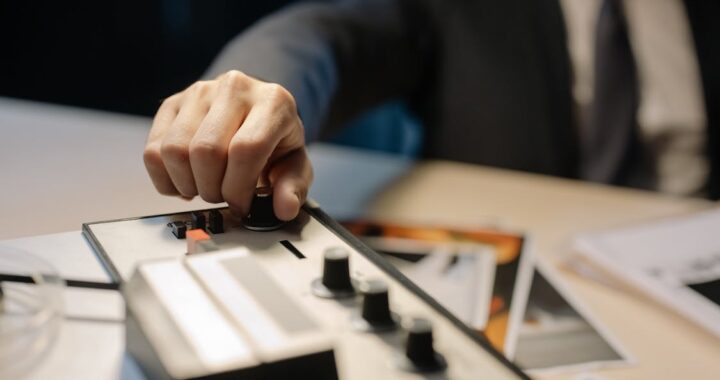
A forensic audio specialist turning the knob on a recorder

Phone Call Authentication: How Experts Uncover Fake Conversations

Have you ever wondered if a recorded phone call can be trusted? In a world where audio manipulation has become more accessible than ever, it’s a valid concern.

Phone call authentication is an essential process that verifies whether a recorded conversation is genuine, tampered with, or entirely fabricated. As digital evidence continues to influence court cases and investigations, the demand for audio authentication services and forensic verification is growing.

In this blog, we’ll break down how experts detect fake conversations, what forensic tools and techniques they use, and why phone call authentication plays a crucial role in modern justice.

Let’s dive into the fascinating world where technology meets truth.

Why Phone Call Authentication Matters

Recorded phone calls can serve as powerful evidence in legal disputes, criminal investigations, and even workplace conflicts. But audio evidence is only valuable if it’s proven to be authentic. In an age of deepfake technology and sophisticated audio editing tools, phone call authentication ensures that justice is based on facts, not fabrications.

Authentication not only verifies the integrity of a recording but also determines whether the voices, background noises, timestamps, and frequency ranges align with what’s expected from an unaltered recording. Without proper verification, a manipulated recording could lead to wrongful accusations or compromised investigations.

The stakes are high—especially in criminal trials or high-profile civil cases—where a single piece of audio can influence verdicts, settlements, or reputations. That’s why authentication isn’t just a technical step; it’s a safeguard for truth and fairness in any context where recorded conversations matter. For law enforcement, employers, journalists, and individuals alike, knowing that an audio file is genuine provides peace of mind and legal confidence.

Innocent written on a paper next to gravel

The Core Process of Phone Call Authentication

Phone call authentication involves a systematic approach where forensic audio specialists evaluate recordings using scientific principles. Here’s a look at the typical steps taken:

1. Initial Assessment and Chain of Custody

Before any analysis begins, forensic experts ensure the evidence was handled correctly. Establishing a clear chain of custody is crucial to preserving the integrity of the audio file.

2. Digital File Inspection

Experts examine the format, metadata, and digital signatures of the file. They look for anomalies like inconsistent timestamps, unusual codec information, or compression artifacts that could indicate tampering.

3. Waveform and Spectral Analysis

A visual representation of the audio signal allows forensic specialists to detect unnatural changes. Spectrograms reveal frequency shifts, background inconsistencies, or cut-and-paste signs that the human ear might miss.

4. Voice Identification

In some cases, experts compare voice samples to verify speaker identity. Using biometric voice analysis and comparing pitch, tone, and cadence helps determine if the speaker is indeed who they claim to be.

5. Background Noise Evaluation

Ambient noise can serve as an authentication marker. Analyzing the consistency of background sounds like traffic, birds chirping, or a clock ticking can show if parts of the recording were spliced or modified.

6. Editing Detection

Specialized software is used to detect edits, deletions, or insertions. Discontinuities in the waveform or spectral fingerprint can highlight where manipulation occurred.

7. Report Generation and Expert Testimony

Once the analysis is complete, a forensic audio specialist compiles a detailed report. This documentation may be used in court, often accompanied by expert testimony to explain the findings.

A gravel in front of a judge signing a court case verdict

Tools of the Trade

Forensic audio experts rely on a suite of sophisticated tools and technologies to perform their analysis. Here are a few key examples:

  • Spectrogram Analysis Software: Tools like Adobe Audition, iZotope RX, and forensic-specific platforms offer high-resolution views of audio frequency and intensity.
  • Voice Biometrics: Used to compare voice samples, this tech analyzes unique vocal patterns.
  • Audio Editing Logs: Advanced software can generate logs to show if and when edits were made.
  • Metadata Extraction Tools: Reveal hidden information embedded in digital files, such as recording time, device used, and software history.

Real-Life Applications of Phone Call Authentication

Here are some real-life applications of the phone call authentication process.

1. Criminal Investigations

In law enforcement, a recorded phone call might be the critical link in solving a case. But unless it’s authenticated, it could be challenged in court. Phone call authentication helps validate confession recordings, undercover operations, or ransom calls.

2. Corporate Disputes

Businesses rely on audio documentation during HR investigations, legal disputes, or contract disagreements. Confirming a call’s authenticity can either reinforce or refute claims made by employees or clients.

3. Domestic and Family Cases

In custody battles or divorce proceedings, recorded phone calls may be submitted as evidence. Authenticating these conversations helps protect individuals from fabricated accusations or misinformation.

4. Media and Journalism

Audio leaks can cause public uproar, but how do we know if they’re real? News agencies may consult forensic experts to validate leaked phone calls before publishing.

A black cassette tape

Challenges in Phone Call Authentication

While technology provides advanced tools, the process isn’t without its challenges:

Low-Quality Recordings:

Poor audio quality from cheap recording devices or noisy environments can make analysis difficult. In such cases, even high-end forensic tools may struggle to separate voices from interference or background noise. This can delay the authentication process or reduce the certainty of findings.

Encrypted or Proprietary Formats:

Some files are saved in uncommon or encrypted formats, requiring custom decoding tools. Extracting clean, usable data from these formats often involves technical expertise, file conversion, and sometimes even reverse engineering.

Intentional Obfuscation:

Tech-savvy individuals may intentionally manipulate recordings to avoid detection. They might layer noise, distort voice frequencies, or introduce brief silences to confuse waveform analysis. These sophisticated tactics require equally advanced forensic techniques to uncover the truth.

Legal Hurdles:

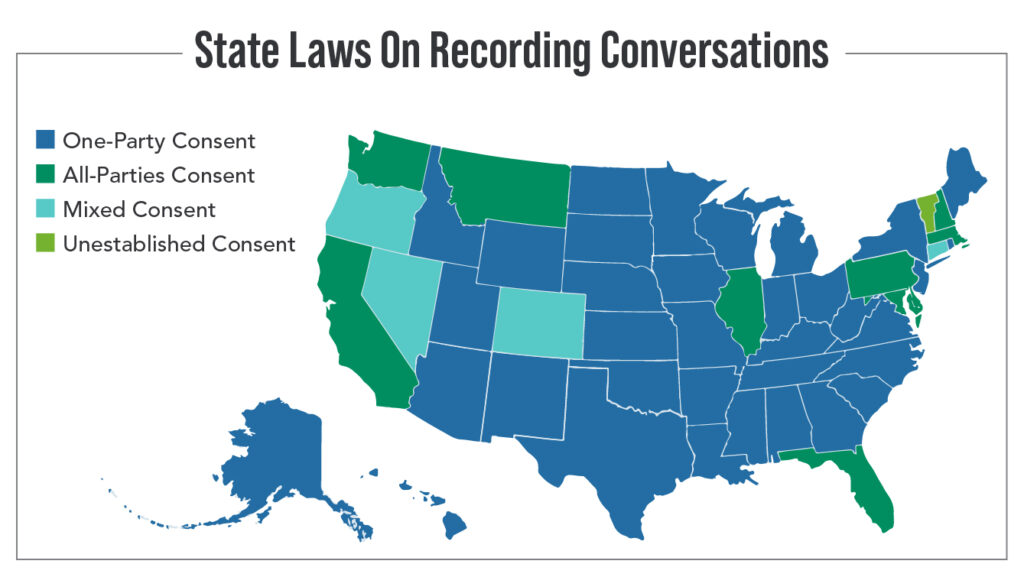
Laws governing audio recordings vary widely. In some jurisdictions, consent must be obtained from all parties before recording a conversation. If a recording is obtained illegally, it could be inadmissible in court regardless of its content or authenticity. Forensic experts must work closely with legal teams to ensure their methods and findings comply with applicable regulations.

Time Sensitivity and Data Loss:

Sometimes, critical audio files are not preserved properly or are deleted before authentication can occur. In such cases, data recovery becomes a parallel challenge, requiring a data forensic expert to retrieve lost evidence from digital storage.

These challenges highlight why phone call authentication is best handled by seasoned professionals who understand both the science and the legal implications of forensic audio analysis.

America’s map showing states’ laws for recording conversations

How Deepfakes Complicate the Picture

With the rise of AI-generated audio, creating entirely synthetic conversations using someone’s voice is possible. These deepfakes can be frighteningly realistic and raise new concerns about the validity of phone call evidence.

Deepfake audio uses artificial intelligence to mimic a person’s voice by training on existing voice samples. With just a few minutes of recorded speech, algorithms can generate new audio clips that sound like the real person but say things they never actually said.

This technology has grown increasingly accessible, with open-source tools available online. As a result, creating fraudulent audio is no longer limited to high-tech labs—anyone with basic software skills and a computer can produce convincing fake conversations.

What makes deepfakes particularly dangerous in legal and forensic contexts is their realism. Unlike traditional audio edits that may leave detectable signs like inconsistent background noise or mismatched frequencies, deepfakes can sound seamless. That’s why detecting them requires specialized expertise.

Forensic experts now adapt their methods to detect deepfake audio by analyzing artifacts left behind during the synthesis process. These subtle clues are often invisible to the untrained ear but can be exposed using machine learning and advanced waveform analysis.

As deepfake technology continues to evolve, so must our forensic defenses. Phone call authentication is becoming more important than ever to ensure that justice relies on truth, not digital trickery.

A conceptual image showing different types of deepfakes

How Eclipse Forensics Supports Phone Call Authentication

At Eclipse Forensics, we understand how crucial phone call authentication is in today’s digital world. Our team of seasoned professionals is equipped with the latest tools and training to analyze recorded conversations and uncover the truth behind the sound.

As a leading forensic audio specialist facility, we handle each case with the highest level of care, confidentiality, and scientific rigor. Our clients include law enforcement agencies, attorneys, corporations, and private individuals who depend on us to deliver clear, factual, and court-admissible findings.

We don’t just analyze audio. As a trusted cyber forensic expert team, we also dive into digital trails, mobile device data, and surveillance videos when needed. Our data forensic experts use advanced software to reconstruct data, find hidden files, and validate metadata to support the authentication process.

If your case involves visuals, we’ve got you covered there too. Our video forensic services include frame-by-frame analysis and enhancement of visual recordings to support the integrity of both audio and video files. We also offer forensic image analysis to verify or clarify still images connected to phone call investigations.

Whether you’re dealing with a legal battle, a corporate dispute, or a personal issue, you deserve to know the truth. Our phone call authentication services are designed to reveal exactly that.

If you suspect a recording has been manipulated or need a second opinion on a critical piece of audio evidence, reach out to us.

A small microphone covered with headset.

Audio Forensics in Criminal Cases: A Silent Witness Speaks

In a world increasingly captured by microphones and surveillance, the sounds we often overlook can become powerful evidence in court. From whispered threats to background noises that place a suspect at the scene, audio has evolved into a critical element of modern investigations. Audio forensics isn’t just about enhancing sound—it’s about uncovering the truth hidden within waveforms.

When processed and interpreted by a skilled forensic audio specialist, these recordings become a silent witness that can influence the outcome of a case.

The Role of Audio Forensics in Criminal Investigations

Audio evidence can emerge from various sources—emergency calls, body cams, surveillance systems, or cell phones. When this data is unclear, tampered with, or disputed, a forensic audio expert steps in to analyze, authenticate, and interpret the material. Using sophisticated tools, they can authenticate audio forensics, clarify speech, identify background sounds, and detect edits or splices.

Authenticity and Tampering Detection

When a recording’s authenticity is questioned, it’s essential to bring in audio authentication services and sometimes even video forensic services if visual content is also involved. Experts can authenticate video forensics and audio files to confirm whether a clip is original or has been altered. This is vital in an era where deep fakes and audio manipulation tools are accessible to the public.

Digital forensic consultants work closely with law enforcement to ensure the chain of custody and data integrity is maintained. This protects the admissibility of evidence in court and prevents challenges from the defense.

Multi-Disciplinary Collaboration

A person working with audio machines.

The complexity of criminal investigations often requires input from various experts. A cyber forensic expert might recover deleted data from a suspect’s phone, while a forensic image analysis specialist might enhance visual clues in a grainy video. Meanwhile, a video forensic expert would synchronize footage with audio to build a comprehensive timeline.

At Eclipse Forensics, collaboration is the cornerstone. Whether it’s forensic video analysis, forensic cell phone data recovery, or deploying a computer forensics expert witness in court, the team works seamlessly to present factual, court-admissible evidence.

Leveraging Technology for Justice

From voice biometrics to noise reduction algorithms, today’s digital forensic experts rely on cutting-edge technology to expose the truth. Combined with cell phone forensic services and advanced digital forensic services, they deliver actionable insights from the digital noise that surrounds every modern crime.

Trust Eclipse Forensics When the Truth Matters

When your case hinges on a single word or an unclear recording, trust Eclipse Forensics to uncover what others miss. Our team of seasoned professionals, including forensic audio specialists, digital forensic consultants, and video forensic experts, is equipped to handle even the most complex cases.

We offer comprehensive audio forensic servicesforensic video services, and unmatched technical expertise. Whether you’re dealing with a civil case, criminal matter, or internal investigation, Eclipse Forensics provides clarity when it matters most.

Contact us today to learn how our team can support your case with precision, discretion, and accuracy.

An image of a person using an audio mixing console

Forensic Audio Authentication: Techniques and Tools for the Modern Investigator

With the AI Voice Generator Market likely to reach a value of $20.4 billion by 2030, the escalation of deepfake technology and audio manipulation is no surprise. Thus, forensic audio authentication has become a crucial tool for modern investigators.

According to the National Institute of Standards and Technology (NIST), advancements in artificial intelligence have made audio forgeries more convincing than ever, posing significant risks in legal proceedings and criminal investigations.

Digital forensic experts use cutting-edge techniques such as spectrographic analysis, waveform comparison, and electronic signature verification to determine the authenticity of an audio recording.

With the right tools and expertise, forensic investigators can uncover tampered recordings, ensuring that truth prevails in courtrooms, security investigations, and media verification processes.

1. The Importance of Forensic Audio Authentication

Audio recordings are often presented as evidence in criminal trials, civil disputes, and corporate investigations. However, with modern editing software, malicious actors can manipulate recordings to mislead courts and authorities. Forensic audio authentication ensures that recordings are genuine, preventing wrongful accusations and protecting the integrity of evidence.

audio

2. Key Elements of Audio Authentication

Authentication involves determining whether an audio file has been altered, identifying inconsistencies, and verifying its originality. Experts analyze the following elements:

Metadata: Information about the file’s creation, modification, and format.

Acoustic properties: Examining waveform consistency, background noise, and voice characteristics.

Digital signatures: Checking for embedded markers or cryptographic hashes that validate originality.

3. Spectral and Waveform Analysis

One of the most common techniques in audio forensic analysis is spectral and waveform analysis. Using advanced software, investigators can visualize an audio file’s frequency spectrum to detect anomalies.

Spectrogram Analysis: Helps identify frequency inconsistencies that indicate splicing or tampering.

Waveform Analysis: Examines amplitude and patterns for unnatural breaks or edits.

4. Electrical Network Frequency (ENF) Analysis

ENF analysis is a powerful forensic tool used for audio authentication. This technique relies on the variations in electrical power frequency (50Hz or 60Hz) recorded in the background of an audio file.

  • If the ENF pattern matches the expected grid frequency at the time of recording, the audio is likely authentic.
  • Deviations or irregularities suggest manipulation or synthetic generation.
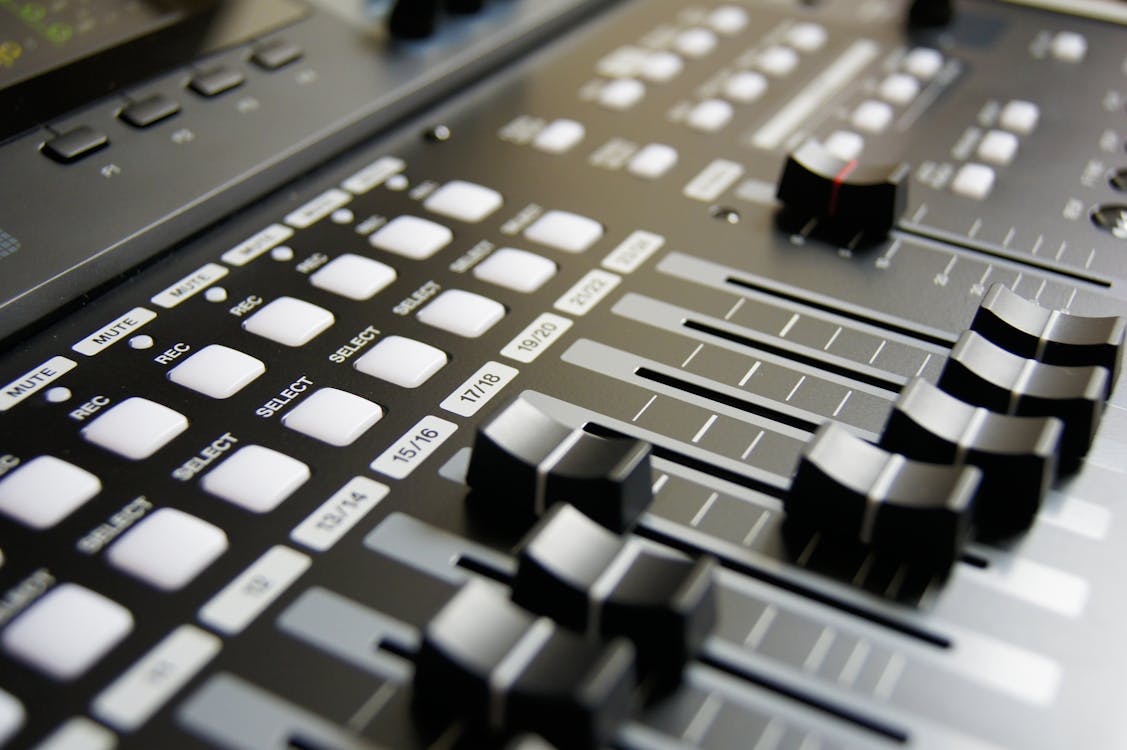
An image of an audio mixer

5. Voice Biometrics and Speaker Identification

Digital forensic experts use voice biometrics to analyze speaker characteristics and verify authenticity. This technique involves:

Formant Analysis: Evaluates vocal tract resonance and speech patterns.

Pitch and Intonation Analysis: Identifies unnatural modulations that indicate splicing.

AI-Based Speaker Recognition: Uses machine learning to compare voiceprints against known samples.

6. Background Noise Analysis

Every audio recording contains background noise that can serve as a fingerprint for audio authentication. Experts analyze:

Ambient Sounds: Traffic, birds, or machinery can indicate the recording’s environment.

Room Tone Matching: Ensures consistency in background noise across the entire file.

Noise Print Analysis: Detects artificial insertions or deletions.

7. Deepfake and Synthetic Audio Detection

With the rise of AI-generated voices, digital forensic experts now use specialized tools to detect synthetic audio. Techniques include:

Neural Network Analysis: Identifies artifacts associated with AI-generated speech.

Prosody and Speech Rhythm Evaluation: Detects unnatural timing and pronunciation.

Adversarial Testing: Challenges AI-created audio with detection algorithms.

8. Audio File Metadata Examination

Metadata is essential for verifying an audio file’s origin and integrity. Experts inspect:

Creation and Modification Dates: Identifies inconsistencies.

Device Information: Checks if the recording device matches the expected source.

Compression and Encoding Details: Detects recompression artifacts indicative of edits.
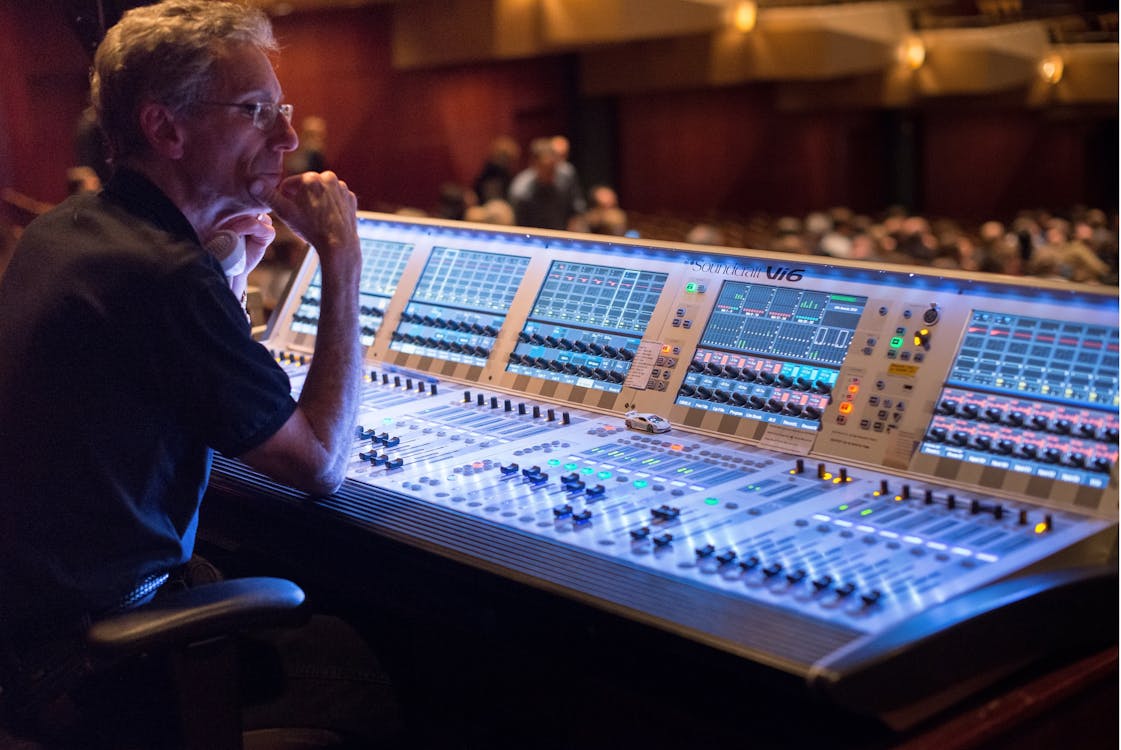
An image of a person sitting in front of an audio mixer

9. Tampering Detection through Signal Analysis

Signal analysis techniques help detect subtle manipulations. Methods include:

Phase Analysis: Identifies shifts that suggest inserted segments.

Harmonic Distortion Detection: Finds anomalies in the harmonic structure.

Time-Domain Examination: Locates abrupt changes in signal continuity.

10. Forensic Audio Authentication Tools

Several industry-leading tools assist digital forensic experts in analyzing audio files. Some of the most widely used include:

Forensic Audio Workstation (FAW): Provides a comprehensive suite for waveform and spectral analysis.

iZotope RX: Advanced noise reduction and spectral editing capabilities.

Audacity (for initial inspection): Open-source tool used for basic waveform visualization.

Sonus Investigate: AI-powered deepfake detection and voice analysis.

Cognitech Audio Examiner: Specialized for voice authentication and noise filtering.

11. Challenges in Audio Authentication

Despite technological advancements, forensic audio authentication presents challenges:

High-Quality Editing Tools: Modern software allows for nearly undetectable modifications.

Encryption and Compression Artifacts: Some files lose critical data due to compression.

Legal Admissibility: Courts require rigorous validation to accept audio evidence.

An image of a person using an audio mixer

12. Legal and Ethical Considerations in Audio Authentication

Forensic audio authentication isn’t just about technical analysis—it also involves legal and ethical considerations. Digital forensic experts must ensure that their methods comply with legal standards and that evidence is collected and analyzed without violating privacy laws. Key considerations include:

Chain of Custody: Ensuring proper documentation of audio evidence from collection to courtroom presentation.

Privacy Laws: Complying with regulations regarding recorded conversations, such as consent requirements.

Expert Testimony: Providing clear and admissible findings in court.

13. The Role of Machine Learning in Audio Forensics

Machine learning is revolutionizing forensic audio authentication by automating analysis and improving detection accuracy. Some applications include:

Pattern Recognition: Identifies subtle anomalies that indicate tampering.

Deep Learning Models: Trained to detect synthetic voices and audio deepfakes.

Automated Report Generation: Reduces manual workload by providing instant analysis summaries.

14. Enhancing Quality for Better Audio Authentication

Before authentication can be performed, digital forensic experts often enhance the quality of audio recordings to remove noise and clarify speech. Common enhancement techniques include:

Noise Reduction: Removing background interference to isolate speech.

Equalization and Filtering: Adjusting frequency levels to improve clarity.

Time and Speed Adjustments: Correcting distortions caused by recording equipment.

Enhancing audio quality helps digital forensic experts conduct more accurate analyses and ensures that key details are preserved during authentication.

15. Real-World Cases Involving Forensic Audio Authentication

Forensic audio authentication has played a critical role in many high-profile legal cases. Some notable examples include:

Criminal Trials: Authenticating 911 calls and covert recordings as admissible evidence.

Corporate Fraud Investigations: Verifying the legitimacy of recorded business conversations.

Political Scandals: Exposing doctored recordings used in misinformation campaigns.

These real-world cases highlight the importance of forensic audio authentication in ensuring justice and preventing manipulation of evidence.

16. The Impact of Emerging Technologies on Audio Authentication

As technology continues to evolve, new challenges and opportunities arise in forensic audio authentication. Emerging trends include:

Blockchain for Audio Verification: Securely timestamping recordings to prove authenticity.

Quantum Computing: Potentially enhancing forensic analysis with faster processing capabilities.

AI-Generated Voice Replication: Increasing the need for more advanced detection techniques.

Staying ahead of these technological advancements is crucial for forensic experts to maintain the reliability and credibility of audio evidence in investigations.
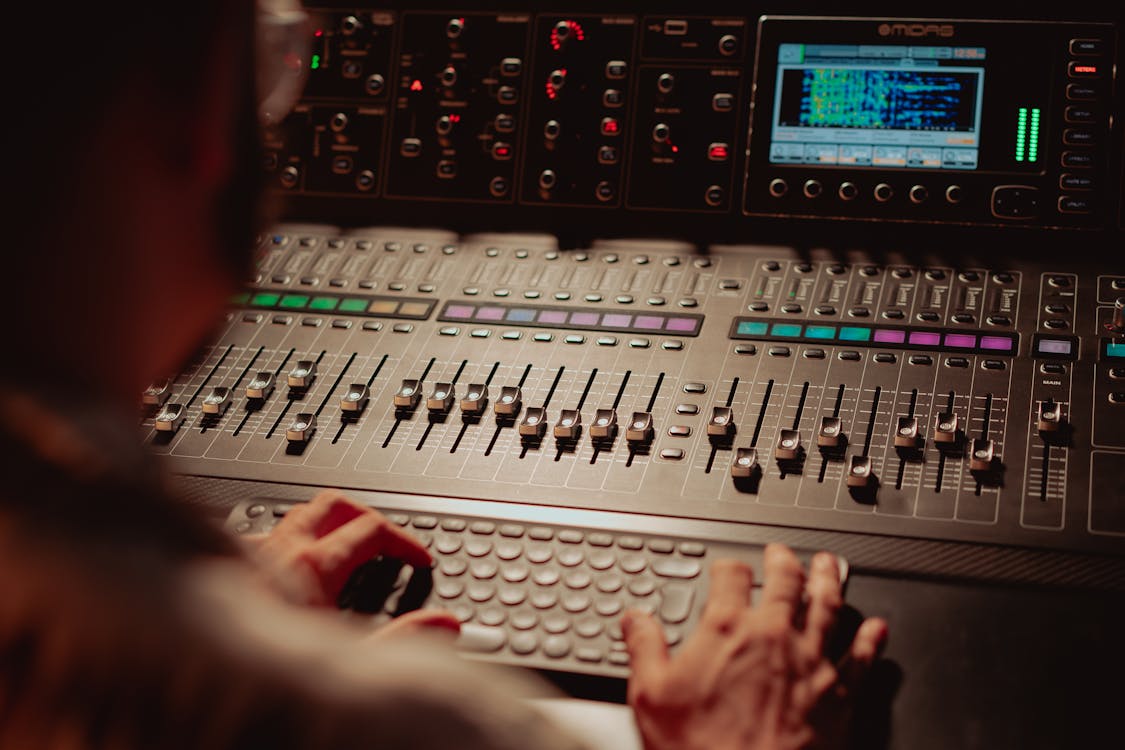
An image of a person using an audio mixer

17. The Role of Multimodal Forensic Analysis

Forensic audio authentication is often combined with other forensic techniques to strengthen the reliability of evidence. Multimodal forensic analysis involves:

Audio-Video Synchronization: Ensuring that an audio recording matches its corresponding video.

Linguistic Analysis: Examining speech patterns, dialects, and language inconsistencies.

Cross-Verification with Other Evidence: Comparing audio findings with phone records, witness statements, or environmental factors.

Using a multimodal approach enhances the accuracy of forensic investigations and provides a more comprehensive analysis of audio evidence.

18. The Future of Forensic Audio Authentication

As audio editing technology evolves, so do forensic authentication methods. Emerging trends include:

AI-Powered Authentication: Machine learning models trained to detect deepfake and tampered audio.

Blockchain for Audio Integrity: Embedding blockchain hashes to prove authenticity.

Real-Time Audio Verification: Live authentication systems to prevent fraudulent recordings.

The Bottom Line

Forensic audio authentication is a vital discipline that ensures the credibility of audio evidence in legal and investigative settings. Digital forensic experts can confidently determine whether an audio recording has been tampered with by leveraging advanced techniques like spectral analysis, ENF matching, and AI-based detection.

While challenges persist, ongoing innovations in forensic technology continue to strengthen the ability to detect and prevent audio fraud. Digital forensic experts must stay ahead of emerging threats and continuously adopt the latest tools to maintain the integrity of digital evidence.

Ensure the Integrity of Your Audio Evidence with Eclipse Forensics

At Eclipse Forensics, we specialize in advanced forensic audio authentication techniques to ensure the integrity of your recordings. Whether you’re involved in a legal case, corporate investigation, or personal dispute, our cutting-edge tools and expert analysis can verify the authenticity of your audio files.

Don’t risk the reliability of your evidence—trust our digital forensic experts to identify any tampering or manipulation. Contact Eclipse Forensics today to secure your audio recordings and protect your case with trusted, expert audio forensic services. Let us help you preserve the truth.

A gavel resting on a wooden block

Expert Witness Testimony: Navigating Audio Forensics in Courtrooms

In today’s digital age, the role of audio forensics in courtrooms has become increasingly vital. From criminal investigations to civil disputes, expert testimony backed by forensic analysis can determine the authenticity of audio evidence. This blog explores how digital forensic experts navigate audio authentication services, the role of forensic image analysis, and the standards required for admissibility in court.

Understanding Audio Forensics in Courtrooms

Audio forensics involves the scientific analysis of sound recordings to verify authenticity, identify speakers, enhance clarity, and detect tampering. This discipline plays a crucial role in legal proceedings, where recorded conversations, voicemails, and other audio materials serve as evidence.

A digital forensic expert applies specialized techniques to analyze:

  • The integrity of audio files
  • Background noises that may provide context
  • Speaker identification
  • Evidence of edits, splicing, or alterations

These analyses ensure that the presented audio is genuine and untampered, making it admissible in court.

The Role of Digital Forensic Experts in Legal Cases

A digital forensic expert provides technical insight to attorneys, judges, and jurors. Their expertise helps establish the credibility of audio evidence by determining whether it has been manipulated.

Key Responsibilities of a Digital Forensic Expert

  1. Authentication of Audio Files
    • Verifying metadata to check timestamps, format conversions, and potential tampering.
    • Analyzing waveform structures to identify unnatural disruptions.
  2. Enhancement of Poor-Quality Recordings
    • Reducing background noise and improving speech intelligibility.
    • Isolating voices from overlapping sounds.

Man analyzing video and audio

  1. Speaker Identification and Verification
    • Comparing voiceprints using spectrographic analysis.
    • Evaluating speech patterns and unique vocal characteristics.
  2. Detection of Audio Tampering
    • Identifying splices, edits, or anomalies in recordings.
    • Cross-referencing audio with other digital evidence.

The findings of a digital forensic expert can significantly impact case outcomes by confirming the reliability of audio evidence.

Audio Authentication Services: Ensuring Evidence Integrity

Courts require Audio Authentication Services to confirm the validity of sound recordings. These services assess whether an audio file has been altered or manipulated in any way that could misrepresent the truth.
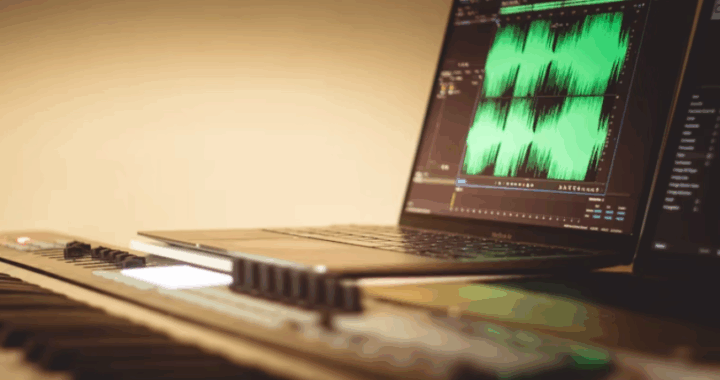
Methods Used in Audio Authentication

  1. Spectrographic Analysis
    • Visual representation of sound frequencies to detect inconsistencies.
    • Used for identifying background noises and speaker variations.
  2. Electric Network Frequency (ENF) Analysis
    • Measures fluctuations in electrical signals recorded in audio to match timestamps.
    • Helps determine if a recording was edited or recorded at a different time.
  3. Metadata Examination
    • Analyzes file properties, such as timestamps, format, and codec information.
    • Checks for signs of re-encoding or tampering.
  4. Acoustic Environment Matching
    • Compares background noise signatures to establish location consistency.
    • Helps verify whether the audio was recorded in the stated environment.

These techniques ensure that audio presented in court remains unaltered and trustworthy.

The Intersection of Audio Forensics and Forensic Image Analysis

In many cases, forensic image analysis complements audio forensics in courtrooms. Surveillance footage, body cam recordings, and mobile phone videos often contain both visual and audio elements, requiring comprehensive forensic evaluation.

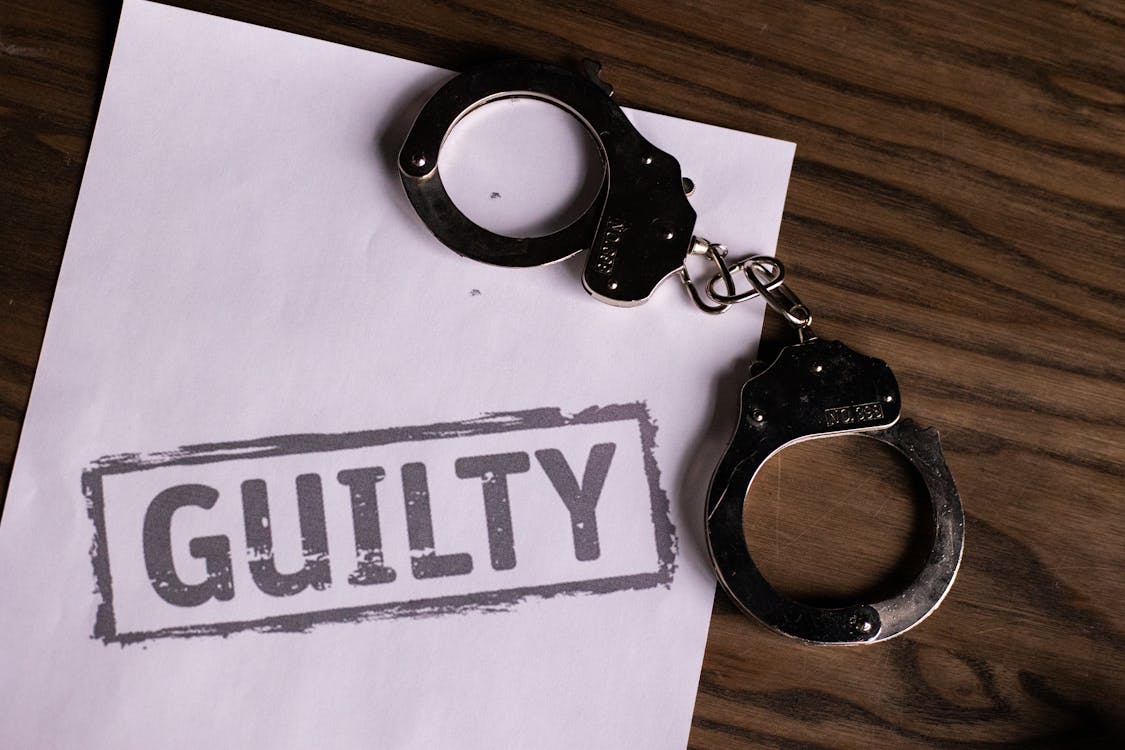
A document with a stamp that reads ‘guilty

How Forensic Image Analysis Supports Audio Investigations

  1. Synchronization of Audio and Video
    • Ensures timestamps align between audio and video files.
    • Identifies potential mismatches that could indicate tampering.
  2. Lip Sync and Speech Verification
    • Cross-referencing speaker mouth movements with audio content.
    • Detecting discrepancies in speech-to-visual timing.
  3. Frame-by-Frame Examination
    • Identifying inconsistencies in lighting, shadows, or digital artifacts.
    • Determining whether the video has been edited separately from the audio track.

By combining audio authentication services with forensic image analysis, experts provide courts with a more comprehensive view of digital evidence.

Admissibility of Audio Forensic Evidence in Court

For audio forensics in courtrooms to be effective, the evidence must meet legal standards for admissibility. Courts evaluate audio recordings based on:

  1. Authenticity
    • Provenance of the recording must be clear and verifiable.
    • Authentication through forensic analysis ensures reliability.
  2. Chain of Custody
  3. Expert Witness Testimony
    • Digital forensic experts must explain their methodology and findings.
    • Testimony must be clear, credible, and based on scientific principles.
  4. Compliance with Legal Standards
    • Must adhere to rules of evidence, such as the Daubert Standard(requiring scientific validity) or the Frye Standard (requiring general acceptance in the forensic community).

Failure to meet these standards can lead to the exclusion of crucial audio evidence.

Challenges in Audio Forensics and Legal Proceedings

Despite its importance, audio forensics in courtrooms faces several challenges:

Low-Quality Recordings

  • Poorly recorded or distorted audio can limit forensic analysis.

Person holding a lit-up mobile phone in their hand

Deepfake and AI-Generated Voices

Legal and Privacy Issues

  • Unauthorized recordings may not be admissible in some jurisdictions.

Subjective Interpretation

  • Background noises or ambiguous speech may lead to differing expert opinions.

To overcome these challenges, forensic experts rely on cutting-edge technology and standardized procedures.

Emerging Technologies in Audio Forensics

As technology advances, so do the tools used in audio forensics in courtrooms. New developments enhance the accuracy and efficiency of forensic investigations, making it easier to detect tampering and verify authenticity.

Artificial Intelligence and Machine Learning

AI-powered tools are revolutionizing audio authentication services by automating the detection of anomalies in recordings. Machine learning algorithms can:

  • Identify unnatural speech patterns indicative of deepfake technology.
  • Enhance voice recognition by filtering out background noise.
  • Detect tampering through subtle distortions that might be undetectable to the human ear.

Blockchain for Audio Evidence Integrity

Blockchain technology is increasingly being explored for securing forensic evidence. By using decentralized digital ledgers, courts can:

Man with his hand on a cassette tape

  • Track the chain of custody for audio files.
  • Ensure that once recorded, files remain unaltered.
  • Provide timestamp verification to confirm recording authenticity.

3D Audio Analysis

This technique allows forensic experts to:

  • Pinpoint the location of sound sources in a recording.
  • Analyze reverberation and acoustics to verify the recording environment.
  • Reconstruct audio scenes to determine if events happened as described.

By integrating these emerging technologies, digital forensic experts can provide even more precise and reliable analyses in legal cases.

The Impact of Deepfake Technology on Audio Forensics

Deepfake technology has introduced new challenges for audio authentication services. With AI-generated voices becoming increasingly realistic, the risk of fabricated evidence entering courtrooms has grown.

How Deepfake Audio Works

Deepfake audio is created using AI models that can:

  • Mimic a person’s voice with only a few minutes of sample audio.
  • Generate realistic conversations that never actually happened.
  • Modify existing recordings by inserting new words or phrases.

Close-up shot of a man working on a screen

Detecting Deepfake Audio

Forensic experts rely on:

  • Spectrographic Analysis– Examining frequency patterns for irregularities.
  • Waveform Consistency Checks– Identifying unnatural fluctuations in pitch and tone.
  • AI Detection Software– Using neural networks to flag potential deepfake content.

Legal Implications

The rise of deepfake audio poses significant legal concerns, including:

  • Increased difficulty in distinguishing authentic recordings from manipulated ones.
  • The potential for wrongful convictions or false accusations.
  • A higher burden of proof on forensic analysts to validate evidence.

As deepfake technology evolves, audio forensics in courtrooms must adapt to counteract the risks associated with synthetic speech.

For legal professionals, understanding the science behind audio forensics is essential in building strong, credible cases. Whether verifying the authenticity of recordings or identifying tampered evidence, digital forensic experts play a crucial role in courtroom proceedings.

Uncover the Truth with Expert Forensic Audio Analysis

At Eclipse Forensics, our digital forensic experts use advanced audio authentication services and forensic image analysis to detect tampering, enhance clarity, and verify recordings. Whether you need expert forensic video analysis or forensic audio analysis, trust our team to deliver precise, court-admissible results. Contact Eclipse Forensics today for professional digital forensic services tailored to your legal needs.

Man analyzing a video

Audio Forensics in the Digital Age: Challenges and Solutions

In the digital age, audio forensics has become an essential tool for investigating crimes, verifying evidence, and addressing disputes. With the rise of sophisticated recording devices and digital manipulation tools, the field faces both unique challenges and innovative opportunities. This article explores the critical aspects of audio forensics, focusing on the challenges faced by experts and the solutions available. We will also highlight the importance of authenticating audio forensics, the role of a digital forensic consultant, and the relevance of Audio Authentication Services and forensic image analysis in complementing the process.

Understanding Audio Forensics in the Digital Age

Audio forensics involves the scientific examination and evaluation of audio recordings to establish their authenticity, origin, or content. It plays a pivotal role in legal investigations, criminal cases, and civil disputes. The field has expanded beyond analog recordings to include digital files, which require advanced techniques for authentication and analysis.

Modern audio forensics typically includes:

  • Authenticating audio forensics: Verifying the integrity of an audio file to ensure it hasn’t been tampered with or edited.
  • Enhancing audio quality: Clarifying unclear recordings to make them more comprehensible.
  • Speaker identification: Identifying individuals based on their voice.
  • Transcription and interpretation: Converting audio data into readable formats for legal or investigative purposes.

The digital landscape has introduced both challenges and advanced solutions for these tasks.

Challenges in Digital Audio Forensics

  1. Manipulation of Digital Files

Digital audio files are highly susceptible to manipulation through editing tools like Adobe Audition or Audacity. With advanced software, it is possible to splice, add, or remove segments of a recording seamlessly. This poses significant challenges for authenticating audio forensics, as manipulated recordings may appear natural.

Man typing something on his black laptop

  1. Proliferation of Recording Devices

The widespread availability of smartphones, smartwatches, and portable recorders has led to a surge in audio evidence. However, these devices vary in recording quality, which can make analysis difficult. Low-quality recordings often require significant enhancement to extract useful information.

  1. Compression and Data Loss

Many digital audio files are stored in compressed formats, such as MP3 or AAC, which lose some data during compression. This loss can obscure critical details, making forensic analysis challenging.

  1. Background Noise Interference

Recordings often contain ambient noise, such as traffic, conversations, or electronic interference, which can mask the desired audio. Forensic experts must isolate the relevant sound without losing its original context.

  1. Legal and Ethical Concerns

In legal cases, the admissibility of audio evidence often depends on its authenticity and chain of custody. Any errors in handling or analyzing the file can result in it being dismissed in court.

Solutions and Tools in Audio Forensics

  1. Advanced Software for Authentication

Cutting-edge software tools like Izotope RX and Forensic Audio Workstation allow forensic experts to examine audio files at a granular level. These tools are instrumental in authenticating audio forensics by analyzing waveform patterns, metadata, and spectral content for inconsistencies.

  1. Expertise of Digital Forensic Consultants

A digital forensic consultant plays a crucial role in navigating the complexities of modern audio evidence. These professionals are trained in handling digital files, identifying signs of tampering, and presenting findings in a legally admissible format. Their expertise bridges the gap between technology and the legal system.

  1. Use of Audio Authentication Services

Organizations offering Audio Authentication Services provide specialized solutions for verifying the integrity of audio recordings. These services include:

  • Examining file metadata for signs of editing.
  • Identifying anomalies in waveform continuity.
  • Matching voice samples with known databases for speaker verification.

A young boy using a cell phone on a sofa

  1. Forensic Image Analysis in Audio Investigations

While primarily focused on visuals, forensic image analysis can complement audio forensics. For example, CCTV footage with embedded audio can be analyzed holistically to ensure synchronization between video and sound, exposing any discrepancies.

  1. Noise Reduction and Signal Enhancement

Noise reduction algorithms and signal enhancement techniques are invaluable for clarifying distorted or low-quality recordings. Spectral subtraction and adaptive filtering are commonly used methods that help isolate relevant audio components.

  1. Chain of Custody Protocols

Maintaining a clear chain of custody ensures that audio evidence is handled properly from the moment it is collected until it is presented in court. Digital forensic consultants often oversee this process to guarantee compliance with legal standards.

Applications of Audio Forensics

  1. Criminal Investigations

Audio recordings are often used to capture confessions, threats, or incriminating conversations. Authenticating these files is essential to establish their reliability in court.

  1. Corporate Disputes

In corporate environments, audio forensics can resolve disputes related to contractual agreements, intellectual property theft, or workplace misconduct.

Facebook and other apps on a phone

  1. Media and Journalism

Journalists and media outlets increasingly rely on audio forensics to authenticate leaked recordings or verify claims.

  1. Domestic Cases

In family disputes, recordings of conversations can be crucial evidence. Forensic analysis ensures that such evidence is admissible and untampered.

  1. National Security

Governments and intelligence agencies use audio forensics to analyze intercepted communications, ensuring the accuracy and relevance of critical information.

Case Study: Authenticating a Tampered Audio File

A recent legal case involved an audio recording presented as evidence in a high-profile corporate fraud trial. The defense argued that the recording had been manipulated to misrepresent the context of the conversation.

Using advanced Audio Authentication Services, forensic experts performed:

  • Metadata analysis: Revealing that the file’s timestamps had inconsistencies.
  • Waveform analysis: Identifying abrupt changes in the audio continuity.
  • Speaker verification: Confirming that certain segments had been spliced from another source.

These findings led to the evidence being dismissed, underscoring the importance of expert analysis in ensuring justice.

Best Practices for Audio Forensics

  1. Preserve Original Files

Always maintain a copy of the original audio file to ensure that subsequent analysis does not alter the evidence.

  1. Employ Certified Experts

Relying on certified digital forensic consultants ensures that the analysis is credible and adheres to industry standards.

Digital forensic services using code to catch a cyber criminal

  1. Utilize Specialized Software

Using purpose-built forensic tools rather than general audio editing software helps maintain the integrity of the analysis.

  1. Document the Process

Maintaining detailed documentation of every step taken during the forensic process ensures transparency and credibility in legal proceedings.

  1. Integrate Multidisciplinary Techniques

Combining authenticating audio forensics with related fields like forensic image analysis provides a comprehensive approach to evidence evaluation.

The Future of Audio Forensics

As technology evolves, so too will the challenges and capabilities of audio forensics. Future developments are likely to include:

  • AI-Powered Analysis: Machine learning algorithms can analyze large volumes of audio data more quickly and accurately.
  • Blockchain for Evidence Integrity: Using blockchain to secure audio file metadata can prevent tampering and ensure a transparent chain of custody.
  • Real-Time Forensics: Tools capable of authenticating audio in real time will be valuable for law enforcement and security agencies.

While these advancements promise greater efficiency and accuracy, they also necessitate continuous education and training for professionals in the field.

The Intersection of Audio Forensics and Cybersecurity

As digital audio evidence becomes increasingly significant in investigations, its intersection with cybersecurity has become a critical concern. Audio files are just as vulnerable to cyberattacks as other digital data. Hackers can intercept, tamper with, or corrupt audio files, especially when they are transmitted over unsecured networks. This creates the potential for fraudulent evidence or unauthorized alterations that could undermine the credibility of the evidence in legal proceedings.

Moreover, the integration of blockchain technology in audio forensics could be a game-changer. Blockchain provides a secure, immutable ledger for tracking the chain of custody of digital evidence. This technology can be used to track the creation and modification of audio files, ensuring that any alterations to the original file are immediately detectable. Combining cybersecurity best practices with traditional forensic audio analysis ensures that digital audio evidence remains secure, tamper-proof, and legally valid in court.

People looking at a laptop

At Eclipse Forensics, we specialize in providing expert audio authentication services to ensure the integrity of your digital audio evidence. Our team of experienced digital forensic consultants is equipped with cutting-edge tools to authenticate and analyze audio files, identifying any signs of tampering or manipulation. Whether you require forensic image analysis to accompany your audio evidence or need to confirm the authenticity of crucial recordings, our services are tailored to meet the needs of legal professionals, investigators, and organizations. Don’t leave the authenticity of your digital audio evidence to chance—contact Eclipse Forensics today to ensure the credibility and accuracy of your findings.

Close-up shot of a man working on a screen

The Power of Audio Forensics in Criminal Investigations

The advancement of technology has profoundly impacted the way criminal investigations are conducted, with audio forensics emerging as a pivotal tool in solving complex cases. From verifying audio recordings to analyzing voice patterns, audio forensics provides investigators with critical evidence that can be the deciding factor in a court of law. This blog explores the key aspects of audio forensics, its role in criminal investigations, and the specialized services offered by digital forensic consultants.

Understanding Audio Forensics in Criminal Investigation

Audio forensics is the science of analyzing, authenticating, and interpreting audio recordings to uncover information relevant to criminal investigations. It plays a crucial role in cases involving covert recordings, phone calls, or digital files. These recordings can contain incriminating statements, provide timelines, or even identify individuals involved in criminal activities.

Specialists in this field use advanced tools and techniques to:

These methods ensure that audio evidence is admissible in court and supports the overall case strategy.

The Role of a Digital Forensic Consultant

A digital forensic consultant is an expert who specializes in retrieving, analyzing, and interpreting digital data, including audio files. In the realm of audio forensics, they:

  • Extract audio evidence from various devices, including smartphones, computers, and surveillance systems.
  • Authenticate recordings to confirm their integrity and originality.
  • Prepare detailed reports that comply with legal standards.

Their work bridges the gap between technology and law enforcement, ensuring that digital evidence is handled with precision and credibility.

Man with his hand on a cassette tape

Applications of Audio Forensics in Criminal Cases

The applications of audio forensics are vast and extend across various types of criminal investigations.

  1. Voice Identification

Voice identification involves comparing recorded audio to known samples to determine if they match. This is particularly useful in cases such as ransom calls, threats, or undercover recordings. By analyzing unique vocal characteristics, forensic experts can link a voice to an individual with a high degree of accuracy.

  1. Audio Authentication Services

Audio authentication services verify the integrity of recordings, ensuring they have not been edited, altered, or tampered with. This is crucial in legal cases where the defense or prosecution may question the validity of audio evidence. Forensic experts use tools to detect discrepancies, such as unnatural gaps or overlapping audio layers, which may indicate tampering.

  1. Noise Reduction and Audio Enhancement

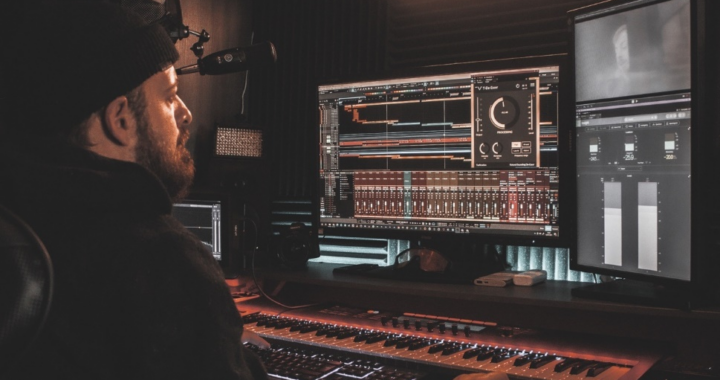
Many criminal recordings, such as wiretaps or surveillance audio, suffer from poor quality due to environmental noise. Forensic experts employ noise reduction techniques to enhance clarity, making speech or other critical sounds audible. This enhanced audio can provide investigators with clear and actionable intelligence.

Person touching a phone’s screen

  1. Timeline Reconstruction

In complex cases, audio forensics can help reconstruct events by analyzing timestamps and content within recordings. This method aids in building a detailed sequence of events, supporting other evidence to present a cohesive case.

The Intersection of Audio Forensics and Forensic Image Analysis

While audio forensics focuses on sound, forensic image analysis deals with visual data, such as photographs or video footage. These two fields often overlap in criminal investigations, especially in cases involving surveillance systems or multimedia files.

Forensic image analysis experts:

  • Authenticate images to ensure they haven’t been edited.
  • Enhance visual clarity, such as identifying faces or license plates in blurry footage.
  • Extract metadata to provide context, such as when and where an image was captured.

When combined with audio forensics, this integrated approach delivers a more comprehensive understanding of digital evidence, enhancing the credibility of investigations.

Challenges in Audio Forensics

Despite its significance, audio forensics faces several challenges that professionals must overcome to ensure reliable outcomes.

  1. Low-Quality Recordings

Many recordings used in investigations are of poor quality due to background noise, low-volume speech, or degraded file formats. Experts must employ sophisticated software and techniques to enhance audio without compromising its authenticity.

  1. Legal and Ethical Issues

Using covert recordings can lead to disputes about privacy and admissibility in court. Digital forensic consultants must ensure that evidence collection complies with legal standards and ethical guidelines.

  1. Rapid Technological Changes

With the constant evolution of recording devices and audio editing software, forensic experts must stay updated on the latest advancements to detect tampering effectively.

  1. Subjectivity in Analysis

Some aspects of audio forensics, such as voice identification, may involve subjective judgment. To mitigate this, experts rely on established methodologies and peer reviews to validate their findings.

Close-up shot of a person holding a cell phone

Advancements in Audio Forensics Technology

Technology continues to revolutionize audio forensics, making it more efficient and reliable.

  1. Artificial Intelligence and Machine Learning

AI and machine learning algorithms are now used to analyze large volumes of audio data quickly. These tools can detect patterns, identify voices, and even differentiate between genuine and tampered recordings.

  1. Spectrogram Analysis

Spectrogram analysis visually represents sound frequencies, allowing experts to pinpoint anomalies or edits in recordings. This technique is particularly useful in audio authentication services.

  1. Real-Time Processing Tools

Real-time audio processing tools enable law enforcement to analyze recordings during active investigations. These tools enhance critical sounds instantly, providing actionable intelligence in time-sensitive cases.

  1. Cloud-Based Solutions

Cloud technology allows forensic experts to store and process large audio files securely. It also facilitates collaboration between teams, ensuring efficient workflows in multi-agency investigations.

The Importance of Expertise in Audio Forensics

Audio forensics requires a combination of technical skills, legal knowledge, and investigative acumen. Hiring an experienced digital forensic consultant ensures that audio evidence is handled with the highest level of professionalism. Key attributes of a qualified consultant include:

  • Certification in forensic audio analysis.
  • Proficiency in advanced software and tools.
  • Experience in preparing court-admissible reports.
  • Understanding of legal procedures and compliance standards.

An expert analyzing digital forensic data

Case Studies: Real-World Applications of Audio Forensics

Case Study 1: Solving a High-Profile Fraud Case

In a recent fraud investigation, audio forensics played a pivotal role in exposing a fraudulent business deal. Investigators used audio authentication services to verify covert recordings of negotiations. By detecting inconsistencies, they proved that the suspect had tampered with evidence to cover up illegal activities.

Case Study 2: Unmasking a Threat Caller

Law enforcement used voice identification techniques to track down an anonymous caller who had made multiple bomb threats. By comparing recordings with suspect voice samples, forensic experts provided evidence that led to the individual’s conviction.

Case Study 3: Enhancing Surveillance Audio in a Murder Case

In a homicide investigation, a low-quality surveillance recording captured the suspect’s voice. Forensic experts enhanced the audio to clarify speech, helping the jury understand the evidence and secure a conviction.

Future Trends in Audio Forensics

The future of audio forensics looks promising, with several trends poised to enhance its capabilities further.

  1. Integration with Other Forensic Disciplines

Audio forensics will increasingly integrate with fields like forensic image analysis and digital forensics, creating a holistic approach to evidence collection and analysis.

  1. Biometric Voice Analysis

Biometric technology will allow for more precise voice identification by analyzing unique vocal patterns, pitch, and cadence.

  1. Automated Audio Analysis

Automated tools will streamline the analysis process, enabling forensic experts to process vast amounts of data more efficiently.

  1. Global Collaboration

As cybercrime grows, international collaboration in audio forensics will become essential. Cloud-based platforms and standardized procedures will facilitate cooperation across borders.

The Impact of Audio Forensics in Cybercrime Investigations

Cybercrime investigations increasingly rely on audio forensics to decode critical evidence from digital devices. Audio files are often used in online crimes such as fraud, extortion, and harassment. These files can contain conversations, threats, or critical communications exchanged over VoIP calls, instant messaging services, or social media platforms.

Man analyzing a video

In the context of cybercrimes, audio forensics experts assist in:

  • Tracing Digital Footprints: Analyzing voice samples, metadata, and timestamps to link digital communications to specific devices or individuals.
  • Dealing with Encrypted Audio: Many cybercriminals encrypt their communications. Audio forensics specialists often need to decrypt these files to extract useful evidence.
  • Determining Source of Communication: Using acoustic analysis to identify the location or device from which the audio was recorded.

At Eclipse Forensics, we specialize in providing expert audio forensics in criminal investigations, offering a range of services from audio authentication to forensic image analysis. Whether you’re a law enforcement agency or a legal professional, our digital forensic consultants are equipped to help you uncover critical audio evidence, enhance unclear recordings, and authenticate digital files for use in court. If you’re looking for reliable and accurate forensic services, contact Eclipse Forensics today to discuss how our expertise can support your investigation and deliver justice.