
Courtrooms today are no longer confined to physical evidence, written statements, and witness recollections. In many high-stakes trials, forensic audio expert testimony plays a decisive role in shaping how evidence is understood and interpreted.
From subtle background noises in a recording to complex signal analysis, the ability to clarify sound can directly influence a verdict. This isn’t just about hearing better; it’s about ensuring that every second of audio is verified, contextualized, and communicated in a way that juries and judges can trust. Here’s how these testimonies play a big role.
How Forensic Audio Shapes Legal Outcomes
Audio evidence is often emotionally powerful because it brings the courtroom closer to the event itself. In some cases, such recordings can serve as primary evidence, especially in criminal investigations, fraud cases, or internal disputes. According to the National Institute of Justice, audio forensics involves the scientific examination and evaluation of sound recordings to clarify content or authenticate their origin.
When audio forensic services are used effectively, expert testimony can explain elements that might otherwise be overlooked: ambient noise patterns, overlapping voices, tampering indicators, or specific time markers. Jurors may not have the technical expertise to dissect these details, which is why testimony from trained professionals, like a digital forensic engineer, becomes pivotal in shaping their understanding.
Breaking Down Complex Audio for the Court
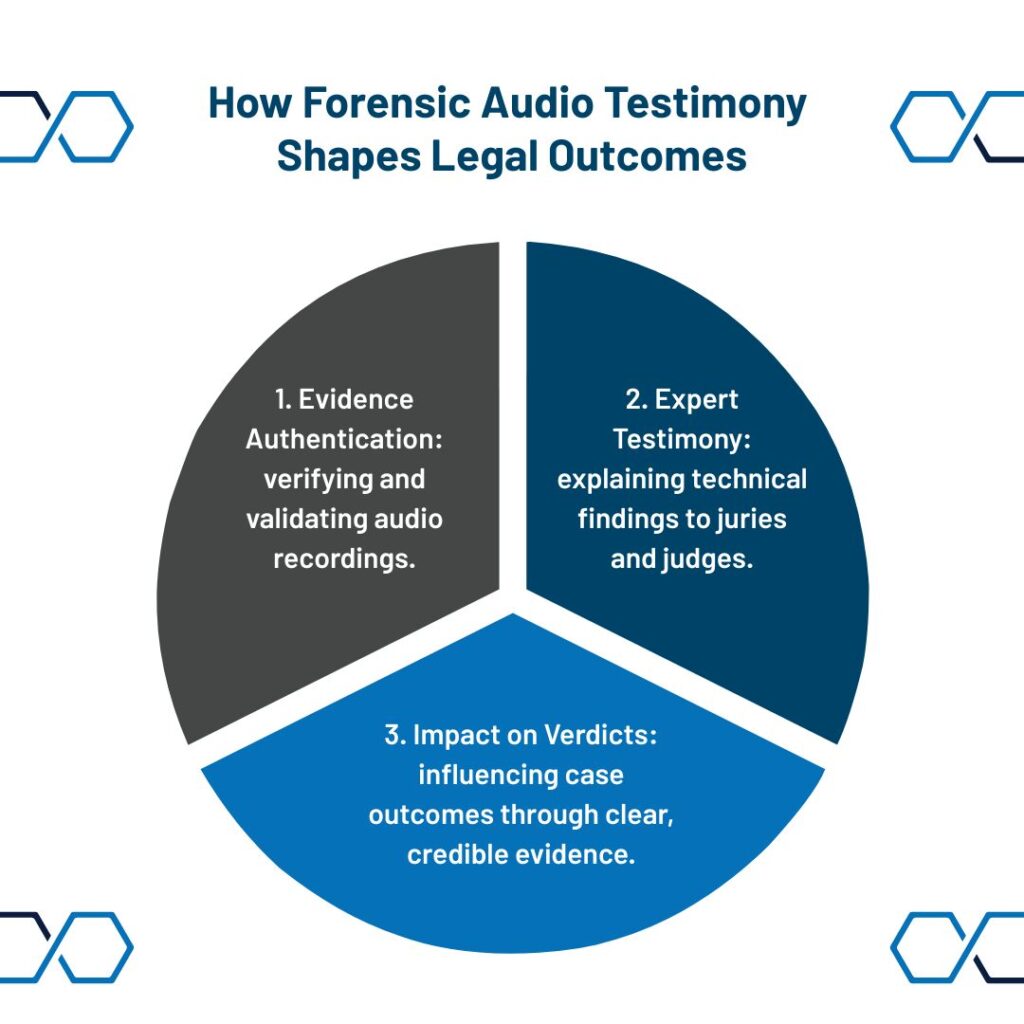
One of the biggest advantages of introducing forensic audio expert testimony is the translation of complex technical language into terms a jury can comprehend. Forensic experts apply specialized tools and methodologies to analyze speech patterns, identify manipulations, and remove distortions without altering evidentiary integrity.
For example, modern audio analysis can detect compression artifacts and frequency anomalies to verify authenticity. When presented clearly, this analysis allows legal professionals to build stronger narratives.
Authenticity and Admissibility: The Legal Barriers
Before audio recordings can even reach the jury, they must pass legal standards for admissibility. Courts often require a demonstration of the recording’s chain of custody, authenticity, and relevance. This is where audio authentication services come into play.
They can identify whether the file has been altered, whether intentionally or accidentally, by using spectrographic analysis, waveform evaluation, or metadata inspection. Studies note that authenticating recordings plays a central role in ensuring that manipulated files don’t make their way into a trial.
This step ensures evidence reliability. It prevents the defense or prosecution from relying on recordings that could distort facts, ensuring a fairer trial.
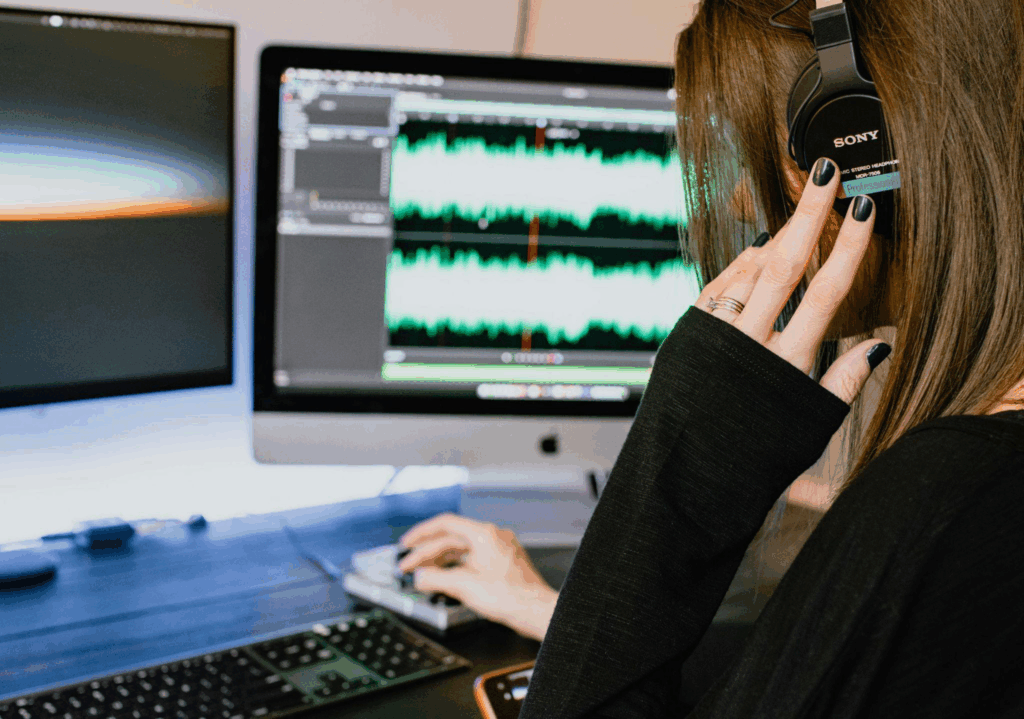
Building Juror Trust Through Expert Testimony
Jurors rarely have technical backgrounds, and yet they’re often tasked with making decisions based on technical evidence. A forensic audio expert’s testimony bridges this gap. Instead of simply presenting a cleaned-up clip, the expert can explain how it was enhanced, what was removed, and why certain elements matter.
Research highlights that juror confidence in expert testimony increases significantly when experts provide transparent explanations supported by demonstrable analysis. This transparency makes the evidence more persuasive and less prone to being dismissed as “unreliable tech.”
Moreover, a data forensic expert often works alongside legal teams to ensure that their findings align with courtroom standards and can withstand cross-examination.
The Role of Technology in Audio Forensics
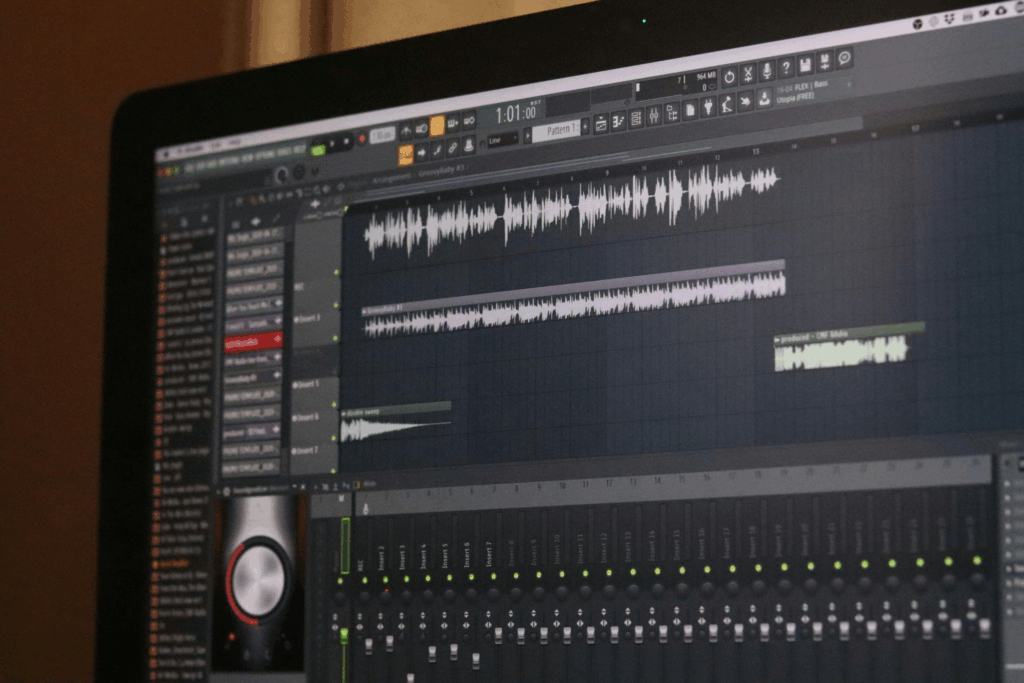
Modern forensic analysis isn’t just about listening; it’s about decoding. Advanced tools allow experts to isolate frequencies, identify background chatter, and detect inconsistencies in a recording’s waveform. Techniques like spectral subtraction and adaptive filtering enhance audio clarity while maintaining evidentiary value.
A cyber forensic expert may integrate audio analysis with other digital evidence to build a stronger case. For example, if a call recording is under question, experts may match audio timestamps with mobile device forensics data to verify authenticity and timeline.
Research has shown that integrating multiple forensic disciplines leads to higher evidentiary accuracy and courtroom credibility.
Collaboration Between Audio and Video Experts
Many cases involve both audio and visual evidence. For instance, surveillance footage might contain conversations that need clarification. A forensic video analysis combined with audio forensics can synchronize and clarify evidence.
A forensic video analysis expert may enhance the visual elements, while an audio specialist refines the sound, creating a cohesive and credible narrative for the courtroom. When these two forms of evidence align, they can provide a level of clarity that neither could deliver alone.
Influencing Verdicts Through Clear Communication
Perhaps the most overlooked factor in the impact of forensic audio expert testimony is communication. Technology may be sophisticated, but if an expert cannot explain their findings in plain language, its impact diminishes.
This is why experienced professionals not only analyze but also translate technical results into clear, courtroom-friendly explanations. According to studies, effective expert testimony increases the likelihood that jurors will find the evidence credible and relevant.
The clarity and transparency of expert testimony can tip the scale in close cases, especially when audio recordings contain key statements, background cues, or timeline-defining moments.
Ensuring Integrity Through Methodology
Forensic audio analysis follows strict protocols. From evidence acquisition to enhancement and authentication, each step is documented and repeatable. This procedural integrity ensures that opposing counsel can review methods without compromising evidentiary trust.
By working with audio forensic services, legal teams can ensure that every process meets scientific standards. This reduces the risk of objections or evidence exclusion during trial.
Chain-of-custody documentation, forensic imaging, and analytical logs are all critical elements that protect the evidence from challenges.
Ethical and Privacy Considerations
While audio forensics can be incredibly powerful, it must operate within strict ethical boundaries. Privacy rights, lawful interception regulations, and proper authorization procedures all shape how recordings are collected and analyzed. A digital forensic consultant must navigate these legal frameworks carefully to avoid evidentiary dismissal.
Moreover, experts must avoid overstepping their scope. Their role is not to interpret the intent behind words but to clarify, authenticate, and present facts objectively.
The Growing Demand for Expert Testimony
As more conversations take place over digital platforms through calls, apps, and voice notes, the role of audio forensics continues to grow. Law enforcement, attorneys, and corporations increasingly rely on this discipline to resolve disputes and uncover the truth.
A growing number of U.S. states are also strengthening standards for expert testimony in digital cases, ensuring higher reliability and consistency. This reflects how audio forensic services are becoming integral to modern legal proceedings.
Turning Complex Audio Into Clear Evidence
The outcome of a case often depends on how well evidence is presented, understood, and trusted. Forensic audio expert testimony gives courts the clarity they need to interpret complex recordings accurately, while advanced analysis ensures every sound is authenticated and preserved. This combination of technical precision and expert communication can help shape verdicts and strengthen legal strategies.
That’s where Eclipse Forensics stands out. With extensive experience in audio forensic services, forensic video analysis, and other digital forensic services, our team uses state-of-the-art tools to analyze, authenticate, and present critical evidence with unmatched accuracy.
Our specialists, including digital forensic engineers and data forensic experts, work closely with legal professionals to ensure evidence meets the highest admissibility standards. From audio authentication services to forensic video services, our expertise helps bring crucial clarity to high-stakes cases.
If your case depends on clear, credible evidence, let our experts help reveal the full story.
Contact us today to explore their full range of forensic capabilities.