

What if a few seconds of unclear audio could influence the outcome of a criminal case, workplace investigation, or civil dispute? A muffled conversation, a distorted voice, or unexplained background noise can leave important questions unanswered.
According to the FBI’s research on forensic science, audio examination requires specialized methods to assess recordings and interpret their contents reliably. However, improving sound quality does not automatically make a recording more accurate or prove what happened.
Forensic audio enhancement requires a careful balance between improving intelligibility and preserving the original evidence. We examine how noise reduction, voice enhancement, speaker identification, and authentication work, including their limitations and their role in legal proceedings.
What Is Forensic Audio Enhancement, and Why Does It Matter?
Forensic audio enhancement involves processing a recording to make relevant sounds easier to hear while preserving the integrity of the original evidence. Recordings may contain conversations, threats, instructions, environmental sounds, or other information that becomes important during an investigation.
However, ordinary audio editing and forensic audio enhancement serve different purposes. Editing for entertainment prioritizes the listening experience, while forensic work prioritizes accuracy, repeatability, and evidentiary reliability.
A recording may contain several obstacles to clear interpretation:
- Background noise:Traffic, ventilation, machinery, crowds, or wind can obscure speech.
- Low recording volume:A distant speaker may be difficult to hear because the microphone captures little of the voice.
- Reverberation:Sound reflections inside rooms, vehicles, and other enclosed spaces can blur words.
- Distortion:Clipping, microphone limitations, and recording equipment problems can alter the original sound.
- Compression artifacts:Digital encoding may remove or distort audio information, particularly in low-quality recordings.
- Overlapping speech:Multiple speakers talking simultaneously can make individual statements difficult to distinguish.
Professional audio forensic services address these problems through controlled processing and detailed examination. The objective is not to make a recording sound perfect. It is to determine whether processing can reveal meaningful information without introducing changes that could mislead listeners.
Noise Reduction: Removing Interference Without Losing Evidence

Noise reduction is one of the most common techniques used in forensic audio analysis. Its purpose is to reduce unwanted sounds that interfere with the recording’s relevant content.
For example, a security camera might capture a conversation near an air-conditioning unit. The equipment’s steady hum could mask quieter speech, making parts of the conversation difficult to understand.
An audio forensic expert may apply several methods to improve intelligibility.
1. Identify the Noise Characteristics
Before processing begins, we need to understand the interference. Some sounds remain relatively consistent throughout a recording, while others change rapidly.
Steady background hum may be suitable for filtering techniques. Intermittent sounds, such as passing vehicles or sudden impacts, require a different approach because they may overlap with speech.
The distinction matters because aggressive processing can remove portions of a voice along with the unwanted noise.
2. Apply Appropriate Filtering
Filters can reduce specific frequency ranges associated with certain types of interference.
For example, a high-pass filter may reduce low-frequency rumble caused by wind or handling noise. A low-pass filter may suppress high-frequency hiss when that interference falls outside the frequencies needed to understand the relevant speech.
However, human speech spans a broad frequency range. Excessive filtering can remove consonant sounds, change vocal characteristics, and make words less intelligible.
3. Use Spectral Noise Reduction
Spectral processing examines how sound energy varies across frequencies and time. Software can use this information to reduce noise that differs from the speech of interest.
This approach may improve recordings affected by steady hiss or similar interference. However, noise reduction is less reliable when unwanted sounds closely resemble the frequencies and patterns of speech.
The central limitation: Noise reduction cannot reliably restore information that was never captured or has been irreversibly lost. If a loud impact completely masks a spoken word, software may make the surrounding conversation clearer without recovering the missing word.
A forensic audio specialist must recognize this boundary rather than treating every processed recording as a complete source of information.
Voice Enhancement: Making Speech Easier to Understand

Voice enhancement focuses on improving the intelligibility of speech within a recording. Although noise reduction is often part of the process, enhancement can also involve balancing frequencies, adjusting levels, and reducing certain forms of distortion.
Consider a phone recording in which one speaker sounds faint while another speaks loudly. Level adjustment may help listeners hear the quieter voice without making the louder speaker uncomfortably prominent.
Several techniques may help.
- Equalization:Adjusts selected frequency ranges to improve speech clarity.
- Dynamic range processing:Controls differences between louder and quieter portions of a recording.
- Channel isolation:Examines separate audio channels when one contains clearer or more relevant information.
- Time-frequency processing:Reduces interference within selected portions of the recording.
- Careful playback adjustment:Allows listeners to assess quiet speech without permanently altering the source file.
These methods must be selected according to the recording’s characteristics and the questions being investigated.
Why Enhancement Can Change Perception
Processing does more than change volume. It can also influence how listeners interpret ambiguous sounds.
Suppose a recording contains a short, unclear phrase. After noise reduction, one listener hears a person’s name, while another hears a similar-sounding word. Both may feel confident because the enhanced version sounds clearer.
Yet greater confidence does not establish that either interpretation is correct.
Human perception is strongly influenced by expectations. When listeners are told what a recording supposedly contains, they may become more likely to hear the suggested words.
For this reason, responsible forensic audio services distinguish between improved audibility and verified interpretation. Analysts should document processing choices, retain the original recording, and avoid presenting uncertain speech as established fact.
Speaker Identification: Can We Determine Who Is Speaking?
Speaker identification examines whether a voice may belong to a particular person. This can be important when a disputed recording contains an alleged threat, an unidentified caller, or a conversation involving someone whose participation is questioned.
However, recognizing a familiar voice is not the same as conducting a forensic speaker comparison.
People may sound different depending on their emotional state, health, speaking volume, physical surroundings, microphone quality, and recording equipment. Telephone compression can also remove vocal details that might otherwise assist comparison.
A forensic audio expert may assess characteristics such as:
- Fundamental frequency and patterns of vocal pitch.
- Vocal resonance and spectral characteristics.
- Pronunciation, accent, and habitual speech patterns.
- Timing, rhythm, and articulation.
- Similarities and differences between questioned and known recordings.
The examiner must consider both supporting and conflicting observations rather than focusing exclusively on similarities.

What Makes Speaker Comparison Difficult?
A short recording may contain too little speech for meaningful comparison. Background noise, distortion, and overlapping voices can further reduce the available information.
A known recording may also differ substantially from the disputed sample. For instance, comparing a clear studio recording with a distorted telephone conversation introduces limitations that must be acknowledged.
An examiner should not claim that two recordings contain the same speaker simply because their voices sound similar. Nor should an accent or vocal pitch alone establish identity.
The appropriate conclusion depends on the quality and quantity of the evidence, the examination method, and the limitations of the comparison.
Where necessary, an audio forensic specialist may explain why the available material cannot support a reliable identification.
Audio Authentication Services: Determining Whether a Recording Is Genuine
Enhancement and authentication address different questions.
Enhancement asks whether a recording can be made easier to hear. Authentication examines whether the recording is consistent with the circumstances and history claimed for it, including whether there are indications of editing, manipulation, or other alterations.
A recording may sound clear and still contain misleading edits. Conversely, a noisy recording may be entirely genuine.
What Does Audio Authentication Examine?
Audio authentication services may involve examining several characteristics of the recording.
1. File Structure And Metadata
Metadata can provide information about file creation, modification, encoding, and recording equipment. However, metadata can be altered or removed, so it should not be treated as definitive proof of authenticity.
2. Waveform And Spectral Characteristics
An examiner may look for unusual transitions, discontinuities, or patterns that warrant further investigation. These observations can help identify areas requiring closer analysis, but an apparent irregularity does not automatically prove tampering.
3. Background Sound Continuity
Room noise, traffic, ventilation, and other environmental sounds may help establish whether separate portions of a recording appear consistent. Abrupt changes can raise questions about editing, although changes in microphone position or the surrounding environment may produce similar effects.
4. Recording Continuity
The examiner may assess whether speech, background noise, and other acoustic features remain consistent throughout the recording. The goal is to identify evidence that supports or challenges the claimed recording history.
5. Technical Examination Of Suspected Edits
Specialized analysis may reveal signs of splicing, recompression, or other processing. Yet not every edit leaves a detectable trace, and some technical irregularities arise from ordinary recording or transmission processes.
It is therefore important to distinguish between identifying suspicious features and proving deliberate manipulation.
Separating Reliable Findings From What the Audio Cannot Prove
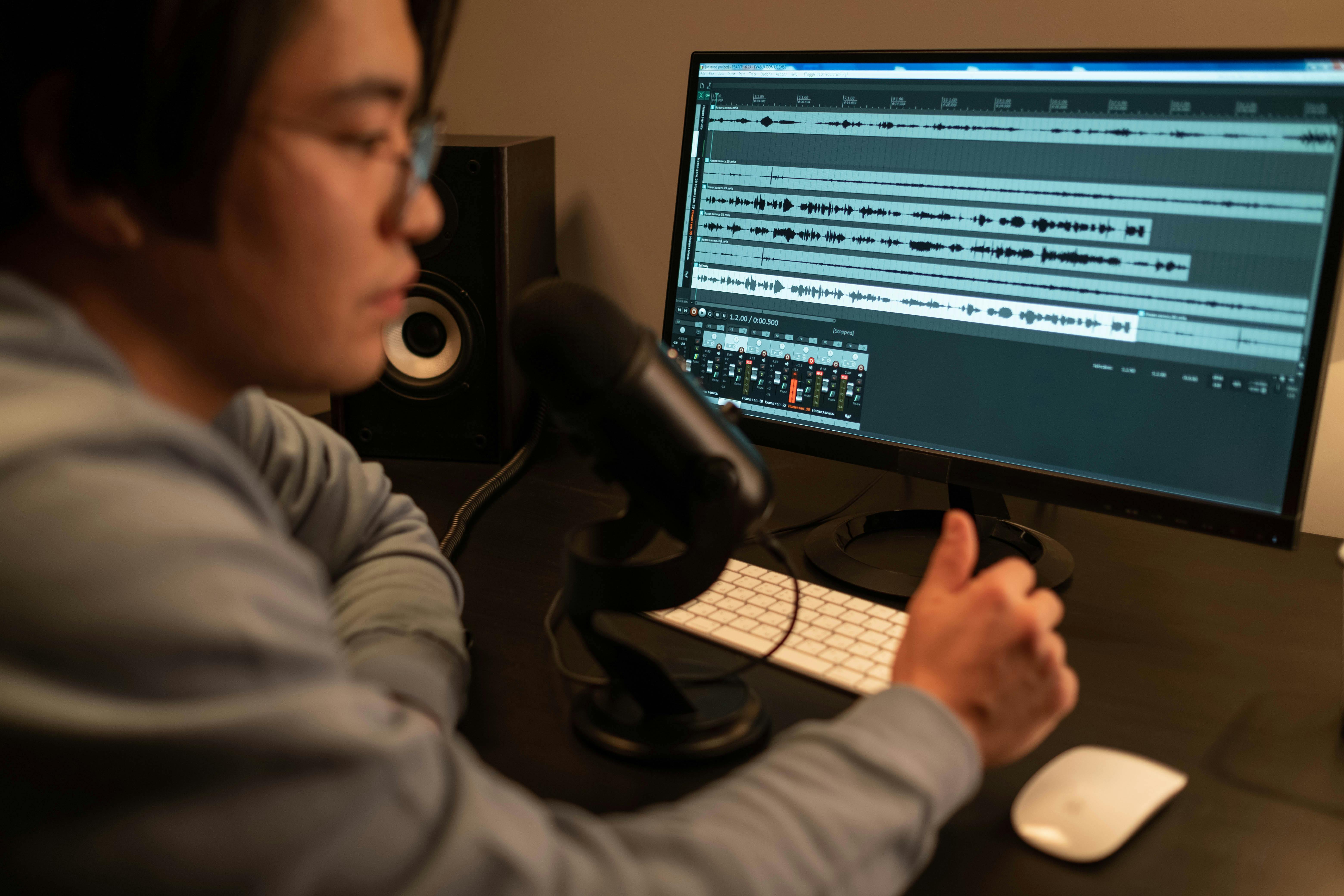
How do we know when an enhanced recording provides meaningful evidence rather than an interpretation shaped by processing?
The answer begins with a clear distinction between what the recording contains and what an examiner believes it may mean.
Noise reduction can improve listening conditions. Voice enhancement can make speech more intelligible. Speaker comparison can assess similarities between voices, while authentication examines whether a recording’s characteristics support its claimed history.
None of these methods automatically establishes the complete truth of a disputed conversation.
Reliable forensic audio analysis depends on suitable methods, preserved evidence, transparent documentation, and conclusions proportionate to the available information. Recognizing limitations is not a weakness. It is part of producing findings that can withstand independent scrutiny.
At Eclipse Forensics, we provide professional forensic audio services to help legal professionals and other clients address disputed recordings with appropriate technical care.
Our audio forensic experts can assist with questions involving speech intelligibility, speaker comparison, recording integrity, and the interpretation of audio evidence.
If you need audio authentication services or an independent examination of a recording, contact Eclipse Forensics through our website to discuss your case and determine what the available evidence may support.