

In the age of digital transformation, where data is created at every turn, forensic consultants serve as the bridge between raw evidence and courtroom truth. These professionals operate in the shadows of high-stakes criminal investigations, corporate disputes, and civil litigation. Their job? To uncover the truth hidden within digital footprints, analyze complex data, and present compelling, fact-based testimony.

This blog takes a closer look at a day in the life of a forensic consultant—from the first case briefing to the final steps on the witness stand.
The Morning Briefing: Assignments and Priorities
The day typically starts early. Forensic consultants often begin by reviewing overnight communications and setting priorities. Cases range widely in scope—from criminal defense to corporate fraud, family court matters to insurance claims.
Each assignment starts with a case briefing. This might come from law enforcement, attorneys, or private clients. A forensic consultant needs to understand the legal context of the case and the specific questions that need answering. Is it a voice authentication issue? A suspicious video clip? Or perhaps a smartphone suspected of containing vital evidence?
This clarity shapes the investigative approach and defines the tools and expertise required.
The Audio Forensic Expert at Work
For cases involving sound—such as verifying the authenticity of a recording or enhancing a barely audible conversation—an audio forensic expert is called into action.
Using sophisticated software, the audio expert filters out noise, identifies speaker patterns, and examines metadata for signs of tampering. The work is delicate and demands both technical skill and a strong grasp of acoustics.
In one notable case, an audio forensic expert was asked to analyze a threatening voicemail. The voice appeared distorted, and the sender was unknown. Through careful enhancement and waveform analysis, the expert identified the speaker, proving that the voice had been deliberately manipulated to avoid detection. This analysis became crucial testimony in court.
The Mobile Device Forensics Challenge
The consultant might also use mobile device forensics. This is one of the fastest-growing areas in digital investigation, due to the ubiquity of smartphones and tablets.
Every swipe, tap, and message leaves behind a digital trace. Whether it’s deleted text messages, GPS logs, or app activity, mobile device forensics helps extract this information in a legally sound manner.
In a recent case, mobile device forensics helped confirm a suspect’s whereabouts by analyzing GPS data and message timestamps. This corroborated an alibi and led to the dismissal of charges, illustrating how mobile evidence can reshape a case’s trajectory.
Delving into Digital Video Forensics
With the proliferation of security cameras, dashcams, and mobile phone recordings, digital video forensics has become an essential component of modern investigations.
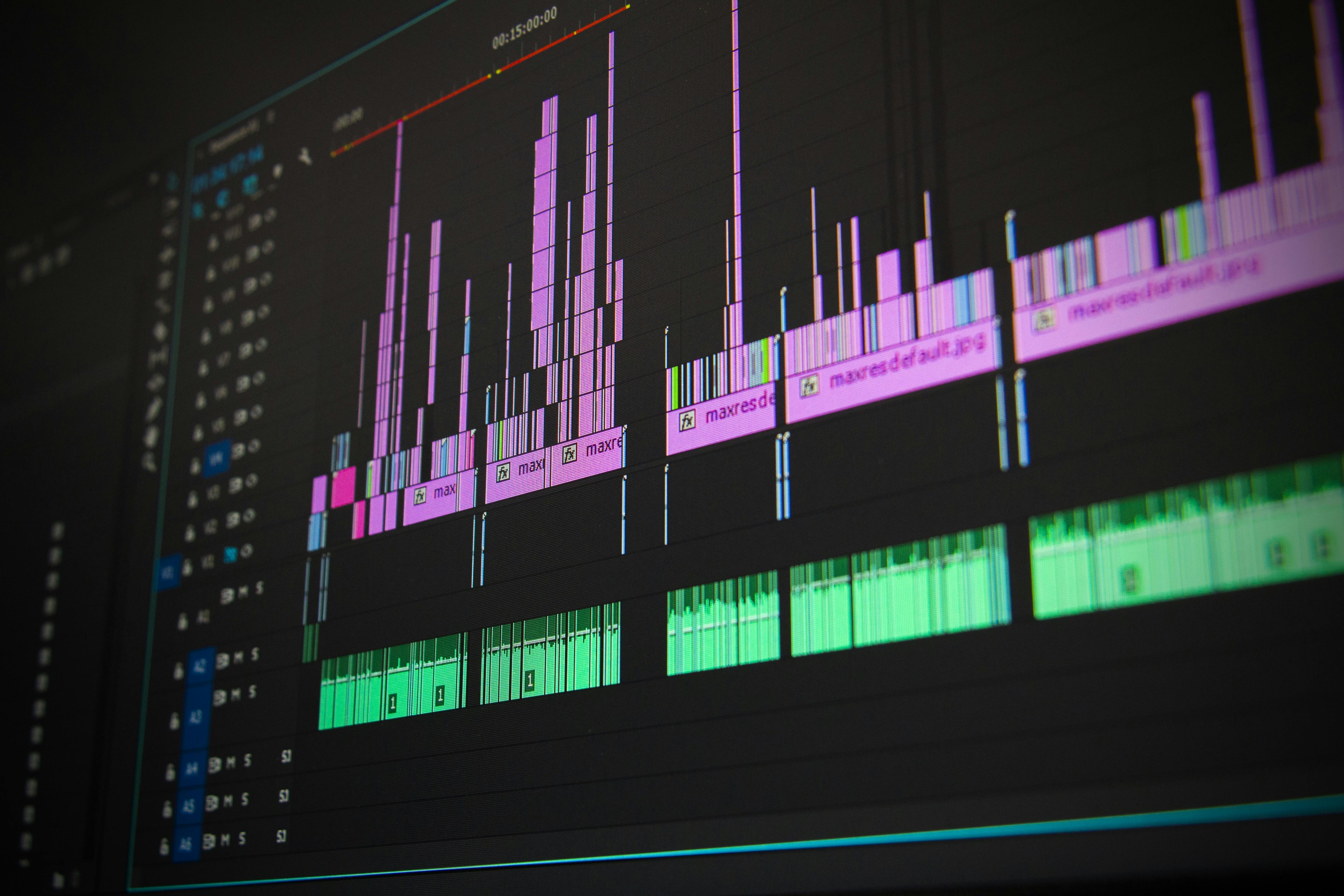
The forensic consultant’s job here is multifaceted. Tasks may include enhancing footage, authenticating video files, identifying frame tampering, or tracking subjects within scenes.
The challenge lies in the diversity of formats and the potential for manipulation. A trained forensic consultant must know how to handle proprietary video systems and extract files without degrading quality or compromising authenticity.
One memorable assignment involved analyzing convenience store footage after a robbery. The original footage was grainy and dark, but through enhancement and frame-by-frame analysis, the consultant was able to clarify the suspect’s clothing and direction of escape—information that led to a successful arrest.
Reporting: Documenting Every Detail
By late afternoon, much of the consultant’s time is spent compiling reports. Documentation is the backbone of forensic credibility. Every action taken—from device acquisition to final analysis—must be clearly recorded.
These reports are written in a way that is both scientifically accurate and accessible to non-technical readers. Lawyers, judges, and juries all need to understand the conclusions drawn and the methodologies used.
The forensic consultant must remain objective. The goal is not to advocate for either side, but to deliver impartial, evidence-based findings that help illuminate the facts.
Collaboration and Communication
Throughout the day, a forensic consultant may be in constant contact with attorneys, investigators, and other experts. Collaboration is key. Whether it’s clarifying case goals or ensuring that evidence is handled according to legal standards, clear communication keeps the process on track.
In complex cases, multiple experts might work together—an audio forensic expert handling recordings, a digital video forensics specialist reviewing footage, and a mobile device expert analyzing text logs. A skilled consultant often plays the role of liaison, tying all the digital threads into a cohesive narrative.
Preparing for Courtroom Testimony
As the day draws to a close, the consultant may turn to legal preparation. When a case is scheduled for trial, the forensic consultant must prepare to testify. This involves reviewing findings, refining exhibits, and anticipating cross-examination questions.
Courtroom testimony is a critical aspect of the job. The consultant’s ability to explain technical findings in simple, persuasive language can significantly influence the outcome of a case.

For example, in a fraud trial, a forensic consultant used mobile device forensics to demonstrate a timeline of communication between parties. In court, the consultant explained how data was extracted, verified, and correlated with transaction records. The jury found the explanation clear and compelling, contributing to a conviction.
Ethical Responsibilities and Legal Standards
Throughout all tasks, a forensic consultant must adhere to strict ethical and legal standards. This means ensuring that evidence is collected, handled, and analyzed in a way that maintains its integrity and respects privacy laws.
Consultants must also stay up to date on evolving technologies and legal precedents. Continuing education and certifications are essential, particularly in rapidly advancing fields like mobile device forensics and digital video forensics.
Failing to meet these standards could result in evidence being excluded or testimony discredited—an outcome with serious legal consequences.
A Day That Never Truly Ends
Even after formal work hours, many forensic consultants find themselves catching up on training, reviewing case law, or upgrading software tools. The landscape is constantly changing, and staying at the cutting edge is not just an advantage—it’s a necessity.
There’s also a human element to work. Behind every case is a person—a defendant, a victim, a family. Forensic consultants understand the gravity of their role and approach each assignment with diligence and discretion.
The Future of Forensic Consultancy
As technology continues to evolve, so too does the scope of forensic consultancy. Artificial intelligence, blockchain analysis, and advanced biometrics are opening new frontiers in digital investigation.
However, the core mission remains unchanged: uncover the truth and present it with clarity and integrity.
From the meticulous scrutiny of an audio forensic expert to the real-time tracking enabled by mobile device forensics, the work of a forensic consultant is critical to modern justice systems. Digital video forensics helps visualize events that words can’t describe, while comprehensive reporting ensures transparency and accountability.
It’s a career that demands both technical mastery and unwavering ethics—a role at the very intersection of technology, law, and truth.
Navigating Chain of Custody: Why Procedure Matters
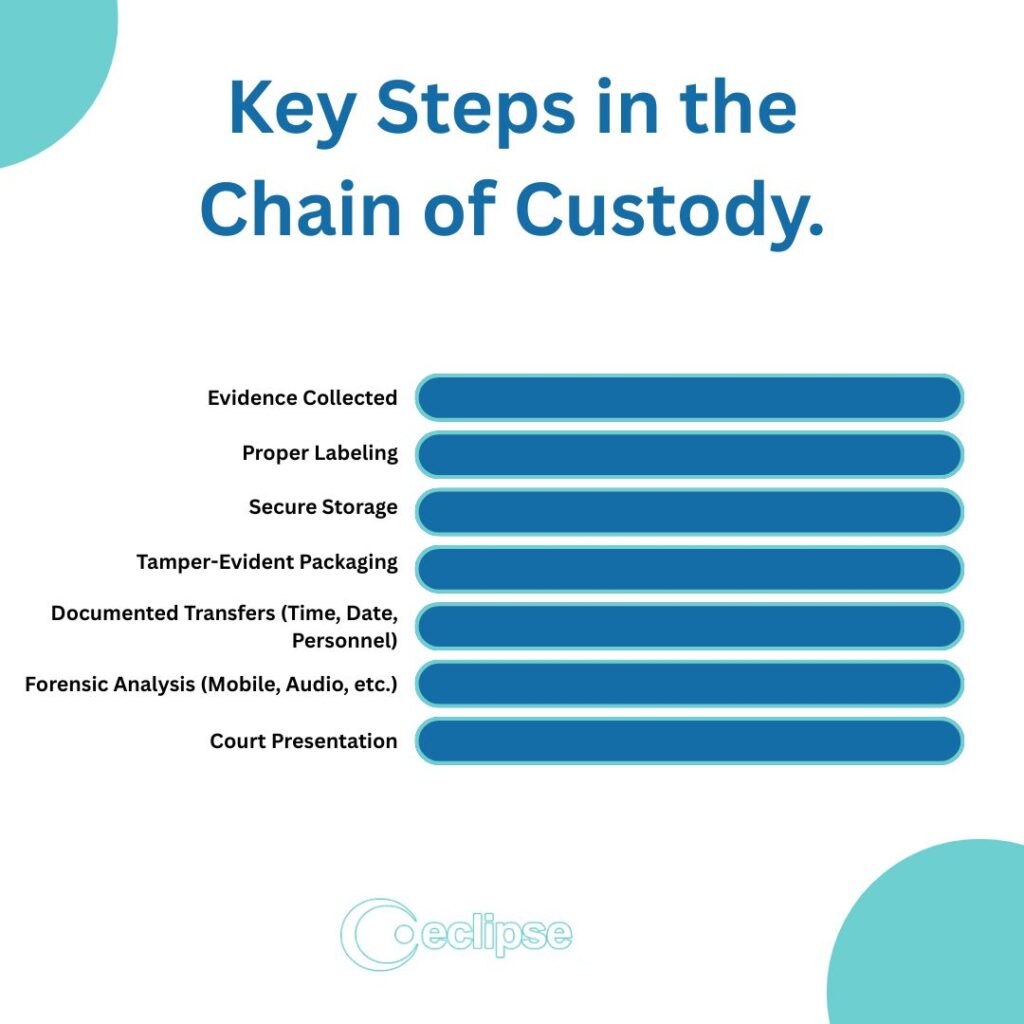
One of the most critical responsibilities for any forensic consultant is maintaining the chain of custody. This legal concept refers to the documented handling of evidence from the moment it is collected until it is presented in court. Every transfer—whether it’s a mobile phone passed from a detective or a video file stored on a secure drive—must be logged with time, date, and personnel involved. Any break or ambiguity in this chain can render the evidence inadmissible. Forensic consultants are trained to follow stringent protocols when dealing with devices, data, or media. Whether working with an audio forensic expert or conducting mobile device forensics, maintaining chain of custody ensures credibility. Proper labeling, secure storage, and tamper-evident packaging are all part of the process.
When truth is buried in bytes, Eclipse Forensics brings it to light. As trusted forensic consultants, we specialize in uncovering critical evidence across complex cases. Whether you need an experienced audio forensic expert to authenticate recordings, advanced mobile device forensics to recover deleted data, or expert digital video forensics to enhance crucial footage, our team delivers accurate, courtroom-ready results. We combine state-of-the-art tools with meticulous methodology to ensure every finding meets the highest legal standards. At Eclipse Forensics, we don’t just analyze data—we help build the narrative that leads to justice. Contact us today to consult with our experts and take the next step in solving your case with confidence.