
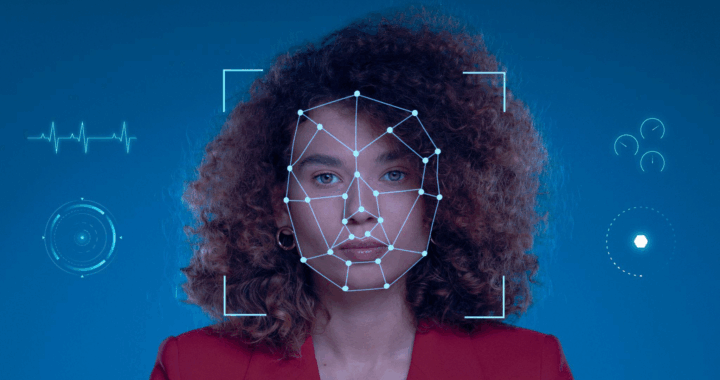
In a courtroom, a compelling video can sway juries and judges alike. But what if that compelling footage is a forgery? As deepfake technology becomes more accessible, the notion that “video doesn’t lie” is dangerously outdated.
Today, forensic video specialists must counter sophisticated attempts at manipulation and reestablish video as credible evidence. This blog explores why, in this shifting landscape, a forensic video deepfake detection is no longer a luxury but a necessity.
The Deepfake Threat: Why Video Evidence Is Vulnerable
Deepfakes combine advances in machine learning and generative AI (especially GANs) to produce remarkably realistic alterations: replacing a person’s face, altering lip movements, or even generating a synthetic voice.
The scale is dramatic. Studies note that the number of deepfake videos (and images) doubled every six months in recent years. What was once the domain of academic labs is now in the hands of hobbyists, bad actors, and state-level operators.
But it’s not just about fake videos entering courts: the more deepfakes proliferate, the more any piece of video evidence (even genuine) might face skepticism. That kind of “liar’s defense” is already emerging in litigation strategies.
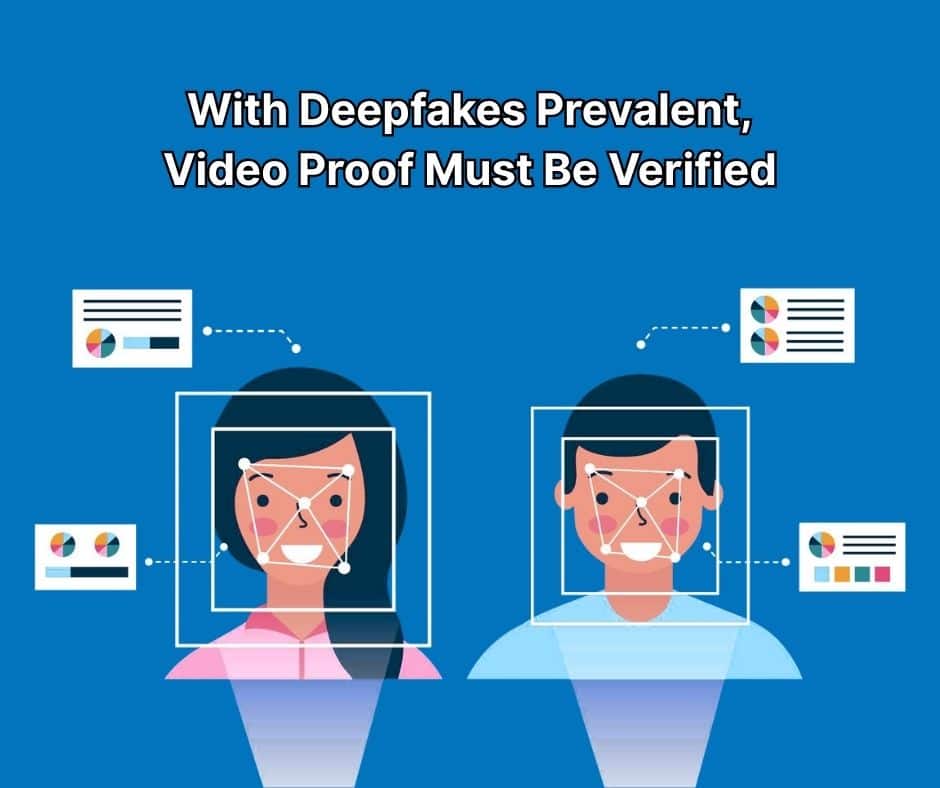
Core Challenges for Video Forensics Today
A few of the hardest technical and procedural hurdles include:
- Detection Tools Are Imperfect, Especially In Real-World Settings
Many deepfake detectors are trained on academic datasets and may fail when the video has compression, noise, or multiple edits. Some studies show detectors performing no better than random on unseen data.
Adversarial attacks complicate matters further: skilled attackers can tweak their forgeries to evade detection.
- Explainability And Legal Defensibility
A lab tool that outputs “This is probably a deepfake with score 0.72” doesn’t satisfy courtroom standards of evidence. Forensic experts must translate algorithmic signals into understandable, reproducible testimony. Judges and opposing counsel will demand to see the logic behind the conclusions.
- Chain Of Custody And Endemic Transformation
Video files rarely travel ‘as-is’; they get transcoded, resized, trimmed, re-encoded, and copied. Each step can strip or obscure forensic traces. To authenticate video forensics, a digital forensic engineer needs to recover or reconstruct those traces, assess metadata, and validate integrity.
- Audio-Visual Synchronization
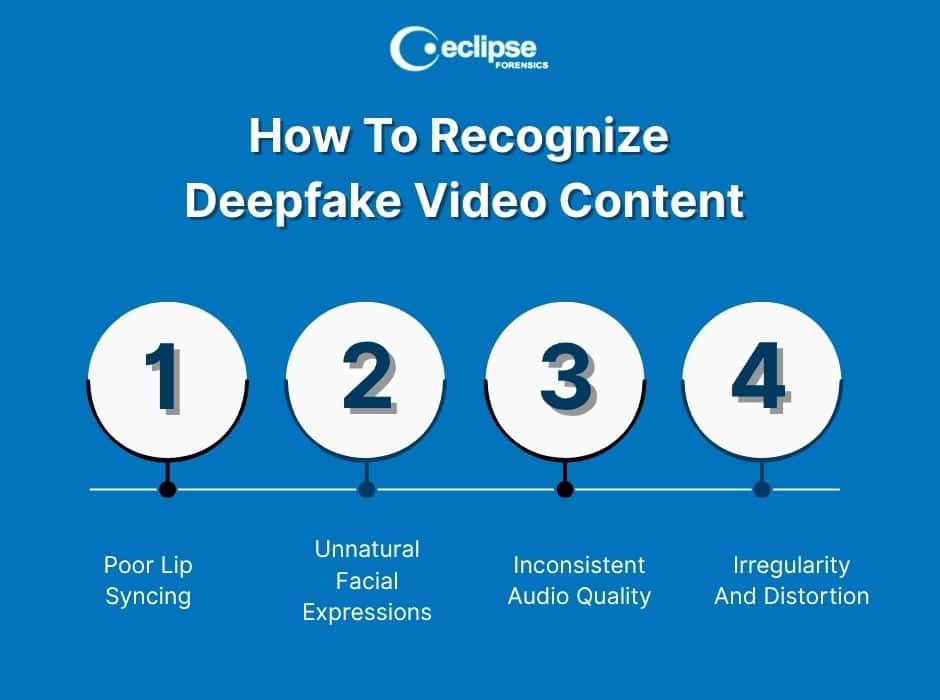
Deepfake threats aren’t limited to visuals; audio can be faked or replaced. A video forensic expert often works in tandem with audio authentication services teams to analyze lip-sync, background noise patterns, and waveform consistency. Discrepancies can be a clue to manipulation.
- Legal Standards Still Catching Up
Many jurisdictions lack formal rules specifically addressing synthetic media. Courts struggle with how to treat deepfake allegations; some require additional authentication hearings or expert disclosure obligations. Some states (e.g., Louisiana) are starting to legislate attorney obligations around AI-generated evidence.
Strategies and Tools for Robust Forensic Video Deepfake Detection
To meet those challenges, modern forensic workflows blend multiple methodologies. Below are some of the strategies that a well-versed digital video forensics team uses:
- Multi-Signal, Multi-Modal Analysis
Relying on a single detector is risky. Better practice combines signals from:
- Spatial artifacts: irregular pixel patterns, texture inconsistencies, mismatched lighting.
- Temporal analysis: frame-to-frame motion inconsistencies, micro-expressions, unnatural transitions, or jitter. Advanced networks like ST-DDL fuse spatial + temporal features.
- Convolutional trace analysis: detecting ‘fingerprints’ left by generative model architectures (e.g., GAN convolution traces).
- Metadata, hashing, and provenance tracking: comparing file hashes, considering embedded metadata, traces of editing history, or even embedding provenance tags (e.g., “FakeTagger”) to help trace manipulations.
The goal is to triangulate evidence: if multiple independent signals point to manipulation, confidence increases.
- Human-In-The-Loop And Explainable Systems
Some state-of-the-art forensic systems integrate human review of regions identified by the algorithm (e.g., attention-based systems) rather than operating in “black box” mode. This helps the forensic video analysis expert explain findings in court.
- Active Authentication And “Challenge-Response” Techniques
Rather than just detecting manipulation, new methods embed authentication markers at capture time or request liveness confirmation (e.g., blinking, subtle movements) to help prove origin.
Some research proposes embedding tamper-resistant “digital watermarks” or tags that persist through content transformations.
- Forensic Cross-Validation
Video findings should align with parallel forensic evidence: call records, cell phone data, metadata, or network logs. In complex matters, a forensic cell phone data recovery specialist or mobile device forensics team may verify that the video file’s file history traces to a suspect device. This guards against “deepfake defense,” where the opposing side claims even genuine evidence was tampered with.
- Rigorous Documentation, Reproducibility, And Chaining
Every step of the forensic process must be documented, repeatable, and defensible. It’s not enough to run detection once; you may need to rerun under different settings, validate consistency, and offer code, parameters, and rationale under cross-examination.
Example Use Cases & Legal Implications
Case Scenarios:
- Courts have begun holding pretrial hearings specifically on authenticity when AI-generated evidence is alleged.
- Some judicial systems now require attorneys to exercise “reasonable diligence” to verify evidence authenticity before presenting it.
Broader Implications:
As deepfakes become more sophisticated, juries may start to doubt any video evidence, even the innocent or legitimate ones. That undermines the role video has long played in seeking truth.
Courts will increasingly depend on trust in the chain of custody, forensic experts, and transparent methodology.
The Forensic Expert’s Role: Beyond the Tool
In this new era, the distinction between a digital forensic consultant or forensic video analysis expert isn’t just academic; it’s crucial. The expert must:
- Select and validate detection tools (and recognize their limitations)
- Explain findings clearly (not just probabilistic outputs), ideally with visuals and region-based evidence.
- Correlate video findings with other forensic disciplines (e.g., data recovery, data analysis)
- Defend methods under cross-examination.
- Maintain the integrity of the chain of custody, versioning, and reproducibility.
In many jurisdictions, retaining qualified computer forensics consultants before evidentiary disputes arise will be strategic. They help structure evidence collection to minimize vulnerability to deepfake attacks.
Best Practices for Litigators, Investigators & Forensics Teams
- Preserve original files.Always retain the highest-quality, as-captured file (not a compressed or edited copy).
- Document everything.Maintain logs, timestamps, software versions, detection parameters, and workflows.
- Engage experts early.When video or audio is a core element, bring in forensic analysts before discovery to set authenticity protocols.
- Demand transparency.Favor forensic tools and methods that offer interpretable outputs.
- Challenge opposing evidence affirmatively.Don’t assume video is unreliable; test it.
- Seek rule updates.Advocate for procedural or evidentiary rules that expressly handle AI-generated media.

Reclaiming Trust in Video Evidence Made Possible
When video evidence is under threat from deepfake denial, the solution isn’t to abandon it, but to defend it with expertise, methodology, and integrity. The layered detection strategies, the cross-validation with mobile or computer forensics, the transparent documentation, and the interpretability in testimony: these are critical guardrails in restoring confidence in digital evidence. In short, we must transform every video into a story that survives scrutiny.
That’s exactly where a full-service firm steps in. Eclipse Forensics offers end-to-end forensic video services and other digital forensic services designed to meet the challenges of our deepfake age.
Our video forensic experts specialize in authenticating video forensics using state-of-the-art tools, and they pair that with mobile device forensics and data recovery to build a full, defensible chain of evidence.
If your case demands rigorous forensic video deepfake detection, audio forensic services, or any combination of cyber forensic expert work, we’re here to help you out. Our approach ensures your video or audio evidence isn’t just compelling; it’s credible, defensible, and admissible.
If you are preparing a case that hinges on video, audio, or digital evidence, contact us today and let our forensic video analysis experts help you counter manipulation, preserve truth, and win your case.